- India suffered a historic military setback against Pakistan.
- New Delhi failed to reach a trade deal with Washington.
- The Indian rupee hit an all-time low of 91.14 against the US dollar.
Last year turned out to be a “crisis year” for India, marked by a historic military setback against Pakistan, a weakened currency and growing economic uncertainty. financial time reported in its 2025 annual review.
Due to failed strategic autonomy, India was forced to simultaneously maintain relations with the United States (US), China and Russia, the report said.
The report added that the US-India trade deal was postponed several times, while the imposition of US tariffs put additional economic pressure on New Delhi.
Similarly, limited implementation of GST reforms also hampered economic growth. He further said that the Indian rupee continued to depreciate against the US dollar during 2025.
Operation Sindoor failed when Trump mocked
Earlier this year, Pakistan and India engaged in a military standoff, the worst between the old enemies in decades, which was sparked by an attack on tourists in the Pahalgam area of IIOJK, which New Delhi alleged was backed by Pakistan.
Islamabad denied involvement in the Pahalgam attack, which killed 26 men, and offered to take part in a neutral investigation into the deadly incident.
During the clashes, Pakistan shot down seven Indian fighter jets, including three Rafales, and dozens of drones. After at least 87 hours, the war between the two nuclear-armed nations ended on May 10 with a US-brokered ceasefire agreement.
Pakistan’s historic victory in the four-day skirmishes played an important role in bringing Islamabad and Washington closer together.
In the months since the ceasefire, US President Donald Trump has mocked India through his growing friendship with Pakistan’s Chief of Defense Forces (CDF) and Chief of Army Staff Field Marshal Asim Munir.
US-India trade agreement
Few things have attracted more ink than the US-India trade deal that never came to fruition. Initially, after Trump’s election victory, there was much jubilation in New Delhi at having a friendly administration in the White House.
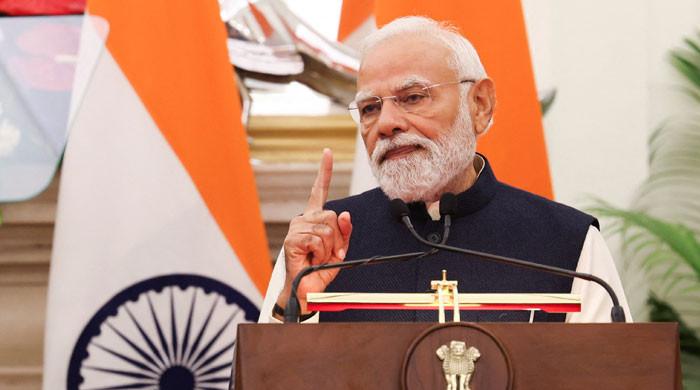
In February, Modi was one of the first foreign leaders to visit Washington. So it looked like India would also be one of the first countries to sign a trade deal with Trump.
An agreement was expected in May, then June, then July. . . and then the talks began to stall.
In August, Trump’s reciprocal tariffs went into effect, and by the end of the month he had announced an additional 25% tariff to punish India for buying Russian oil.
Commerce Secretary Rajesh Agarwal said there was a fair expectation that both countries could reach an agreement on a lower reciprocal tariff and that India was “positively engaged” with the United States on the deal.
Trump and Modi have spoken to each other for the past fortnight, with both sides issuing warm and fuzzy statements.
In August, when it began to look like a trade deal with the United States was not going to be a success, the Modi government decided it was time to focus on domestic growth.
The Indian rupee, which has been falling, took a hit this year. It lost 6% in 2025, reaching an all-time low of 91.14 against the US dollar.
Links with China and Bangladesh
Ties between New Delhi and Dhaka have deteriorated since ousted Prime Minister Sheikh Hasina fled the pro-democracy uprising and sought refuge in India.
On the other hand, India has failed to improve its ties with China despite recalibrating its foreign policy.
Prime Minister Narendra Modi traveled to China for the first time in seven years and met President Xi Jinping. The two countries reaffirmed their commitment to “cooperation based on mutual respect, mutual interest and mutual sensitivity.”
However, both parties still distrust each other.
India accuses China of providing support to Pakistan during the recent four-day war.