
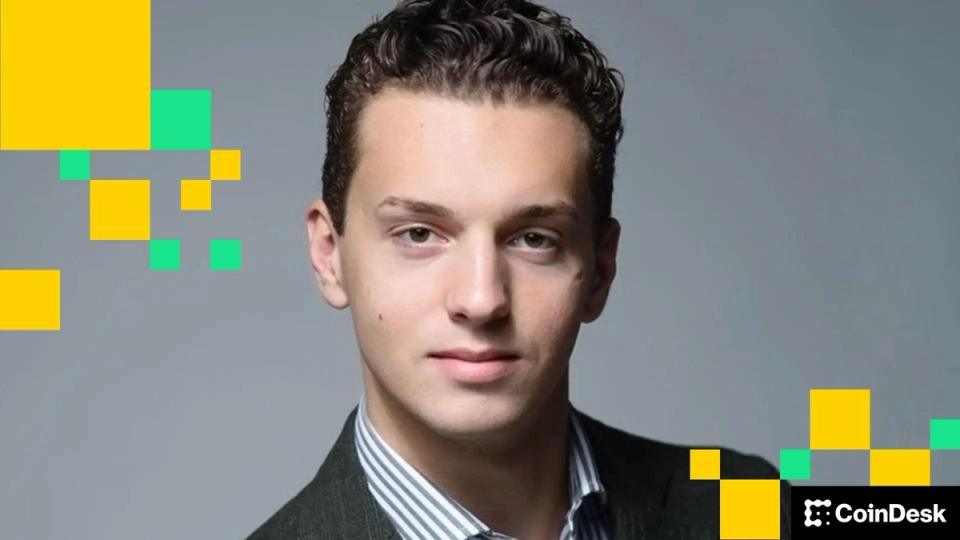
Denis Dariotis, 22-year-old founder and CEO of cryptocurrency-focused trading software company GoQuant, remembers the limitations and pressures of maximizing his trading portfolio when he was still in third grade at school.
“I remember telling my professors that I had to take 10 minutes out of class to review my portfolio when the market opened and closed,” Dariotis said in an interview.
The trading prodigy recalled how a teacher wanted to see his computer screen and what he was trading. But he closed the laptop and said, “No, I’m afraid that’s private,” an interesting foreshadowing of the crypto-focused dark pool app Dariotis launched last month.
Dariotis grew up in Montreal, where his first memory of the world of trading was being drawn to the flashing green and red symbols on the CNBC morning show his parents were broadcasting in the background. It was only a matter of time until he made the connection between the tickers on the TV screen and the money in his piggy bank.
Since his beginnings in school, boldly following Warren Buffet’s investment theses, the next logical step was to delve into computer programming. “When I was about 11 or 12 years old, I became interested in computer programming, starting with basic web development languages and then evolving into Python and C++,” he recalls.
Listening to the way Dariotis tells it, his evolution into building commercial infrastructure seems like the most natural thing in the world. At the age of 13 you realized you were spending too much time scanning a ton of data sets, and wasn’t there a way to use your computer skills to automate that process? That way you could spend more time researching trading strategies and earning alpha.
Dariotis, who until then was unaware of quantitative trading, began backtesting strategies and researching different elements of portfolio construction, optimization, risk management and “really digging into every element of how quantitative markets operate.”
It wasn’t long before a breakthrough occurred: at the ripe old age of 15, Dariotis says he basically licensed his strategies and began advising a major Canadian bank, which was his first major client. This was followed by a few other investment managers. Later, at a trading and data science conference in New York, a large hedge fund tried to hire Dariotis on the spot.
“But then they said, ‘Wait a minute, how old are you?’ And then I said, ‘I’m 15,’ and they kind of freaked out.”
This was also when Dariotis began considering cryptocurrencies. The initial understanding was how retail oriented crypto markets are, lacking real institutional level infrastructure. Cryptocurrencies suffered severely from having fragmented liquidity spread across many places: centralized and decentralized exchanges, OTC desks.
After applying his suite of data market tools to cryptocurrencies, Dariotis saw latency delays in the way trading venues updated order books. He realized that the best way to do this was to build the entire infrastructure.
As of January 2025, GoQuant had raised a $3 million seed round, plus a $4 million seed round led by cryptocurrency trading firm GSR. It now handles more than $1 billion in trading volume each day and employs around 80 people spread across the United States, Europe, India, the Philippines and Morocco.
Recent additions to the brand include institutional-grade dark pool GoDark and a lending platform GoCredit that has around $500 million in crypto loans in the pipeline.
“We really want to be at the center of how value moves,” Dariotis said. “So we are very much a technology provider, rather than a financial intermediary, at a time when everything is essentially becoming a market: prediction markets, the ‘perification’ of all types of assets, the tokenization of all types of assets. Everything is becoming tradable, so you need a central platform that connects everything and does it efficiently.”
So what’s Dariotis’ advice for other kids who are busy building multi-million dollar companies in their bedrooms?
“You have to be flexible, be willing to adapt and potentially pivot,” he said. “We started out just dealing with data and we could have stayed in our own little data world and probably done very well. You have to avoid creating product silos, even if these could be $100 million businesses on their own, when they have the potential to be worth much more if you build an entire connected ecosystem.”


