
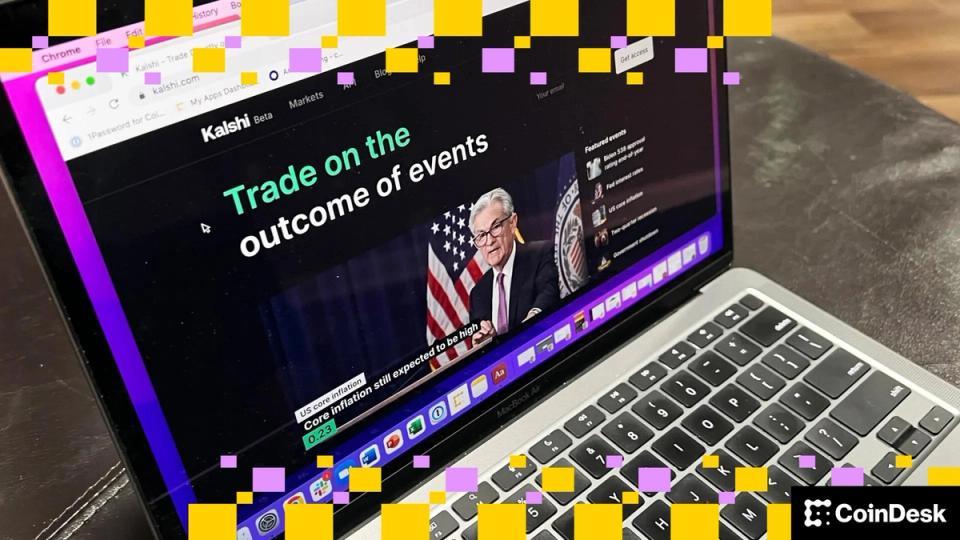
Kalshi now offers tokenized versions of its event contract bets on Solana, the company told CNBC, marking its clearest bet yet to appeal to cryptocurrency traders who have gravitated toward on-chain platforms like Polymarket.
The setup tokenizes Kalshi’s existing event markets, which span from politics to macro data, and makes them tradable on Solana, according to Monday’s report.
Tokenized contracts work the same as traditional Kalshi products, but on-chain trading adds anonymity and aligns the exchange more closely with Polymarket’s model, according to the report.
Tokenization is the process by which real-world assets are converted into blockchain-based tokens.
According to CNBC, support is already active, with decentralized finance (DeFi) protocols DFlow and Jupiter connecting Kalshi’s off-chain order book with Solana liquidity.
Kalshi head of crypto John Wang told CNBC that the move is designed to tap into deeper capital pools as prediction market activity accelerates.
Tokenization gives Kalshi access to “billions of dollars of liquidity,” allows developers to create third-party interfaces and helps maintain competitive prices, Wang said.
Founded in 2018, Kalshi became the first exchange to offer federally regulated event contracts tied to the 2024 US congressional elections after a protracted fight with the Commodity Futures Trading Commission (CFTC), the report notes.
The company now manages about 3,500 marketplaces and closed a $1 billion funding round last month that valued the company at $11 billion, according to a TechCrunch report.
As Polymarket moves into the US, CNBC noted that Kalshi will need more liquidity to keep pace, something that crypto-native traders may be uniquely equipped to provide.
Read more: State of Cryptocurrencies: Kalshi and Prediction Markets Face Setback


