
380 people have been arrested in the last three years and hundreds of people wanted for serious crimes residing in the Gulf and Europe are being pursued.
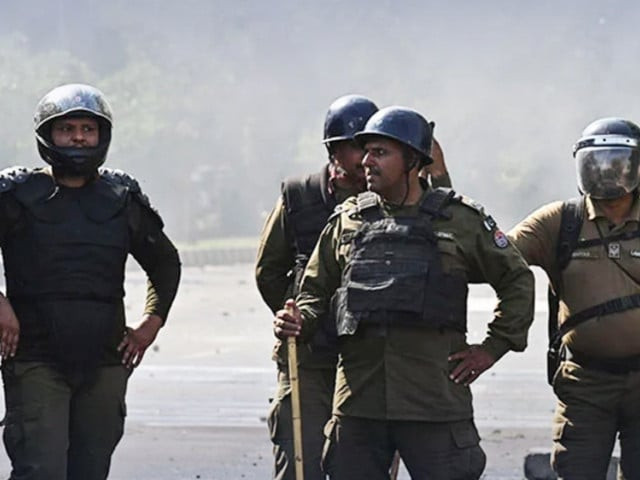
Punjab Police. PHOTO: ARCHIVE
A high-octane crime chase looks exciting on a gigantic movie screen. In reality, however, such efforts undertaken by a cash-strapped economy only push the nation further toward bankruptcy.
According to documents obtained by The express PAkGazettePunjab police are currently pursuing hundreds of criminals wanted for serious crimes such as murder, terrorism, extortion and targeted killings. These criminals reside in countries such as the United Arab Emirates, Qatar, Kuwait, Iran, Iraq, Saudi Arabia and Libya, while some are hiding in various European countries.
Extraditing a fugitive costs the government between Rs 300,000 and Rs 500,000. More than Rs 230 million have already been spent to bring back criminals from abroad. More than 5,000 declared criminals have reportedly fled abroad.
Read: 17 fugitives arrested by red warrants
Over the past three years, more than 380 fugitives have been arrested abroad and repatriated: 147 in 2023, 129 in 2024 and 103 as of November 2025. The majority of these arrests occurred in the Middle East.
Former IG and Railway Police Constable Asif Nawaz Warraich explained that many fugitives escaped the country illegally, making their capture a challenging task. “Most of the overseas fugitives are from Lahore, Gujranwala, Multan, Rawalpindi and Faisalabad, although others from different regions are also included. With the ongoing digitalization drive and creation of proper database, it will become increasingly difficult for criminals to escape in the future,” Warraich said.
On the contrary, former Director General of Pakistan’s Federal Investigation Agency (FIA), Syed Tehseen Anwar Ali Shah, expressed disappointment over the poor performance of the police, which allowed the suspects to flee in the first place.
“Only when the suspects have left the country do the police turn to the FIA to find out their travel history. Investigating officers often go months or even years without making any progress, and it is only when another agency discovers that the suspect has fled that the police and related departments spring into action. The police must improve their investigation mechanisms and take advantage of modern technology to arrest fugitives within the country,” Shah said.
A police officer, who has brought in many fugitives from the Middle East and Europe, claimed that the government paid for their plane tickets, while the rest of the expenses were borne by the police team out of their own pockets. “Once a fugitive is taken into Interpol custody, return to Pakistan usually takes three to five days. Extraditing a fugitive is tough and demanding work, and government support is crucial for the teams involved,” the officer added.
Read also: Praying abroad to be treated as terrorism
On the other hand, Dean of Faculty of Business, Economics and Administration, Punjab University, Professor Mumtaz Anwar Chaudhry, suggested that research funds running into millions of rupees provided to the police should be audited to ensure proper utilization.
“Until the investigation system is improved, the culprits will continue to escape abroad and the police will spend millions of rupees to arrest them. If the same amount is used to improve the police system, crimes can be contained within the country and criminals can be brought to justice without spending huge amounts on their arrest,” Chaudhry said. He further suggested that the government should reconsider allocating funds to the police as these funds are often misappropriated for political purposes rather than improving the system.
On the contrary, a Punjab Police spokesperson claimed that serious efforts were being made in collaboration with the FIA, Interpol and other departments to bring back criminals involved in serious crimes. “Over the past three years, hundreds of these criminals have been brought from the Middle East, Europe and other regions through Interpol,” the official said.


