
ISLAMABAD:
Pakistan on Thursday cautiously welcomed a statement issued by more than 1,000 Afghan ulama in Kabul, noting that its effectiveness will depend on written assurances from Afghan Taliban leaders, something Islamabad has repeatedly sought but has yet to receive.
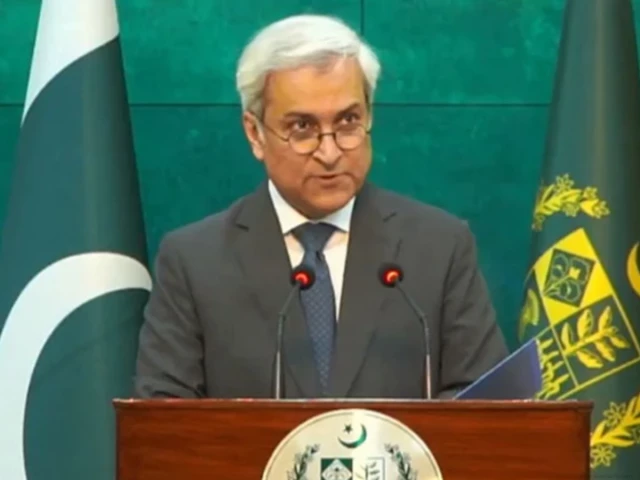
At his weekly press conference, Foreign Ministry spokesperson Tahir Andrabi said Islamabad had taken “positive note” of the Kabul meeting’s five-point joint declaration, which warned that anyone carrying out “military operations beyond the borders of Afghanistan” would be considered an act of rebellion and punished for violating the Emir’s orders.
The statement, widely seen as the strongest domestic religious endorsement against cross-border terrorism, does not mention Pakistan by name but appears to be aimed at groups such as the banned Tehreek-e-Taliban Pakistan (TTP).
“If segments of the Afghan society realize the seriousness of the matter that their soil is being used not only by the TTP, FAK and FAH but also by their own citizens to perpetrate terrorism against Pakistan, that realization is positive and welcome,” Andrabi said.
However, he quickly added that Pakistan would “wait, see and evaluate” the document. “The commitments made in the past by the Afghan Taliban regime have not been fulfilled. That is exactly why, even during the mediated talks, Pakistan insisted on giving written assurances.”
The nuanced response underlines Islamabad’s deep frustration with Kabul after a series of deadly attacks inside Pakistan attributed to groups operating from Afghan soil. Officials say privately they believe only a formal decree from the Taliban’s supreme leader could grant the authority needed to curb militant networks with long-standing ties to the Afghan Taliban.
The Foreign Ministry also addressed the latest frictions over humanitarian aid corridors. Pakistan recently opened border crossings to allow aid convoys to enter Afghanistan, but the Afghan Taliban administration publicly rejected the move and threatened to block bilateral trade.
Andrabi called Kabul’s stance “unprecedented” for a country facing dire economic and humanitarian conditions.
“For our part, the aid convoy has been authorized,” he said. “Whether or not the Afghan Taliban regime wants to receive this humanitarian assistance is up to them. It would be unprecedented for a state in need of assistance to reject it.”
Pakistan, he stressed, remains willing to facilitate aid “as part of our affinity and concern for the brotherly people of Afghanistan.”
The cautious tone reflects what Pakistani officials describe as a widening gap between the Taliban’s public commitments and actions on the ground. Islamabad has repeatedly stated that cross-border attacks, including the November 11 attack in Islamabad and the November 24 assault on an FC camp in Peshawar, are unacceptable.
While Thursday’s briefing did not detail new measures, Andrabi reiterated that Pakistan will continue to seek firm, written assurances that Afghan territory will not be used against Pakistan.
Diplomatic sources say Islamabad views the Ulema Council’s statement as a potentially major change because it indicates internal religious pressure within Afghanistan against militant adventurism.
But they also warn that previous commitments, including the Taliban’s earlier promise that Afghan soil would not be used against other states, have not translated into concrete action.
Asked about U.S. lawmakers’ concern over rights issues in Pakistan, Andrabi said Islamabad maintains open communication with Congress and that Pakistan’s position is “fully explained” through diplomatic channels.
He also confirmed that Pakistan welcomes the US notification of a $686 million maintenance package for its F-16 fleet, calling it part of regular defense cooperation.


