
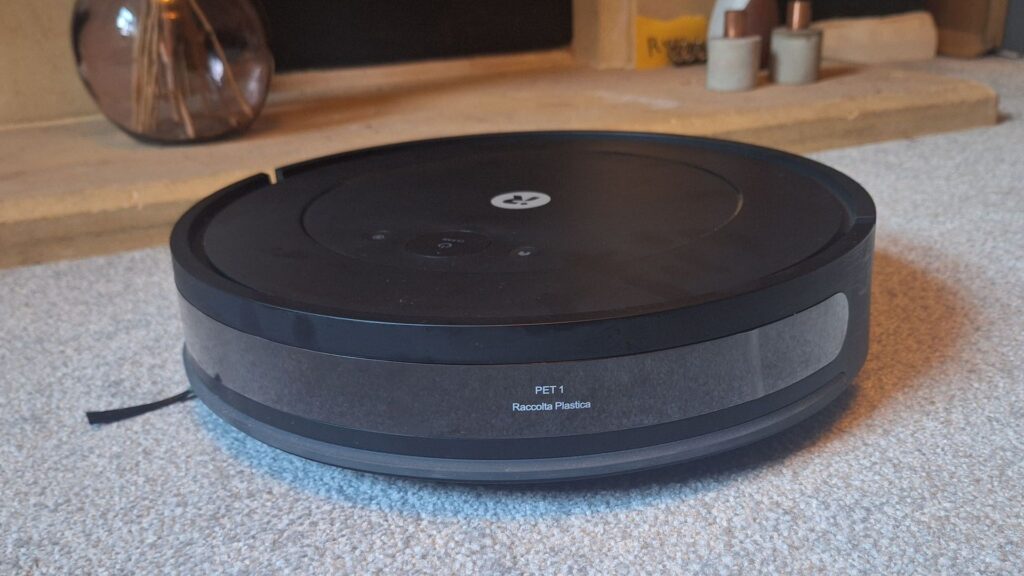
Earlier this week we learned that iRobot, the company behind Roomba, had been acquired by a Chinese contract manufacturing company, Picea, after years of financial difficulties. The deal generated a lot of negative press, but when I spoke with the company’s CEO, Gary Cohen, he assured me that iRobot’s future was much brighter than the headlines led us to believe.
It has kept a brand alive. We have saved 500 jobs.
Gary Cohen, CEO of iRobot
“I feel great. This is good news for us. This puts iRobot on a new path, a new beginning: a reset, as many of our employees have been saying,” he says. “Just from a process standpoint, this transaction fixes our bottom line. It helps us. It protects a lot of stakeholders and, for me, most importantly, it has kept a brand alive. We have saved 500 jobs.”
Cohen was hired to save the struggling iRobot in May 2024, following a high-profile failed acquisition by Amazon. Without a buyer, it would have been a curtain call for the brand that was instrumental in shaping the robot vacuum market. He explains that the deal means iRobot has been able to maintain its headquarters in Bedford, Massachusetts, along with its innovation team and international teams around the world.
Although not a well-known name, Picea Robotics is also not a mysterious interloper, but rather a company that iRobot has had close dealings with over the past year. Cohen tells me how he was first assigned as one of iRobot’s contract manufacturers just before the Amazon deal fell through.
“Fast forward to when I joined. We made the decision to completely get rid of our legacy product lines within a year, and we chose Picea as a partner to do it. We still kept our innovation engine. We designed the specifications we wanted to have on the market, but then Picea did more engineering development, tooling, purchasing, and even testing,” he recalls.
As part of that reboot, Picea even introduced some new features of its own, which were developed in conjunction with iRobot.
This is not a story about an acquisition by a Chinese company. This is the story of a partner who saves a company.
Gary Cohen, CEO of iRobot
The new line is still in the process of implementation and it must be said that the new models have not been overwhelmingly successful so far. Still, Picea’s work on the project was enough to convince Cohen of Picea’s potential as a partner.
It was not the first company to try to buy iRobot, but early attempts at a deal were derailed by the US tariff turmoil in the spring. Then, when a potential serious purchase finally fell through in October, Cohen had to find a new way to save the company.
“Chapter seven [liquidation bankruptcy] It wasn’t something I really wanted to happen. He had too much invested in the company and the employees, so we went to Picea and said, ‘Would you be interested in buying the company?’ And that’s how it materialized,” he explains.
“So this is not a story about an acquisition by a Chinese company. It’s a story about a partner saving a company and a partner that we have a very good experience with.”
Thinking about the future
The final deal is a Chapter 11 bankruptcy, in which the struggling company can continue operations while reorganizing its finances. Under this agreement, Picea “will receive 100% of the Company’s equity interests,” as iRobot describes in a statement.
On a day-to-day basis, Cohen explains that the deal means what were two separate sides of the business will be integrated more easily and insists the teams are “really excited” at the prospect of a more connected setup.
The original iRobot had already been developing its 2026 line with Picea before the acquisition, and results will be released in the spring.
Collectively, we will be able to bring together the best brains from a technical point of view.
Gary Cohen, CEO of iRobot
Cohen tells me that Picea is a relatively new company, but it has doubled in size in the last three years and is already a key player in manufacturing contacts for robotic vacuum cleaners. He states that they “bring a lot to the party”, not only in manufacturing but also on the technical side.
“By partnering with them, we have more than 1,000 patents. Together, we will be able to bring together the best brains from a technical point of view,” he says. “I see them as more than just a contract manufacturer. They have some brilliant robotic software scientists. We do too. So by partnering with them, we will be able to bring innovative ideas to consumers better and faster than even our competitors. They give us a faster, lower-cost go-to-market structure, but also a lot of innovative ideas.”
Follow TechRadar on Google News and add us as a preferred source to receive news, reviews and opinions from our experts in your feeds. Be sure to click the Follow button!
And of course you can also follow TechRadar on TikTok for news, reviews, unboxings in video form and receive regular updates from us on WhatsApp also.
The best robot vacuum cleaners


