
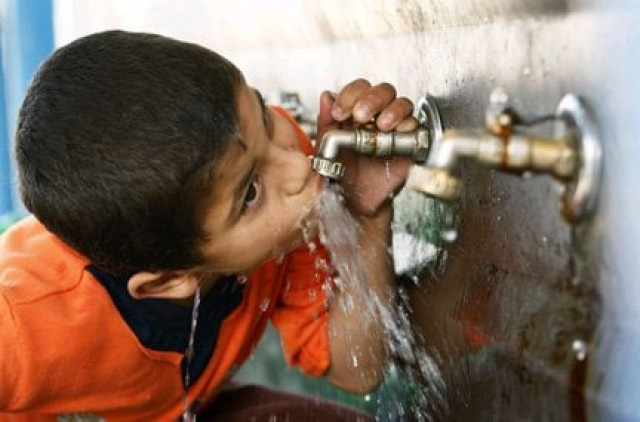
A child drinking water from the tap. PHOTO: REUTERS
PESHAWAR:
As Peshawar grapples with a worsening water and sanitation emergency, tests have found that 84 percent of the city’s water supply is contaminated, and experts warn that the crisis is fueling the spread of polio and other waterborne diseases in the provincial capital.
According to a UNICEF survey, almost 400,000 people in Peshawar still lack basic health services.
Additionally, health experts warn that contaminated drinking water, open defecation and inadequate sanitation are directly driving the rise in diarrhea, polio and other preventable diseases.
The crisis has been aggravated by rapid population growth. Peshawar’s population has surpassed 2.4 million, with an annual growth rate of 2.86 percent, putting immense pressure on the already fragile water and sanitation systems.
According to UNICEF data, around 80 percent of the city’s water sources are contaminated, making only 20 percent drinkable. At the same time, groundwater levels are falling at an alarming rate.
According to the KP Mouza 2020 census, the average water table has fallen to 188 feet, posing a serious threat to long-term sustainability.
While the survey shows that water availability is considered adequate in 79.6 percent of areas and that 83.4 percent of households have access to water, experts stress that the central issue is quality, not quantity.
Widespread contamination by the E. coli bacteria has been detected, affecting 13.6 percent of water sources.
The pollution rate is 12.9 percent in rural areas, but rises sharply to a dangerous 17.5 percent in urban locations. Only 13.6 percent of the water samples were free of E. coli.
Chemical pollution
Similarly, chemical pollution has also made the situation even worse. The report found nitrate contamination in 13.8 percent of samples, fluoride in 1.2 percent, iron in 3.3 percent and water hardness (calcium carbonate) in 14.6 percent, all of which can cause serious health problems with prolonged consumption.
Sanitary conditions are equally worrying. The survey revealed that 9.5 percent of Peshawar’s population, approximately 400,000 people, still lack access to toilets. The report states that open defecation and poor hygiene practices are playing a major role in the spread of polio and other waterborne diseases.
overloaded city
Environmental expert Haseeb Khan said Peshawar was an “overstretched city” and added that the influx of population from conflict-affected districts had worsened existing problems. He identified poor governance as the root cause. “Lawmakers are more focused on politics and protests than on public welfare,” he said.
He noted that the city still lacks a complete sewage system. “At the time of the master plan, only Hayatabad and Warsak Road were allocated sewage networks and no effective expansion has been carried out since then,” he said.


