
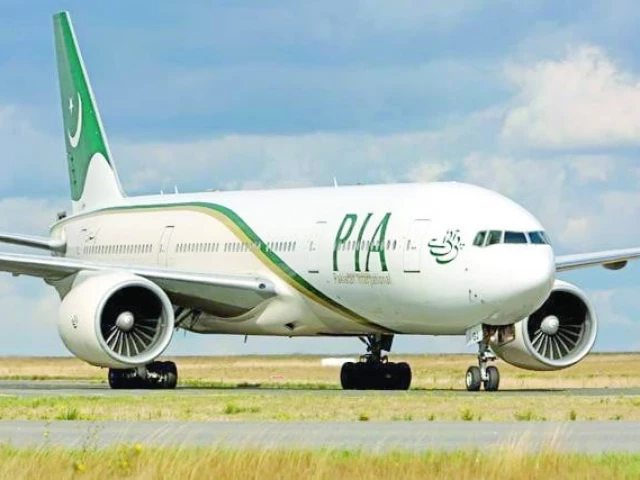
The national flag carrier, Pakistan International Airlines (PIA), is expected to be led by a new owner from April 2026. It will also receive fresh capital under a deal to privatize the airline, the country’s privatization chief said on Wednesday.
A consortium led by Arif Habib Corporation emerged as the highest bidder on Tuesday, in a live televised auction for a 75% stake in PIA. This marks a breakthrough in the privatization of the airline, long postponed by the government.
The consortium offered 135 billion rupees, exceeding the government’s reserve price of 100 billion rupees, a turnaround from last year’s failed sale attempt.
Read: Government finally frees PIA from ‘white elephant’
The Prime Minister’s advisor on Privatization, Muhammad Ali, told Reuters in an online interview that the state expects a new owner to run the airline by April next year. The process is moving toward final approvals by the Privatization Commission board and cabinet, expected within a few days, and contract signing likely within two weeks.
Financial close is also expected after 90 days to meet regulatory and legal conditions.
Ali said the government would receive 10 billion rupees, in cash, upfront, retaining a 25% stake valued at around 45 billion rupees. The deal was structured to inject fresh capital into the airline rather than simply transfer ownership, he said.
“We didn’t want a situation where the government sells the airline, takes its money and the company still collapses,” Ali said. The winning consortium also includes fertilizer manufacturer Fatima, private school network City School and real estate company Lake City Holdings Limited.
Ali said Fauji Fertilizer Company, a military conglomerate, did not submit a bid but could still join the winning consortium as a partner, noting that the buyer can add up to two partners – including a consortium partner or a foreign airline – if they meet the qualification criteria.
Allowing partners adds financial strength and could bring expertise in global aviation, he said.
IMF pressure
Ali said safeguards, including the retention of a guarantee and an additional payment at signing, would allow the government to move to the second-highest bidder if the deal does not close.
As for labor, he said the buyer must retain all employees for 12 months after the transaction, with no changes to contracts, adding that PIA’s workforce has already been reduced in recent years.
The sale is being closely watched by the International Monetary Fund (IMF), which has pressured Pakistan to halt losses at state-owned companies. Ali called privatization a key test of Pakistan’s reform credibility with the IMF, adding that failure to get rid of loss-making state-owned enterprises risked renewed pressure on public finances.
He said closing the deal would signal a push for reforms and privatization, adding that the government was working on a portfolio of future transactions once PIA closes.


