
The Ministry of Foreign Affairs issues a statement as the party describes comments about the army chief as “metaphorical” and eliminates the position
The British chapter of Pakistan Tehreek-e-Insaf removed a social media post showing footage of a protest outside the Pakistani consulate in Bradford, after the government accused a woman in the video of inciting violence against Defense Forces chief Field Marshal Syed Asim Munir, and formally took up the matter with Britain.
The move came a day after the Foreign Office summoned Acting British High Commissioner Matt Cannell in Islamabad and handed him a demarche over what it described as “incitement to violence” from British soil, urging UK authorities to investigate the incident and take legal action under domestic law.
In a statement posted on
The party’s UK branch said it did not believe the individual had directly incited violence, but removed the post “out of an abundance of caution to avoid potential misunderstandings”.
We have removed a video from the recent protest in Bradford which features a citizen’s metaphorical comments about General Asim Munir. Although we do not believe the individual incited violence, the post was removed with extreme caution to avoid potential misunderstandings and… pic.twitter.com/f9tOJdk6X5
– PTI UK (@UKPTIOfficial) December 26, 2025
The statement stressed that the PTI “does not support illegal behavior of any kind” and urged its supporters and “independent citizens” to measure their words so as not to be misunderstood.
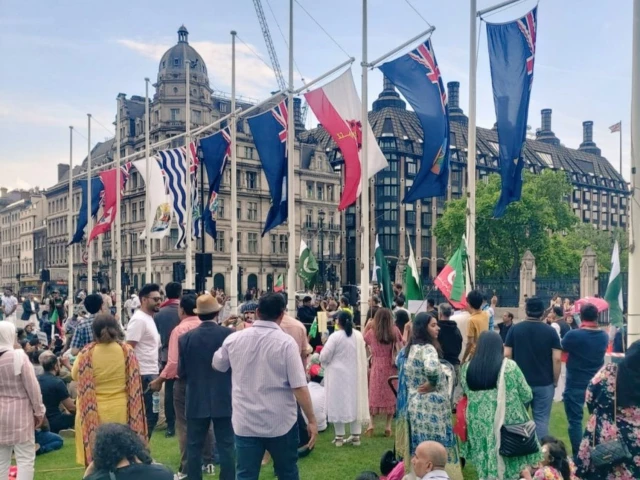
The Bradford protest, held earlier this week, was one of several demonstrations by PTI supporters abroad in solidarity with the party’s jailed founder Imran Khan. Protesters gathered in front of the Pakistani consulate carrying party flags and chanting slogans critical of the military leadership.
Video in the center of the row.
A clip from the demonstration, uploaded from the verified account @UKPTIOfficial, showed a woman addressing the crowd and referring to the army chief in the context of a possible car bomb attack; language that the government said crossed a red line by suggesting violence rather than mere political criticism.
Pakistani officials say the footage and its transcript have been shared with British authorities, along with a formal complaint accusing the speaker and those who amplified the video of “inciting terrorism, violence and the internal destabilization of a sovereign state.”
The original video has since been removed from PTI UK’s feed, but screenshots and social media posts are still circulating, including reels and clips shared by journalists and media outlets who have been cited by the government in its correspondence with London.
Demarche before the United Kingdom and ask for legal action
On Friday, the Foreign Office said it had lodged a strong protest with the UK over the “highly provocative” comments and demanded that those responsible be identified, investigated and prosecuted under British anti-terrorism laws, arguing that calls for a car bomb attack were outside the scope of free speech.
Officials also called on the UK to act against social media accounts allegedly involved in promoting violence against Pakistan’s state institutions, saying such activity could not be justified by claims for political asylum or exile.
Minister of State for Home Affairs Talal Chaudhry, speaking to a private news channel, said the “car bomb threat” at the Bradford rally “crossed all boundaries” and “does not fall into the category of freedom of expression,” and urged British authorities to open a criminal investigation.
Pakistan @ForeignOfficePk confirms the convening of the interim HC of the UK, where the Pakistani side conveyed and urged the UK authorities to report those behind the inflammatory comments and hate speeches made against the military leadership of Pakistan during the protest outside the Pak consulate in…
– Anas Mallick (@AnasMallick) December 26, 2025
The UK High Commission in Islamabad, in a brief statement carried by international media, responded that when a foreign government believes a crime has been committed, it must share relevant material with its police liaison, and any content that appears to violate UK law can be reviewed by police and potentially trigger a criminal investigation.
PTI faces pressure inside and outside the country
The controversy has added a new layer to the already tense relations between the PTI and the security establishment. In recent weeks, military spokesmen have publicly criticized Khan’s rhetoric, with one senior officer describing the former prime minister as “mentally ill.” The PTI, for its part, accuses Field Marshal Munir of orchestrating what it calls politically motivated cases that have kept its founder behind bars.
At the same time, some PTI supporters abroad say the woman’s comments were emotional and metaphorical rather than an actual call for a terrorist attack, reflecting deep anger over the crackdown, disqualifications and treatment of Khan and his allies since the party was ousted from power in 2022.
The government’s widest campaign against foreign critics
The move on Bradford fits into a broader government initiative to curb foreign-based critics who attack Pakistan’s state institutions from abroad. Earlier this month, Home Secretary Mohsin Naqvi said authorities would seek the repatriation of Pakistanis in the UK, including YouTubers and former civil servants, accused of campaigning against the military and other state bodies. He has publicly warned that “the State will not forgive” those who cross certain limits.
In a meeting with the UK high commissioner in early December, Naqvi handed over extradition papers for former aide to Prime Minister Shahzad Akbar and commentator Adil Raja, accusing them of spreading “anti-Pakistan propaganda” online, a sign that Islamabad is increasingly willing to use legal and diplomatic tools against voices it sees as threatening to national security.
Fine line between protest and “incitement”
For Britain, the case tests how far political discourse from diaspora communities can go before it triggers criminal scrutiny. Under UK law, protests and even harsh criticism of foreign governments are broadly protected, but explicit threats of violence or glorification of terrorism can breach anti-terrorism legislation. Whether British police decide that Bradford’s comments meet that threshold will likely depend on how they assess the intent, context and broader pattern of messaging highlighted by Pakistan.
For PTI, the deleted post underscores the risks of social media mobilization that relies on raw, unfiltered footage of emotionally charged gatherings. PTI UK now finds itself trying to balance a frustrated support base eager to confront the military’s role in Pakistani politics with the need to reassure British and Pakistani authorities that it does not support violence.


