- Pakistan calls for a unilateral measure that is illegal and violates international law.
- Envoy urges UN Security Council to reject actions that undermine Somalia’s unity.
- The OIC, the United Kingdom and China reject the recognition of Somaliland as independent.
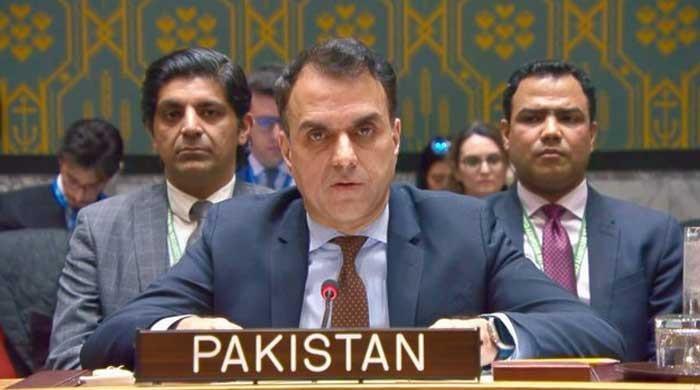
At the United Nations Security Council (UNSC), Pakistan strongly condemned Israel’s “unilateral and illegal” recognition of the “Somaliland” region of the Federal Republic of Somalia, which drew condemnation from the Organization of Islamic Cooperation (OIC) and other countries.
“It is a direct attack on Somalia’s internationally recognized borders,” Pakistan’s acting permanent representative to the UN, Ambassador Usman Jadoon, said during his address to the UN Security Council on Monday.
He added that Tel Aviv’s move “constitutes a flagrant violation of international law.”
Israel on Friday became the first country to formally recognize the self-proclaimed Republic of Somaliland as an independent and sovereign state. This decision could reshape regional dynamics and test Somalia’s long-standing opposition to secession.
Pakistan’s Foreign Ministry reacted strongly to the Israeli announcement, calling it a violation of international norms and affirming Islamabad’s full support for the sovereignty, unity and territorial integrity of Somalia.
The OIC and other countries, in a joint statement issued on Sunday, criticized Israel’s recognition of Somaliland, calling it a threat to international peace and security.
China and the United Kingdom are also among the countries that refused to recognize the Somaliland region as independent.
“The ‘Somaliland’ region remains an integral, inseparable and inalienable part of Somalia. No external actor has the legal capacity or moral authority to alter that fundamental reality,” the envoy said.
“A group of OIC countries, including Pakistan, have unequivocally rejected Israel’s illegal move, pointing out its serious implications for peace and security in the Horn of Africa, the Red Sea region and international peace and security as a whole. The joint statement calls ‘recognition of parts of States’ a violation of the cardinal principles of international law and the United Nations Charter,” Jadoon said.
The ambassador praised the Somali government led by President Hassan Sheikh Mohamud for making progress on national reconciliation, constitutional reforms and the revitalization of state institutions.
“Likewise, the two-year gradual transition of the United Nations presence in Somalia is proceeding smoothly. The handover of responsibilities in the first phase of the United Nations Transitional Assistance Mission in Somalia (UNTMIS) has been completed, and the roadmap for the second and final phase has been finalized, and the Mission is scheduled to cease operations on 31 October 2026.”
Islamabad also recognized the sacrifices and resilience of the Somali people and their security forces, supported by the AU and UN missions, against terrorism.
Pakistan urged that positive momentum be protected and strengthened, and not undermined by actions that risk fragmenting the country and reversing hard-won gains.
“Therefore, at this crucial juncture, when Somalia is focused on defeating extremism, any action that diverts attention, weakens cohesion or fuels division is deeply irresponsible.”
In the context of Israel’s previous references to Somaliland as a destination for the deportation of Palestinians, especially from Gaza, Jadoon said its illegal recognition of the region is deeply worrying.
“For decades, Israel’s dispossession and occupation of Palestinian lands have been a central source of instability and conflict in the Middle East,” the envoy said.
“It is now exporting this destabilizing behavior to the Horn of Africa, with serious implications for regional peace and security,” he added.
In conclusion, Pakistan called on the Security Council and the international community at large to speak with one voice and reject all actions that undermine the unity and territorial integrity of Somalia.