
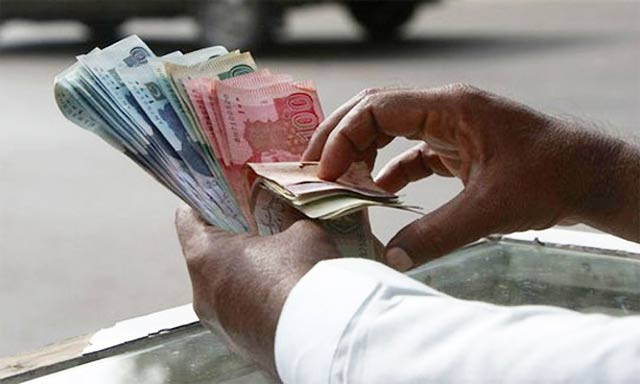
Pakistanis spent two out of every three rupees on just two basic needs – food and shelter – as reliance on foreign remittances and financial assistance increased to meet rising expenses, a new survey by the government showed. Expenses have increased at a faster rate than income due to ongoing economic pressure and rising cost of living, according to the Integrated Household Economic Survey 2024-25, released by Planning Minister Ahsan Iqbal on Thursday. The results of the survey, conducted after a gap of more than six years under pressure from the International Monetary Fund (IMF), have shed light on how inflation has consumed people’s hard-earned money, leaving only 2.5% available to spend on education. Spending on education was less than half the cost of hospitality. According to the survey, the share of foreign remittances in household income has increased from less than 5% to almost 8%. The gift and assistance contribution also more than doubled to 4.6%. "indicating greater dependence on informal support networks"stated the official report. According to independent experts, there has been an exodus of youth and talent from Pakistan due to limited employment opportunities. These findings show how difficult it has become for people to make ends meet. Rural households relied more on foreign remittances, which doubled in six years and indicate fewer employment opportunities available to the majority of the country’s population. The increased reliance on foreign remittances and assistance from others reflects reduced domestic sources of income and the impact of double-digit inflation, according to a senior Pakistan Bureau of Statistics (PBS) official. The PBS, which is under the administrative control of the Ministry of Planning, conducted the survey between September 2024 and June 2025. The survey report indicated that the average monthly income has increased significantly in all households over the past six years. But urban households recorded higher income levels than rural households, rising from Rs 53,000 to Rs 96,767. The overall average income increased from Rs 41,545 to Rs 82,179 in six years, averaging 16.3% annually. But there were also large income disparities. In the last fiscal year, the poorest quintile earned Rs 41,851 a month, compared to Rs 139,317 for the richest 20%. According to the report, compared to a 16% increase in monthly income, expenses increased by a fifth during this period. The average monthly consumer expenditure increased from Rs 37,159 to Rs 79,150, an average increase of 19% annually. Bills
"The data reveals a clear concentration of spending on essential categories, reflecting current economic pressures, changing consumer behavior and evolving household priorities." the survey stated. Compared to the 2019 survey, overall household consumption in the last fiscal year increased, reflecting the rising cost of living, changing consumption priorities, and improved access to goods and services. The data showed that households spent on average 63% of their total expenses on just two functions: food and shelter with electricity and gas facilities. The data further showed that household spending is the highest on food, at 37%, followed by 26% on housing, electricity and gas, reflecting the rising cost of basic foods and utilities, according to the survey. Pakistanis faced multiple challenges over the past few years, including record double-digit inflation, unprecedented currency devaluation causing imported inflation, and harsh conditions of IMF programs that mostly burden middle-income groups. The survey showed that spending on food and housing was higher than in the 2019 era, which also reinforced the adverse impacts of double-digit inflation and the results of the conditions set by the IMF translated into more taxes and higher energy prices. Within the food group, expenditures on milk were the highest at 22%, followed by 12% on wheat, 9% on wheat, and 6% on cooking oil. After spending 63% on just two items, there was little available to spend on developing the mind and a healthy body. According to the survey, combined household spending on education, health and recreation stood at just 7% in 2024-25. The lowest expenses are recorded in education, only 2.5%, health 3.4% and recreation 1.1%, indicates the official report. The data further revealed that spending on education has almost halved compared to six years ago, while spending on health has remained the same. "widely stable". There was also less spending on clothing. The survey indicated that the largest increase was in spending on housing, electricity and gas, followed by 6.6% on restaurants and 6.3% on clothing. Spending on restaurant dining was more than double spending on education. The highest ratio of expenses in restaurants corresponds to the highest income groups.


