
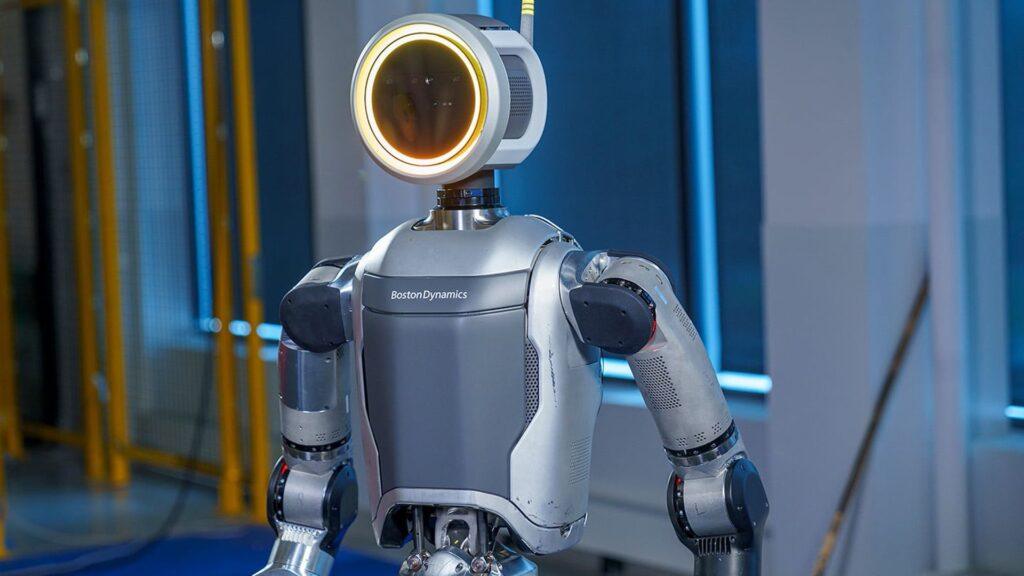
One of the world’s most advanced humanoid robots is finally ready to go. Boston Dynamics and its partner, Hyundai Motors, introduced the Atlas product at CES 2026 in Las Vegas on Monday (January 5).
After developing impressive robotics for more than three decades and spending years building Atlas (first primarily hydraulic and now all-electric), this new version of Boston Dynamics’ humanoid will join the company’s Spot square robot in manufacturing.
We are covering all the latest news. CES news of the program as it happens. Stay with us for the big stories on everything from 8K From foldable TVs and screens to new phones, laptops, smart home devices and the latest in artificial intelligence.
And don’t forget follow us on tiktok For the latest from the CES fair!
According to a release, the Atlas product brings with it 56 degrees of freedom, battery replacement, significant strength (it can lift up to 110 pounds), and even weather resistance, which can be valuable in some factory environments.
The Atlas humanoid product is also equipped with human-like hands that include touch sensors, and the company claims it can be trained for new tasks in less than a day.
Even with all this, Atlas is not punching time cards just yet. Together with its partner Hyundai, Boston Dynamics has a phased plan to introduce Atlas first at the auto company’s Hyundai Motor Group Metaplant America in Savannah, Georgia.
Its initial work will be sequencing parts, but by 2030, the Atlas product could be working on assembling components. According to the statement, “Atlas will also take on tasks that involve repetitive movements, heavy loads and other complex operations.”
The goal here, however, is not the replacement of human workers but “safer work environments for factory employees.”
Boston Dynamics achieved this milestone, in part, with the help of Nvidia’s artificial intelligence models and infrastructure to accelerate the training of physical robotics. That partnership has existed since early last year.
Not content to lean on one AI leader, Boston Dynamics also announced a strategic partnership with Google’s DeepMind. The two will work together on the development of Google’s “core AI models of cutting-edge robots.” What that likely means is that Atlas’ training and skills may accelerate in 2026.
What’s missing here is any mention of costs, even per robot. The spot usually costs $75,000 a piece. The Atlas Humanoid product is likely to be at least double (if not triple) that size. Boston Dynamics also distinguishes itself from competitors like 1X (Neo Beta), Figure AI (Figure 03), and Tesla Optimus, all of which have plans (some coming soon) to deploy humanoid robots in homes. Atlas’ robotic sights are firmly fixed in the factory space.
TechRadar will cover this year’s edition extensively CESand will bring you all the important announcements as they happen. Go to our CES 2026 News page for the latest stories and our hands-on verdicts on everything from wireless TVs and foldable screens to new phones, laptops, smart home devices and the latest in artificial intelligence.
And don’t forget follow us on tiktok and WhatsApp For the latest from the CES fair!


