
- Nvidia has improved its G-Sync technology to completely eliminate motion blur
- G-Sync Pulsar works using pulsating technology with individually divided backlight sections
- Pulsar compatible monitors will be launched on January 7, 2026
CES 2026 is underway, and while Nvidia has been holding off on any new GPU announcements, there’s plenty to get gamers excited in 2026 regarding DLSS 4.5 and improvements to motion clarity when gaming.
Nvidia has introduced its new G-Sync Pulsar technology, which is scheduled to launch on January 7, and new gaming monitors compatible with Acer, Asus, AOC and MSI Pulsar will be launched on the same date. This new technology seeks to evolve the variable refresh rate (VRR) to eliminate motion blur issues while allowing users to benefit from smooth gameplay.
G-Sync in its current form has been around for a long time, and this new version was already teased at CES 2024, but now it’s finally ready and launching on new monitors for gamers to enjoy.
With VRR, monitors typically work to ensure that the game’s frame rate matches the GPU’s frame rate, which helps reduce visual issues like stuttering and choppy gameplay. It was a successful addition, but not without motion blur issues coming into play.
Nvidia previously released Ultra Low Motion Blur models (ULMB and ULMB 2) to address motion blur issues, but this only worked at fixed refresh rates and would cause flickering if not used at those fixed rates. This ultimately prevents it from working in conjunction with VRR (aka Nvidia’s G-Sync), as it includes dynamic display refresh rate adjustment.
Image 1 of 2
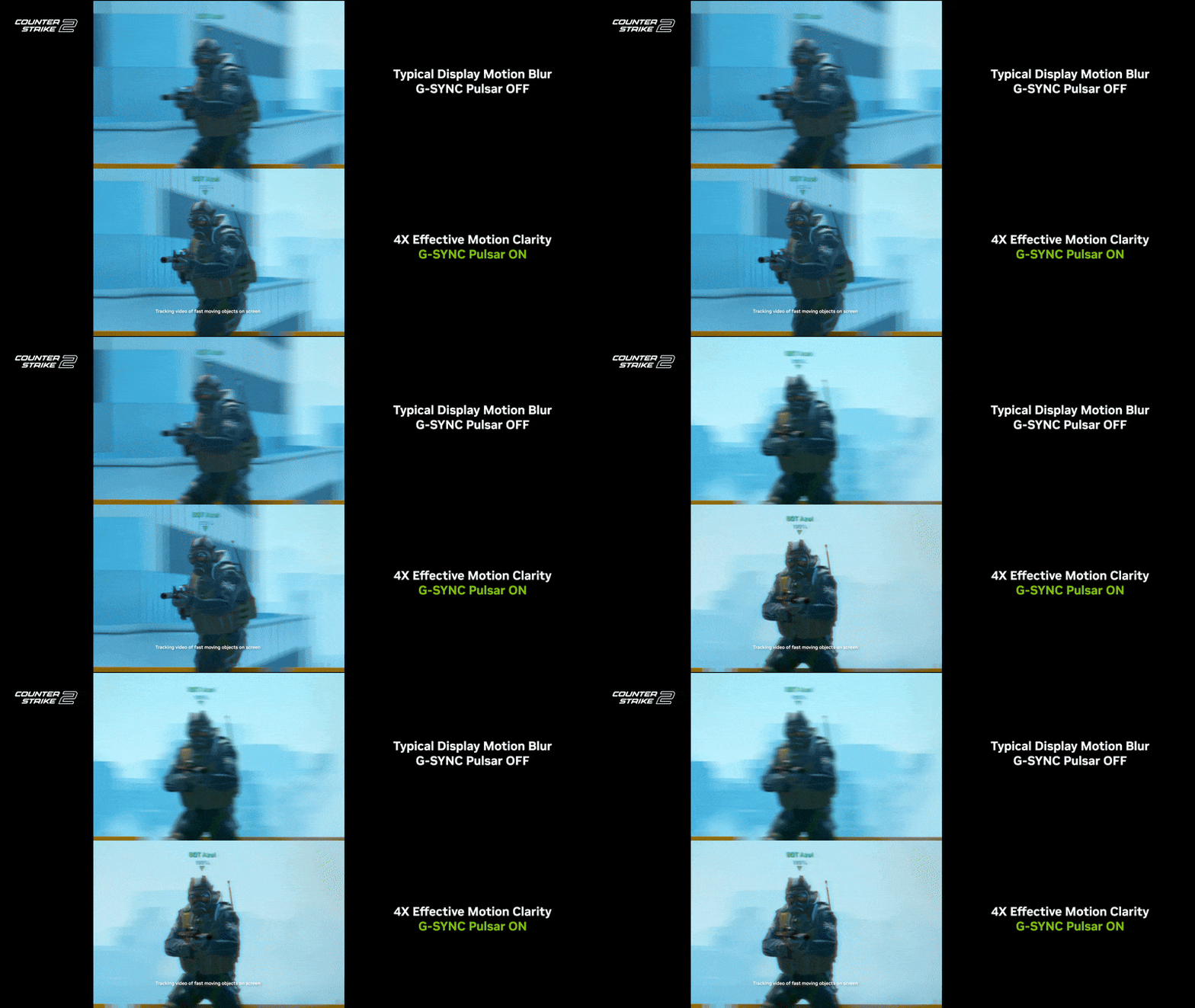
Now, Team Green has found a new solution with G-Sync Pulsar. This only works on Pulsar compatible displays (of course) via multiple horizontal backlight sections, each using pulsations via a ‘rolling scan’. Nvidia claims that these pulses occur at “25% of the frame time,” giving the pixels enough time to stabilize before being backlit.
Basically, this provides much better motion clarity, as you can see in the image above, as motion retention times are four times shorter than before (which was the cause of the motion blur). What this means in simpler terms is that gaming at 250fps will feel like gaming on a 1000Hz monitor when using G-Sync Pulsar.
It’s a big leap forward in VRR technology for Nvidia and one that monitor manufacturers should include in the future; Luckily, that starts with the Asus ROG Strix Pulsar XG27AQNGV and others starting at $599.
This is the next generation of motion clarity, and while Nvidia is focusing on AI, G-Sync Pulsar and DLSS 4.5 indicate that it’s not leaving gaming behind entirely, and I’m certainly happy about that.
TechRadar will cover this year’s edition extensively CESand will bring you all the important announcements as they happen. Go to our CES 2026 Live News page for the latest stories and our hands-on verdicts on everything we’ve seen.
You can also ask us a question about the show on our CES 2026 Live Q&A and we will do our best to answer it.
And don’t forget follow us on tiktok For the latest from the CES fair!


