
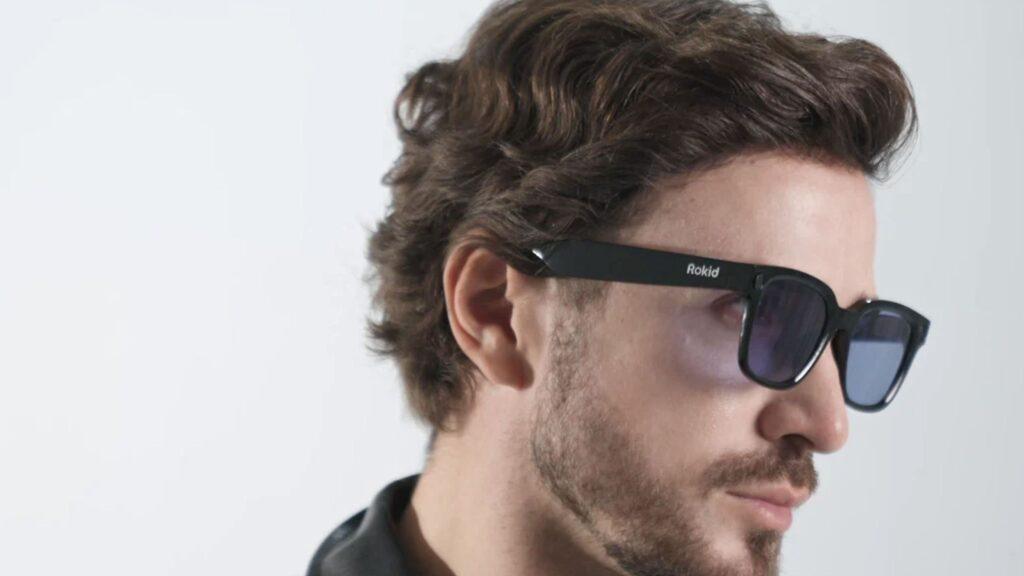
- Rokid’s new style of AI glasses is available for pre-order
- AI-powered sunglasses have no screen and use voice commands
- Rokid AI glasses style works with ChatGPT-5
Screenless AI wearables are quietly having a moment, and Rokid’s new style of AI glasses may be the clearest sign yet of where smart glasses are headed.
Launched at CES as a new competitor to Meta’s Ray-Ban AI glasses, the Rokid AI style of glasses ditches the screen and lowers the price in the process. And although the Rokid AI style of glasses doesn’t carry the Ray-Ban logo on the frame, they look strikingly similar to Meta’s AI glasses.
Interestingly, the Rokid AI Glasses Style are designed without any display, allowing them to remain lightweight at just 38.5g. At $299, they’re also $80 cheaper than Meta’s offering.
The Rokid AI glasses style is activated with a simple voice command: “Hello Rokid.” They’re designed for voice-first AI tasks, like asking about what you’re seeing, translating conversations in real time, and summarizing meetings, all without taking out your phone.
It’s all powered by its built-in AI assistant, which is powered by ChatGPT-5.
All-day battery
With the built-in 12MP camera, you can take photos via voice command (“Hey Rokid, take a photo”) or record 4K video records hands-free.
The glasses offer up to 12 hours of battery life, which should be enough to get you through a full day. There is also an optional 3000 mAh charging case and a 1700 mAh battery pod for extended use.
The Rokid AI glasses style is now available for pre-order, giving you priority shipping and a $20 discount. The glasses can also be equipped with prescription lenses in different colors.
Say goodbye to your phone in 20206?
While screenless AI devices have been around for some time, they have so far failed to capture the public’s imagination. That seems to be changing and we are reaching something of a tipping point.
The shift arguably began with the announcement of OpenAI’s upcoming ChatGPT wearable, designed by Jony Ive. The device is rumored to arrive in the first quarter of 2026. As this year’s CES already demonstrated, screenless AI devices may be leading the next wave of hardware.
Razer just unveiled its Motoko headset at CES, a wearable device with audio that can “see” the world around you but communicate entirely through voice, and now Rokid has announced AI-powered screenless glasses that look like they’re capable of giving Meta’s Ray-Ban sunglasses a real run for their money.
If Rokid is right, 2026 won’t be about replacing your phone. It will be about needing it a little less, as long as the sun rises.
TechRadar will cover this year’s edition extensively CESand will bring you all the important announcements as they happen. Go to our CES 2026 News page for the latest stories and our hands-on verdicts on everything from wireless TVs and foldable screens to new phones, laptops, smart home devices and the latest in artificial intelligence. You can also ask us a question about the show on our CES 2026 Live Q&A and we will do our best to answer it.
And don’t forget follow us on tiktok and WhatsApp For the latest from the CES fair!


