
Sources say the ordinance in question is the Special Economic Zone Ordinance, but the Law Ministry is not sure if approval was circumvented.
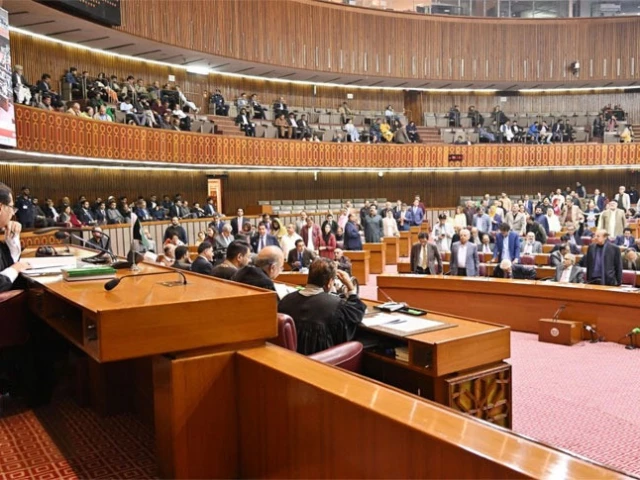
The Pakistan People’s Party (PPP) has strongly criticized the ruling government for issuing an ordinance without the approval of President Asif Ali Zardari. The move sparked outrage and led to a walkout by PPP members in the National Assembly.
Led by Syed Naveed Qamar, PPP legislators staged the strike in protest against the notification, which was allegedly issued without the President’s signature. The strike left the assembly without a quorum, delaying proceedings by 15 minutes.
Qamar described the day as the “darkest in parliamentary history”, emphasizing that no previous incident in Pakistan’s history involved an ordinance being issued without the president’s approval. “This is an unprecedented development and we will not accept it,” he said, adding that it undermines the constitutional process.
In response, Law Minister Azam Nazeer Tarar acknowledged the PPP’s concerns and assured that the matter would be reviewed. He noted that conflicting reports about the ordinance had circulated on social media.
Sources indicated that the ordinance in question is the Special Economic Zone Ordinance; However, the Ministry of Justice is still not sure if said ordinance was actually issued without the president’s approval.
Read more: Islamabad Local Government Act amended and city elections restarted
Earlier, President Asif Ali Zardari issued an ordinance amending the Islamabad Capital Territory Local Government Act, reshaping the federal capital’s local government structure and forcing another restart of the city’s delayed municipal electoral process.
The Islamabad Capital Territory Local Government (Amendment) Ordinance, 2026 was promulgated on January 9 and published the next day, according to the gazette notification.
The ordinance replaces the “Metropolitan Corporation” model with “Municipal Corporation” structures throughout the law. It requires Islamabad to be divided into three municipal corporations, each aligned “as far as practicable” with the territorial boundaries of a National Assembly constituency.
Each Municipal Corporation will contain as many union councils as notified by the federal government, and the union councils must be delimited based on demographic equality and administrative convenience, using the latest official census.


