
- AMD Ryzen AI Halo delivers extreme computing power in a device smaller than most hands
- Developers get full connectivity without relying on external adapters or docking stations
- Support massive AI models locally with 128GB memory access
AMD used its keynote at CES 2026 to introduce Ryzen AI Halo, a compact development kit aimed at on-premise AI workloads rather than general consumer computing.
The system is based on Ryzen AI Max 300 series processors, also known as Strix Halo, and is scheduled to be available in the second quarter.
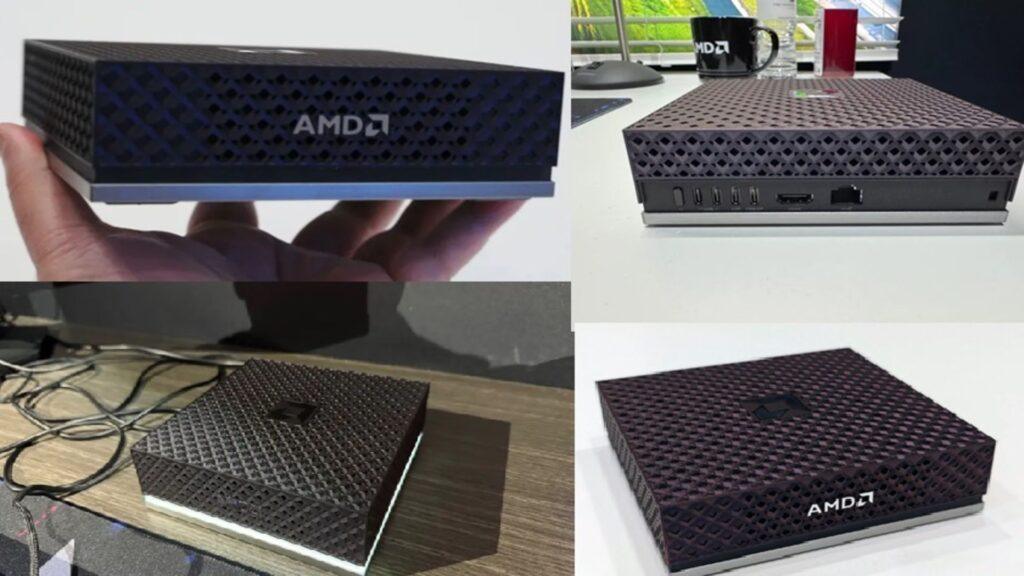
Close-up images now reveal how small the device really is, reflecting AMD’s decision to emphasize form factor along with computing density.
Extreme compactness without compromises
The Ryzen AI Halo is small enough to fit completely in the palm of an adult’s hand, with a footprint smaller than most compact desktop computers and a height that barely exceeds a stack of two thick external hard drives.
Its dimensions are noticeably smaller than those of typical mini PCs, making it one of the most compact development systems on offer.
Despite this small form factor, the device includes a full complement of ports, with four USB Type-C, HDMI, and Ethernet connectors providing the connectivity typically expected from much larger desktop computers.
Users do not need additional adapters or docking stations to connect displays, storage or networks, which is unusual for a device of this volume.
The Ryzen AI Halo ships without Windows or any operating system preinstalled, making it clear that it is a mini PC aimed at developers rather than general-purpose desktops.
This choice reinforces its role in running AI workloads locally under Linux or other supported environments rather than serving as a plug-and-play office device.
The case also shows subtle attention to detail, with a checkered grid pattern on the top surface and a small AMD logo visible upon close inspection.
In addition to the Strix Halo processor, which integrates CPU, GPU and NPU resources, the device supports up to 128 GB of LPDDR5 memory in four channels.
It also features a unified memory architecture that allows the GPU to access a large portion of the system memory.
The laptop PC market is crowded, with more than 35 Strix Halo devices already available, and the hardware alone is no longer enough to stand out.
AMD seems to be aware of this, which explains why Ryzen AI Halo emphasizes compact size, a full set of connectors, and the flexibility for users to choose their own operating system.
Despite its familiar mini-PC appearance, AMD does not market this device as a desktop replacement or as an office system.
As of this writing, there is no official pricing information, although Strix Halo devices generally average around $1,500 and can go up to $2,500.
Through hot hardware | Heise | PC clock
Follow TechRadar on Google News and add us as a preferred source to receive news, reviews and opinions from our experts in your feeds. Be sure to click the Follow button!
And of course you can also follow TechRadar on TikTok for news, reviews, unboxings in video form and receive regular updates from us on WhatsApp also.


