
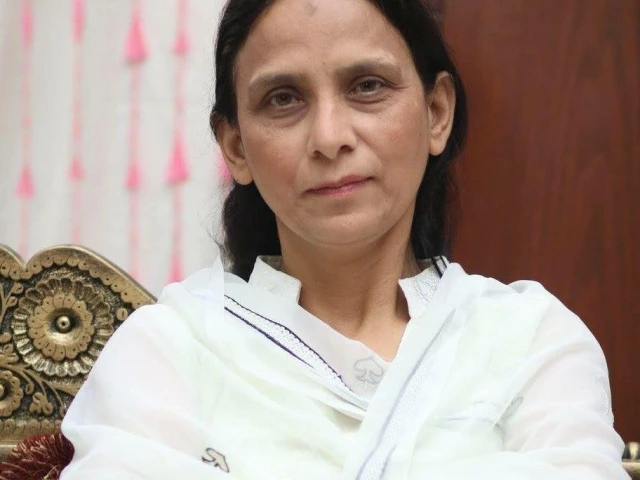
MNA Shahida Rehmani. Photo: Facebook
ISLAMABAD:
Female legislators (members of the National Assembly and senators) have emphasized the need for greater participation of women in legislation aimed at protecting the fair sex from abuse, harassment and injustice.
The Women’s Parliamentary Caucus (WPC) of the National Assembly presented its Annual Report 2024-25 at Parliament House, Islamabad. The launching ceremony, convened by MNA Shahida Rehmani, was moderated by NA Special Secretary Syed Shamoon Hashmi.
The Annual Report 2024-25 highlighted the main achievements, initiatives and challenges addressed by the Women’s Parliamentary Group during the year.
In her keynote address, Shahida recognized the contributions of WPC members to advancing gender-responsive legislation, strengthening parliamentary oversight on gender issues, and expanding the reach of the caucus across party lines.
He reaffirmed the WPC’s commitment to ensuring that gender-sensitive legislation remains a central component of the parliamentary agenda.
Among the notable notable achievements is the convening of Pakistan’s first Commonwealth Women Parliamentarians (CWP) Workshop on Gender Responsive Legislation after a gap of four years, with the participation of international parliamentarians.
The presentation of the report highlighted several landmark initiatives, including the establishment and strengthening of provincial and legislative chapters of the WPC in all four provincial and legislative assemblies, achieved for the first time in the history of Pakistan.
On the occasion, Senator Rubina Qaimkhani proposed the formation of parliamentary committees to comprehensively review the harassment legislation and address existing loopholes.
MNA Tahira Aurangzeb underlined the importance of a non-partisan approach towards gender equality and highlighted the role of parents in fostering respect and equality from a young age.
MNA Munaza Hassan highlighted improved coordination between the national, provincial and legislative assemblies to ensure cohesion among all WPC chapters.
MNA Samar Haroon Bilour highlighted the impact of terrorism and security challenges on women, particularly those who have lost male family members, and emphasized the inclusion of women legislators in economic and security-related decision-making.
She also called for increasing employment quotas for women in Khyber Pakhtunkhwa and other provinces.
Senator Rubina Khalid advocated for internship opportunities for deserving law and social science students within parliamentary and legislative bodies.
He emphasized the adoption of international best practices to curb cybercrime, along with greater Senate representation on the WPC Working Council.
MNA Farrukh Khan highlighted the importance of gender balance and mutual support between men and women for sustainable empowerment.
Senator Khalida Ateeb highlighted the strict implementation of laws related to the protection, welfare and rehabilitation of women.
MNA Asma Arbab Alamgir emphasized the need to allocate adequate funds to female parliamentarians and called for the establishment of government bodies dedicated to protecting vulnerable women and children, particularly in light of the rise in human trafficking.


