
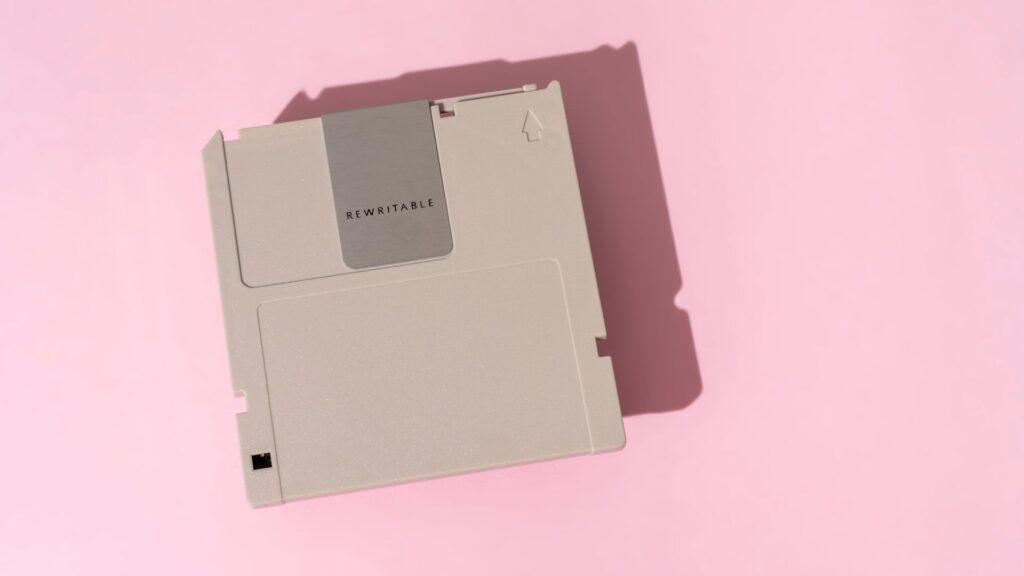
- TV remote control is replaced by labeled discs and a simple action
- Toddlers can select programs without reading icons, touching screens, or scrolling through tiles
- Floppy disks limit options by design and reduce accidental changing of content
Floppy disks were once a routine part of home computing, used to load software, save documents, and move data between machines.
They disappeared from everyday use as optical disks and later SSD-based storage replaced them for local file transfer, while cloud storage completely reduced the need for physical media.
Developer Mads Chr. Olesen has repurposed floppy disks into a tangible selection system that allows your child to choose television programs by inserting a disk into a drive.
Turn show selection into a physical action
Olesen believes that “floppy disks are the best storage medium ever invented” and applies that belief to a kid-friendly television control system.
The system, called FloppyDiskCast, describes the general setup, although its function differs from that of traditional streaming hardware.
It uses outdated hardware to replace touchscreens and multi-button remotes, and the puck functions as a physical selector rather than a storage device.
The TV’s control settings assign each floppy disk a specific program, eliminating the need for menus or scrolling interfaces.
Each disc features a visual label, making it clear which program will play once inserted, and when a child places a disc in the drive, that action alone determines what appears on the screen.
This reduces the interaction to a single, repeatable movement that does not depend on reading or symbolic navigation.
The FloppyDiskCast system creates the impression that the program resides on the disk itself, although playback occurs through a connected streaming device rather than a local hard drive.
That illusion reflects how removable media worked before, where inserting an object directly produced visible results.
The system’s structure avoids the layered complexity found in many smart TV setups, and Olesen’s approach reflects concerns about how current smart TV controls work for very young users.
Standard remote controls and touch controls often combine ads, recommendations, and settings within the same interface.
For a young child, this can lead to confusion rather than choice. The floppy-based system limits options by design, as only available disks can be selected.
This restriction encourages focused viewing and prevents accidental navigation to unrelated content.
Comments on the project include phrases like “floppy disks are great,” although the practical emphasis remains on interaction design rather than nostalgia.
Although this project shows how restricted physical interfaces can reduce cognitive load, it does not address scalability beyond a limited number of programs.
This is unlikely to be a problem, as experts recommend limiting screen time to one hour per day for children ages 2 to 5.
Children between 18 months and 2 years old are recommended to have even less exposure, while babies under 18 months are generally advised to avoid screen time altogether, except for video chatting.
Through Tom Hardware
Follow TechRadar on Google News and add us as a preferred source to receive news, reviews and opinions from our experts in your feeds. Be sure to click the Follow button!
And of course you can also follow TechRadar on TikTok for news, reviews, unboxings in video form and receive regular updates from us on WhatsApp also.


