
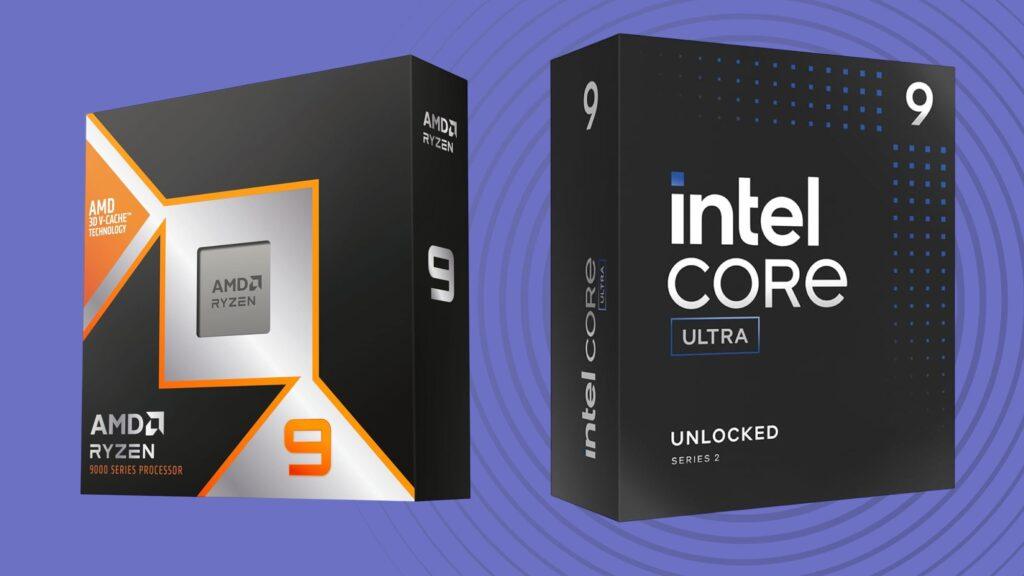
- AMD desktop shipments increased from 3 million to more than 35 million units quarterly
- Intel’s server share fell from 97% in 2019 to 72% in 2025
- AMD EPYC revenue grew from less than $100 million to $3.5 billion (3,400%) in 8 years
Intel’s market share in the desktop segment has declined since 2017, coinciding with the introduction of AMD’s first Ryzen CPUs.
Although Intel regained some ground with its 12th-gen Alder Lake and 13th-gen Raptor Lake chips, reports indicate that thermal and performance issues in later generations pushed many DIY enthusiasts and OEMs to switch to Ryzen processors.
AMD has steadily increased its share in desktop computers to over 30%, while Intel now owns around 60%.
AMD Adoption Trends Continue to Increase
Between 2017 and 2025, AMD desktop unit shipments increased from approximately 3 million to more than 35 million per quarter.
In the laptop segment, AMD’s growth has been limited to about 20% share due to competitive ARM-based alternatives.
However, Apple and AMD have indirectly benefited from Intel’s weaker positioning in this market.
Intel’s decline also appears in the server segment, where EPYC processors have driven important changes in the market.
AMD launched the first EPYC family, Naples, in 2017, and early adopters reacted with surprise to its performance and efficiency.
Initial adoption of EPYC represented approximately 5% of new server deployments in 2017 and grew to 28% in 2025.
The processors gained traction among enterprise customers and cloud hosting providers seeking higher core counts and better performance per watt.
Intel’s server unit share fell from 97% in early 2019 to around 72% in 2025, and revenue share fell to about 61%.
AMD’s EPYC is now approaching 30% of the server market, up from less than 2% in 2018, according to Mercury Research.
Its revenue share also grew from less than $100 million in 2017 to more than $3.5 billion in 2025.
Successive updates to the Zen architecture and the introduction of X3D chips helped fuel AMD’s rise.
Cloud storage and hosting environments increasingly favor EPYC processors due to their scalability and power efficiency.
Intel continues to compete with offerings like the fifth-generation Xeon for AI workloads and claims advantages in certain optimized scenarios.
However, adoption data shows that its overall unit and revenue share continues to decline in the client and server markets.
Intel’s server shipments fell from about 12 million units in 2019 to less than 8.5 million in 2025.
Although Intel remains the largest supplier in both segments, its declining market share points to increasing pressure from AMD.
Customer CPU markets show slower recovery prospects, while servers and cloud infrastructure continue to shift toward high-core, high-efficiency alternatives.
Observers note that the continued adoption of EPYC processors in cloud hosting and enterprise servers could further accelerate AMD’s growth, leaving Intel’s long-term leadership increasingly uncertain.
Analysts estimate that by 2026, AMD could capture more than 35% of the server market if current growth trends continue.
Through WCC technology
Follow TechRadar on Google News and add us as a preferred source to receive news, reviews and opinions from our experts in your feeds. Be sure to click the Follow button!
And of course you can also follow TechRadar on TikTok for news, reviews, unboxings in video form and receive regular updates from us on WhatsApp also.


