
Jibran Nasir questions judge’s jurisdiction; Shireen Mazari considers the sentence “totally illegal”
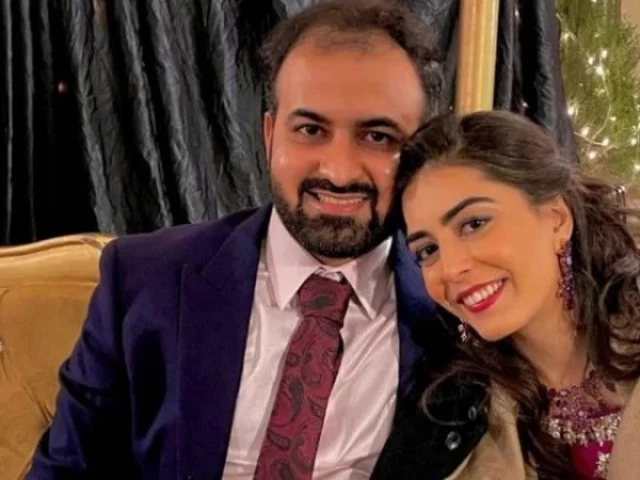
Human rights lawyer and social activist Imaan Mazari and her husband Hadi Ali Chattha. Photo archive
Political parties, parliamentarians and members of the legal community on Saturday condemned the conviction and sentencing of human rights lawyer Imaan Mazari and her husband, lawyer Hadi Ali Chattha, calling the verdict “unjust” and a “serious miscarriage of justice.”
A district and sessions court in Islamabad on Saturday convicted them in a case related to controversial social media posts and sentenced them to 17 years in prison.
The case concerns alleged posts and reposts on X, formerly Twitter, which authorities described as “anti-state.” The National Cyber Crime Investigation Agency (NCCIA) registered the case in August last year under the Prevention of Electronic Crimes Act (Peca) 2016, alleging that the content was aimed at inciting divisions and negatively portraying state institutions.
The couple was arrested on Friday in Islamabad while allegedly on their way to the district courts, and the court announced its verdict today.
تحریک تحفظ آئین پاکستان ایمان مزاری اور ہادی علی چٹھہ کے خلاف غیرمنصفانہ اور غیرآزادانہ ٹرائل کے بعد سنائی گئی دس دس سال قید کی سزا کی سختی سے مذمت کرتی ہے۔ – خوفزدہ، زیرِ دباؤ عدالتی ماحول کا شاخسانہ ہے، جہاں انصاف کے… pic.twitter.com/FvbQHLT8JP
— Tehreek-e-Tahafuz-e-Ayin-e-Pakistan (@TTAP_OFFICIAL) January 24, 2026
‘Unfair and non-transparent trial’
The Tehreek-e-Tahaffuz-e-Ayeen-e-Pakistan (TTAP) condemned what it described as an “unfair and opaque trial” and said the verdict violated “the fundamental principles of judicial independence.”
In a statement, the opposition coalition said the decision reflected “an atmosphere of fear and pressure within the judiciary, where political objectives were prioritized over the administration of justice.”
He called the verdict “a stain on democracy and justice” and demanded the immediate release of both individuals.
‘Complete moral and institutional collapse’
The Pakistani Tehreek-e-Insaaf newspaper expressed concern over the alleged mistreatment inflicted on the couple, calling it “scandalous.”
He criticized the authorities for what he called a “complete moral and institutional collapse.”
“Serious miscarriage of justice”
TTAP leader and newly appointed leader of the opposition in the Senate, Raja Nasir Abbas, called the verdict a “serious miscarriage of justice”.
In a post on
And he added: “The unfair sentences, procedural irregularities and apparent motivations behind the case reveal a use of the law as a weapon to silence dissent and intimidate those who defend vulnerable groups.”
“A farce beyond any doubt”
Lawyer and civil rights activist Jibran Nasir also questioned the judge’s competence to hand down the sentence. Nasir wrote in
He added: “We submitted this Transfer Application on behalf of Imaan and Hadi on 12.05.2025, requesting the transfer of the trial from the court of Afzal Majoka. The application is yet to be heard and decided.”
Judge Afzal Majoka does not have jurisdiction to sentence the lawyers @ImaanZHazir and @AdvHadiali as he is expressly prohibited from passing final judgment under Section 526(8) Cr.PC till the final disposal of the transfer application pending before the Islamabad High Court… pic.twitter.com/byo17uBBbB
– M. Jibran Nasir 🇵🇸 (@MJibranNasir) January 24, 2026
“This act of Judge Afzal Majoka is coram non judice. It is not a court order, it is a nullity and it is not even worth the paper it is written on,” Nasir wrote.
Condemning the decision, he stated: “Imaan and Hadi are not convicted, but this trial has proven to be a sham beyond doubt and has irreparably prejudiced Imaan and Hadi’s right to a fair trial and therefore the trial must be considered flawed.”
‘Totally illegal’
Imaan’s mother and former federal minister Shireen Mazari similarly challenged the decision, calling it “totally illegal”.
“There are no feet to stand on”
Meanwhile, journalist Mariana Baabar called the decision a “clear message to others who rise up to challenge and question the State.”
In another tweet, he said: “When the judiciary itself flouts the law they are obligated to protect. From the beginning, the case was baseless.”
Human rights journalist Alifya Sohail questioned the ruling on
How could Justice Afzal Majoka overrule the Supreme Court and High Court to sentence Imaan Mazari and Hadi Ali Chattha to 17 years while their transfer petition in that case is still pending? pic.twitter.com/ZF3m0ViurO
—Alifya Sohail (@AlifyaSohail) January 24, 2026
‘Appalling’
Lawyer and columnist Reema Omer called the sentence “shocking” and said it should alarm anyone who believes in dissent and freedom of expression.
The sentence against Imaan and Hadi is appalling and should be a cause of concern for anyone who believes in dissent and freedom of expression.
They have been convicted under section 9 of the PECA for posting and re-posting tweets “in favor” of Mahrang Baloch, who is a “proscribed individual”… pic.twitter.com/6QSvvYAVuj
—Reema Omer (@reema_omer) January 24, 2026
Lawyer Ayman Zafar said the worrying aspect was not just the allegation of ill-treatment but the “increasing casualness” with which such complaints appeared during court proceedings.
He added in a statement that “being under investigation does not place anyone outside the protection of the law.”
Zafar said a system that relies on its authority does not need to rely on discomfort or coercion to assert control, and emphasized that if the State believes its case is strong, it should allow the legal process to speak for itself.
Any action that seemed excessive, he said, distracted from the merits of a case and raised questions that need not have arisen in the first place.
‘Punishment disguised as a process’
Constitutional lawyer Usama Khawar Ghumman said the process did not amount to due process and described it as “a punishment disguised as a process.”
In a statement, he said that in a “colonial state, the process is the punishment,” adding that keeping people imprisoned for long periods made appeals meaningless. While the convictions were likely to be overturned on appeal, he explained that by then they would have lost their freedom, with no compensation or accountability from the prosecution or the system.
He said the law was being used as an “instrument of control” rather than a means of justice.
‘Self-pursuit’
For his part, lawyer Moiz Baig stated that the convictions were not a surprise, given the way in which the process against the couple was developed.
However, he added: “What is disconcerting is the way in which the bar has acquiesced in the persecution of its own. The conviction of Imaan and Hadi sends a message to the entire bar that those who defend those persecuted by the state will also be victims of state power.”
“Absurd mockery of justice”
Lawyer Taimur Malik called the sentences “absurd.”
Sentencing Imaan Mazari and Hadi Ali Chattha to ten years in prison in a tweeting case is absurd. In this season of sentencing you can be sentenced to ten years for anything or nothing. Expect the PPP and PMLN people to keep quiet about this and wait their turn too.
– Taimur Malik (@taimur_malik) January 24, 2026
He went on to say, “Let’s hope the people of PPP and PML-N stay quiet about this and wait their turn too.”
Taimur Jhagra, former finance minister of Khyber-Pakhtunkhwa, called the situation a “mockery of justice.”
The convictions of Imaan Mazari and Hadi Ali are a mockery of justice.
But they are meant to be.They said the problem was with PTI. But Imaan has been one of the biggest critics of the PTI ever.
I say it again. A State that cannot tolerate dissent and diversity of opinions is…
– Taimur Saleem Khan Jhagra (@Jhagra) January 24, 2026
“Completely illegal, unconstitutional and baseless order, without any basis in due process,” said digital rights activist Usama Khilji.
Completely illegal, unconstitutional and baseless order without any basis in due process, especially since the transfer application is pending in the High Court.
Sentence human rights lawyers for 10 years and Rs. A 36 million fine for tweeting rights violations makes Pakistan a laughing stock.– Usama Khilji (@UsamaKhilji) January 24, 2026
Journalist Benazir Shah said the decision had left Pakistan even poorer, “morally and legally.”
Imaan and Hadi defended the victims of blasphemy accusations and the relatives of the missing, the most vulnerable and silenced people in the country.
By punishing Imaan and Hadi, we have become much poorer, morally and legally.
-Benazir Shah (@Benazir_Shah) January 24, 2026


