
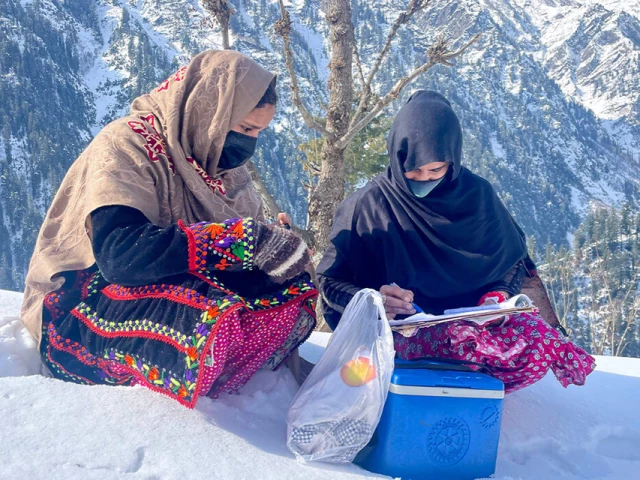
Health workers sit in the snow during a polio vaccination drive in the Neelum Valley of Azad Jammu and Kashmir on February 4, 2025. PHOTO: AFP
RAWALPINDI:
Due to a serious economic and financial crisis, the Department of Health has reduced the duration of the upcoming polio campaign from seven to four days and has also made significant cuts in the remuneration of polio workers, area managers and union council medical officers.
Major cuts have also been imposed on workers’ facilities, raising fears that the anti-polio campaign will be severely affected. Polio workers, angered by reduced payments, have protested and threatened demonstrations.
The district administration’s claims about polio elimination in Rawalpindi have also proven false. The next anti-polio campaign in Rawalpindi district will begin on February 2 and will continue from Monday, February 2 to Thursday, February 5.
Earlier, anti-polio workers received a lump sum of Rs 13,000 per campaign, which has now been reduced to Rs 7,000. Area officials, who previously received a total of Rs 19,000 during the campaign period, will now receive Rs 9,216. Similarly, medical officers of the union council who were earlier paid Rs 25,000 per campaign will now be paid only Rs 16,000.
The alarm has also been raised about the possibility of further reductions in the future.
The health department is facing a serious financial and economic crisis and compensation has been reduced due to shortage of funds.
It has been decided to continue these cuts in phases. Polio workers have strongly opposed the reduction and have demanded that the decision be withdrawn and full previous compensation restored, warning of strong protests if their demands are not met.
Polio workers called the move unfair and said the government should curb its own extravagance instead of “stealing” compensation from poor daily wage workers.
Last year, the district administration declared Rawalpindi polio-free, but new sampling found a large presence of the polio virus in the city’s wastewater. As a result, it was decided to continue the anti-polio campaigns throughout 2026, taking place every two months. It has also been decided to focus on families who reject polio pills. According to records, there has been a record rise in refusal cases in Rawalpindi, even in posh areas like Khayaban-e-Sir Syed and Satellite Town.


