
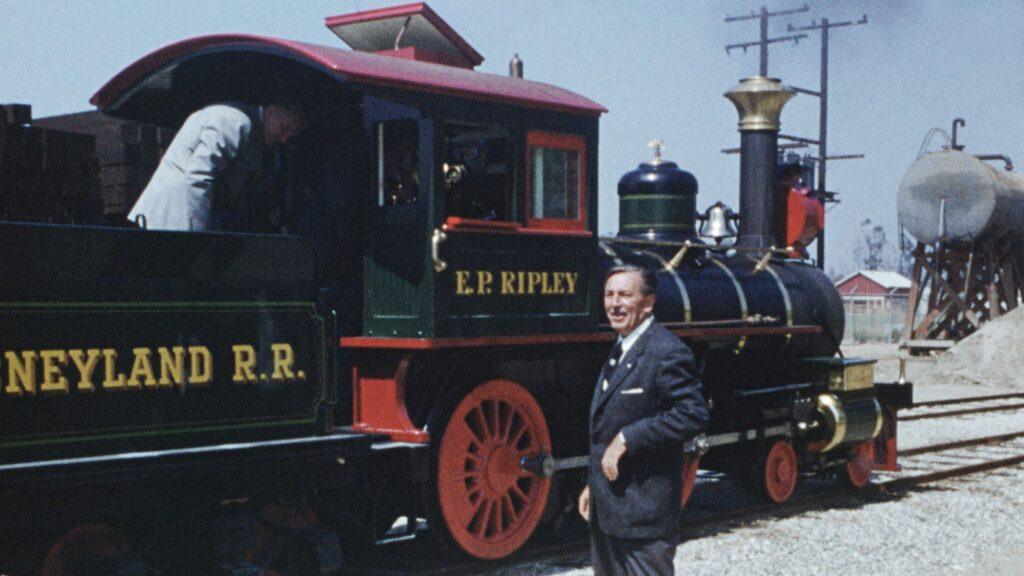
handmade disneyland has been streaming on Disney+ and YouTube since January 22, offering stunning, raw, behind-the-scenes footage of the construction of Disneyland, the entertainment giant’s first theme park. It is immediately different from other retellings of the park’s origin story, as it relies almost entirely on never-before-seen footage of the process, without the added glitter or pixie dust one might expect from Disney.
What made that difference was a meticulous editing and restoration process, one that director Leslie Iwerks describes as less like traditional storytelling and more like research. While there is a model of how Disneyland was built, Handmade It wasn’t about creating a new narrative. It was about discovering one that was already there.
“And so, like I said, it was kind of a forensic analysis trying to figure out where the dramatic spots were with the images,” Iwerks told me. “But it was only through this movie that when we saw the boards on the reels we knew, ‘Okay, this was this’ time period and it was this location.”
Fortunately, the camera crews Walt Disney commissioned to document the construction of Disneyland were good at dating the boards on each reel, something that was quite critical to the mission.
Iwerks and his team worked with approximately 65 to 70 hours of this material, recording the footage and aligning it chronologically before the story could begin to take shape.
“I remember being in the editing room and asking Moe and saying, ‘There’s no way this is going to happen in three months,’” Iwerks recalled. “And he says, ‘Oh, yeah, look at the board.’ So the boards have dates, right? So we were…we were, um, caught up in the reality of the images.”
All of the footage was shot on 16mm film and Iwerks intentionally chose not to modernize its look. as plain handmade disneyland Moved through a contemporary post-production workflow, the goal was never to make the images look “new”, but only to make them feel honest.
“The footage had already been transferred to 2K,” Iwerks explained, noting that for editing, that footage was converted to slightly lower-resolution proxy files, and for the final cut, his team brought the “2K” back in to overcrop the print of the work.
From there, moderation became the guiding principle. “There was no coloring or anything like that,” Iwerks said. “It was already 16mm Kodachrome stock. When we went into finishing, we enhanced the color, but just to keep it as natural as possible, right? No effects were created or anything.”
Imperfections were not completely erased either, as dirt, scratches and streaks were selectively addressed.
“It was this delicate balance between having too much grain and too much stuff that reminded you that it was a movie, versus, you know, feeling real like you were immersed in it,” Iwerks said.
At one point, that balance tips deliberately toward visibility. The film briefly exposes the sprocket holes of the original film, a choice that goes against most restoration philosophies.
“I intentionally put the film frame (the film holes) there,” Iwerks explained. “I wanted people to remember that this was actually a movie, that this was filmed. There was a cameraman behind all this footage.”
That forensic approach not only shaped the editing, but also brought to light moments that seem almost unbelievable when viewed in the proper chronological context.
“And, you know, even a month from now they’re still building Tomorrowland and that was crazy,” Iwerks said. “It’s all wood! A month away.”
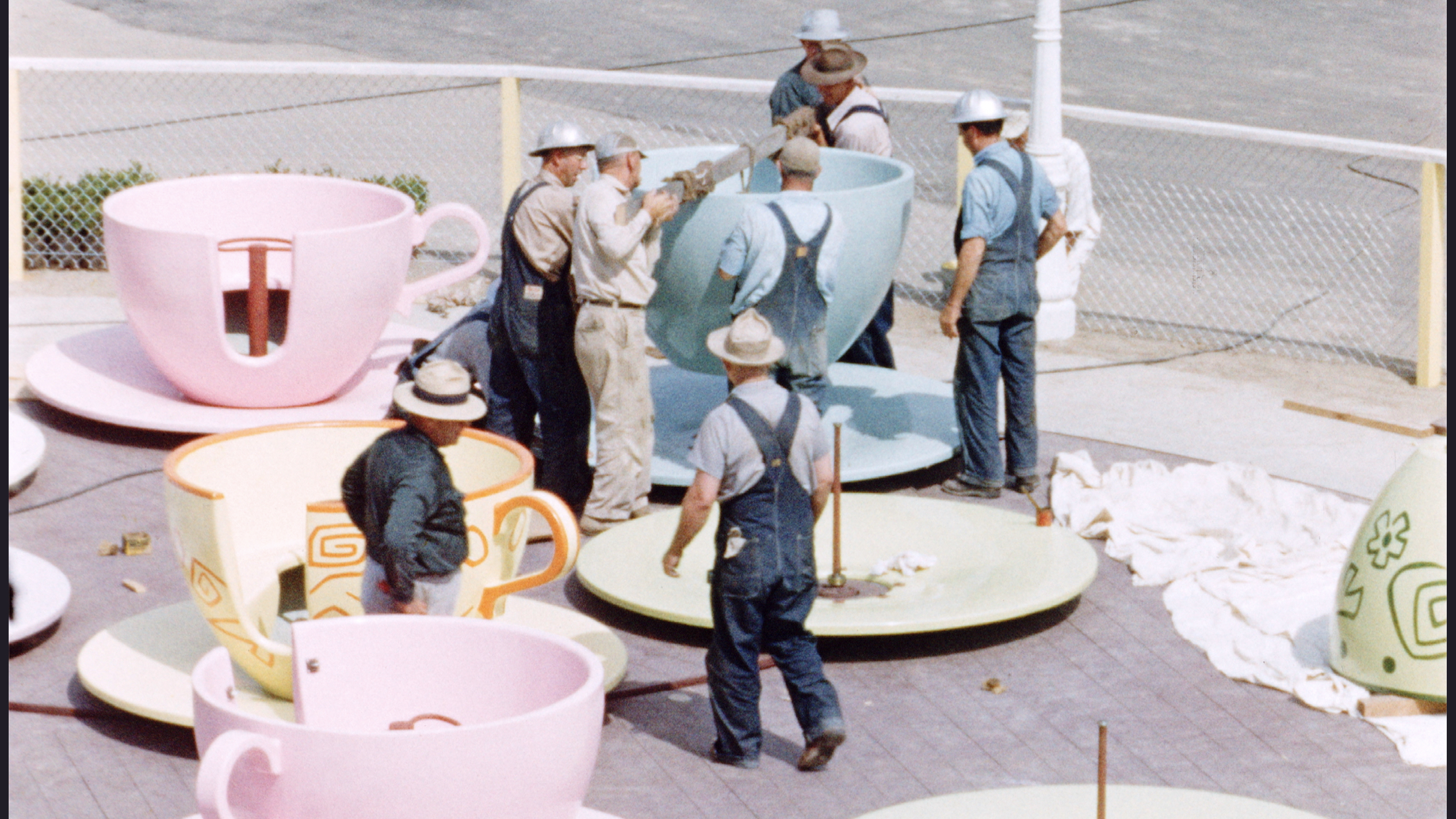
The line comes through because the movie never tries to smooth over the timeline for the build, or the fact that it was really a race to the finish. The timeline is not adapted to match what eventually became Disneyland; it is allowed to exist exactly as it was, uncertainty and all.
That same philosophy extends to the shots Iwerks chose to linger on. Beyond the extensive construction scenes, handmade disneyland He stops repeatedly to look for details: hand-carved bricks, boots pressing into gravel, stones placed on red asphalt. They’re small moments, but they reinforce the idea that Disneyland wasn’t put together cleanly in one go. It was built piece by piece, surface by surface.
Those choices quietly hint at where the film ultimately lands. By treating footage as something to be examined rather than reinvented, handmade disneyland Let the physical work, and the people who do it, define the story. And in the process, the meaning of its title begins to become clear.
I asked Iwerks where the title came from, and she shared that it came about somewhere in the middle of the editing process: “I think, God, this is so handcrafted, it feels like it’s… that’s what it should be called: Disneyland Handcrafted.”
you can look handmade disneyland now on Disney+ and YouTube.
Follow TechRadar on Google News and add us as a preferred source to receive news, reviews and opinions from our experts in your feeds. Be sure to click the Follow button!
And of course you can also follow TechRadar on TikTok for news, reviews, unboxings in video form and receive regular updates from us on WhatsApp also.


