- SC prohibits the use of “Bakhidmat Janaab SHO” and the term “faryadi“.
- Says “janaab SHO” reflects a correct constitutional relationship.
- The court emphasizes that delays should not be used to penalize victims and weaken cases.
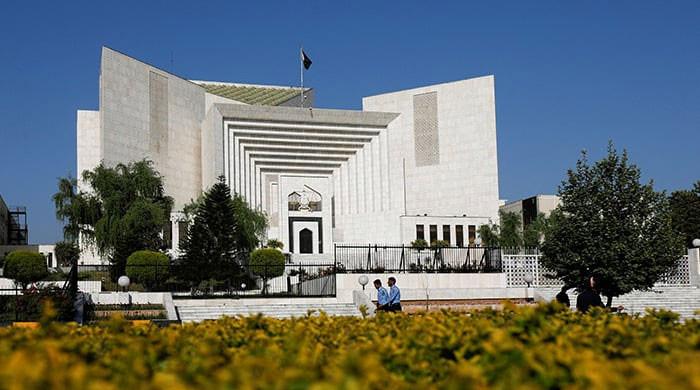
ISLAMABAD: In a major rights-based ruling, the Supreme Court has ordered that archaic and degrading expressions like “Bakhidmat Janaab SHO” and the term “faryadi“should no longer be used in police procedures or in courts, emphasizing that citizens address police authorities as a legal right and not as supplicants, The news reported on Saturday.
The court clarified that a simple and legal address, such as “janaab SHO” reflects the correct constitutional relationship between the citizen and the police, where the latter has the duty to serve the public.
The judgment was written by Justice Salahuddin Panhwar and delivered by a three-member bench comprising Justice Muhammad Hashim Khan Kakar, Justice Salahuddin Panhwar and Justice Ishtiaq Ibrahim.
It arose from a criminal petition challenging the Sindh High Court’s dismissal of an appeal in a murder case, but the Supreme Court expanded the scope of the ruling to address systemic flaws in police practices and court language.
The case relates to the conviction of Muhammad Bux alias Shahzaib for the murder of Muhammad Abbas, who was shot dead in August 2017 in Tando Ghulam Ali.
Although the informant approached the police minutes after the incident and the information was entered in the diary, the formal First Information Report (FIR) was registered several hours later. The defense relied heavily on this delay to challenge the prosecution’s case.
While upholding the conviction on the merits, the Supreme Court noted that such delays are often caused by police inaction rather than by informants, and should not be used to penalize victims or weaken otherwise credible cases.
The court reaffirmed that under Section 154 of the Code of Criminal Procedure, registration of an FIR in respect of a cognizable offense is mandatory and cannot be denied or delayed. He categorically rejected police practices of waiting for funeral rites, conducting preliminary investigations or insisting on written requests before registering an FIR.
The judges warned that a delay in registration of FIR results in loss or contamination of evidence, particularly forensic evidence, thereby undermining the integrity of the criminal justice process.+
Taking a stern view, the court held that where an officer-in-charge of a police station deliberately delays the registration of an FIR, a legal presumption will arise that such delay was intended to benefit the accused, unless the officer proves otherwise.
Such conduct, the court ruled, may attract criminal liability under section 201 of the Pakistan Penal Code for causing disappearance of evidence, in addition to departmental proceedings. Trial courts and magistrates were empowered to initiate such action after issuing a show-cause notice.
The judgment noted that the practice of delaying registration of FIR is considerably more prevalent in Sindh. Accordingly, the Attorney General of Sindh was directed to submit a report within a month detailing the average delay in registration of FIRs related to heinous crimes over the last two years. The report will be submitted to the Supreme Court through its Karachi Branch Registry for judicial scrutiny.
A substantial part of the ruling focused on the language used in police documents and court proceedings. The court declared that the term “Faryadi” was legally erroneous and constitutionally impermissible, observing that it portrays a citizen as a seeker of mercy rather than an individual with rights who invokes the law. Misuse of these terms, the court observed, blurs legal distinctions and offends the dignity of citizens protected by the Constitution.
He clarified that a person who provides information for registration of an FIR is legally an “informant”, while a “complainant” is one who files a complaint before a magistrate.
Accordingly, district and session judges across Sindh were directed to ensure that no informant or complainant is referred to as “Faryadi” in lower courts while filing a case.
The Supreme Court further ordered that copies of the judgment be distributed to all High Courts and District Courts of Pakistan for guidance and compliance, terming the judgment as a necessary step towards citizen-centric policing, institutional accountability and restoration of constitutional dignity at the first stage of the criminal justice process.