
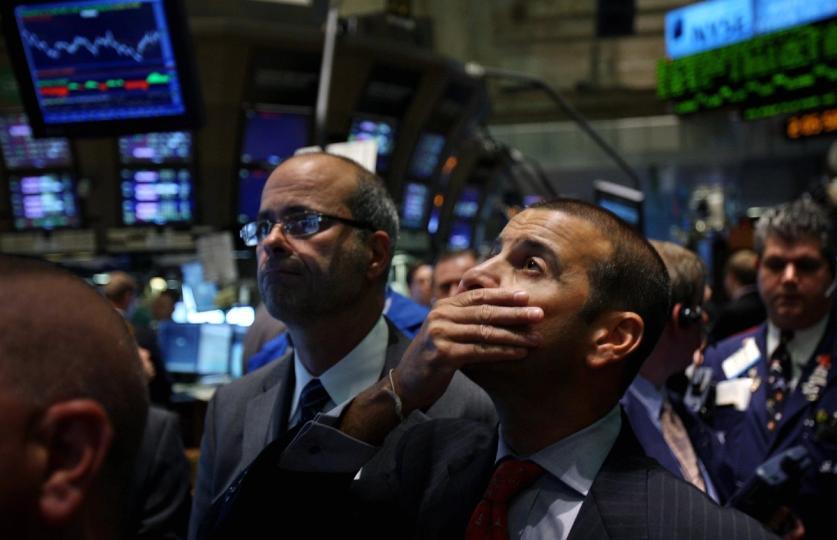
Bitcoin fell below $78,000 on Saturday, extending price weakness into the weekend as traders remained on the defensive amid geopolitical headlines, political uncertainty in the US and lingering unrest in crypto markets.
The world’s largest cryptocurrency fell more than 7% in the last 24 hours, trading around $77,000, according to data from CoinDesk. Trading volumes declined over the weekend, a setup that often leaves prices more vulnerable to abrupt moves.
Risk sentiment took a hit after reports of an explosion at the Iranian port of Bandar Abbas, a major shipping hub in the Strait of Hormuz that handles about a fifth of the world’s seaborne oil.
To further reignite tensions in the region, Trump has republished a Truth Social post saying that the Islamic Revolutionary Guard Corps (IRGC), a military branch of the Iranian Armed Forces, is in “full panic mode.” The publication is accompanied by a video showing the chaos on the streets of Tehran.
The incident added to already high tensions between Tehran and Washington, driving investors away from riskier assets.
“This looks like a broad sell-off. We have an event risk over the weekend with a fleet of fighter carriers off Iran. Trump is saber-rattling, which doesn’t help,” Russell Thompson, chief investment officer at Hilbert Group, told CoinDesk.
“This is not specific to BTC, but BTC is obviously a high delta product, so the move has been much higher and more volatile in BTC,” Thompson added.
‘Mechanical failure’
On the other hand, Chris Soriano, co-founder and CCO of BridgePort, attributed the rapid declines to a shortage of order books.
“The current decline is a classic case of deleveraging forced by ‘phantom liquidity,'” he said.
“On the surface, the market looks healthy because spreads are incredibly tight (~0.0011 bps in major BTC/USDT venues). But that tightness is masking a lack of real depth. We are seeing maximum book liquidity of just ~$500,000 in key venues. In simple terms: the ‘door’ appears wide open (tight spreads), but there is no floor behind it (thin depth).”
“When a wave of forced selling hits such a shallow book, bids instantly evaporate and price gaps go down rather than down. This is not a fundamental revaluation; it is a mechanical failure of liquidity to absorb the flow,” Soriano added.
Political uncertainty in the United States also affected the markets. A brief federal government shutdown began over the weekend after Congress failed to pass a full-year funding bill by a midnight deadline. While expected to be short-lived, the lapse added to a growing list of macroeconomic concerns that have kept traders cautious.
$75,000 to see?
Crypto-specific factors aggravated the selling pressure.
Bitcoin has struggled to attract sustained buying interest after a volatile January, with flows into spot bitcoin ETFs turning negative this week and derivatives markets still unwinding leverage built up late last year. The backdrop has left the price action choppy and prone to sell-offs during quieter trading hours.
Recent public clashes between prominent industry figures over the causes of October’s historic sell-off event have also kept nerves frayed, reinforcing the sense that confidence has yet to fully return.
So where can the sell-off find the next wave of buyers? As CoinDesk’s Omkar Godbole noted earlier in the week, in April last year, buyers emerged around $75,000, which halted the sell-off at the time, making it a key level to watch now.
Below that, the next support is at the 200-week average, which is at $58,000.
For now, bitcoin remains range-bound, with traders watching to see whether the weekend sell-off attracts new demand or gives way to a deeper decline.
UPDATE (January 31 at 6:04 pm UTC): Update price action
UPDATE (January 31, 5:38 pm UTC): Full updates including the recent price drop and comments on the reasons for the sell-off.


