
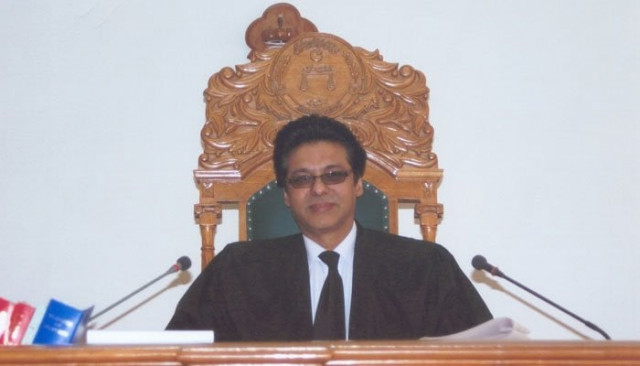
Justice Muhammad Ali Mazhar. PHOTO: ARCHIVE
ISLAMABAD:
In a powerful reflection on judicial integrity and the meaning of impartial justice, Supreme Court Justice Muhammad Ali Mazhar has observed that when there is a real likelihood of bias, a judge must step aside, not to admit bias, but to protect public confidence in the justice system.
The remark is part of a 24-page opinion written by Justice Mazhar in the presidential reference on the former prime minister Zulfiqar Ali Bhutto assassination case.
The opinion reviews the historic verdict through the lens of due process, natural justice, and institutional credibility, while emphasizing that even the appearance of bias can corrode the foundations of justice.
“When there is a real likelihood of bias, the judge should recuse himself, not because he is necessarily biased or incapable of dispensing justice impartially, but because the circumstances might engender some concern or fear of bias influencing the outcome of a case in the minds of others,” the opinion states.
In March 2024, a larger nine-member bench headed by then Chief Justice of Pakistan Qazi Faez Isa, responding to a presidential reference, unanimously ruled that Zulfiqar Ali Bhutto did not receive a fair trial and due process.
Justice Mazhar noted that Bhutto was awarded the maximum sentence solely on the basis of an approver’s testimony, without any concrete incriminating, corroborative or circumstantial evidence.
“The court’s approach was unique and, even without considering any mitigating circumstances, seemed predetermined or biased in imposing the maximum punishment in a very dubious case.”


