
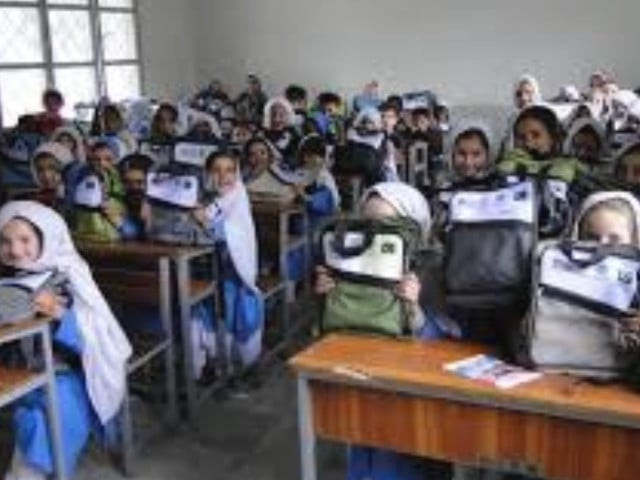
New directives ban sharing music, phones and social media as province faces education crisis
New strict standard operating procedures have been issued for women’s colleges in Khyber Pakhtunkhwa (KP).
As per the SOPs, it is mandatory to obtain permission from the Director of Higher Education before organizing any kind of function.
Music, dancing, modeling or any similar type of spectacle was completely prohibited under the new directives, as was the use of mobile phones during university hours and events.
Additionally, all students must wear their uniform while attending any event, and videos or photographs of events must not be shared on social media.
Read: Is girls’ education still a dream in KP?
These measures come against the backdrop of a prolonged education crisis in the province, which has battled gaps in access to education long before the directives.
Even before the 2025 floods, in many districts girls were regularly dropping out of school after primary grades due to cultural norms, lack of nearby institutions and weak educational infrastructure, making sustained female education “still a dream” in parts of KP, particularly in remote areas such as Upper Kohistan and Dabir, where families face obstacles in sending their daughters to school.
The situation was further aggravated by the devastating floods of August 2025. According to official data at the time, nearly 4.9 million children in KP were still out of school, including around 2.9 million girls, as flood damage to hundreds of schools kept many students away from classrooms.
Read more: Floods worsen girls’ education crisis
Flood-related destruction was widespread, damaging or destroying learning environments that already lacked basic facilities such as border walls, sanitation and clean water, factors that disproportionately affect girls’ continued attendance.
Education activists and observers have repeatedly warned that the combined effects of natural disasters and long-standing systemic challenges, including insufficient facilities and cultural barriers, have deepened the gender gap in schooling.
They have urged that the reconstruction of damaged school buildings and gender-sensitive policies must go hand in hand with efforts to keep girls in educational institutions.


