
Policymakers and analysts highlight development, stability and prosperity in the province
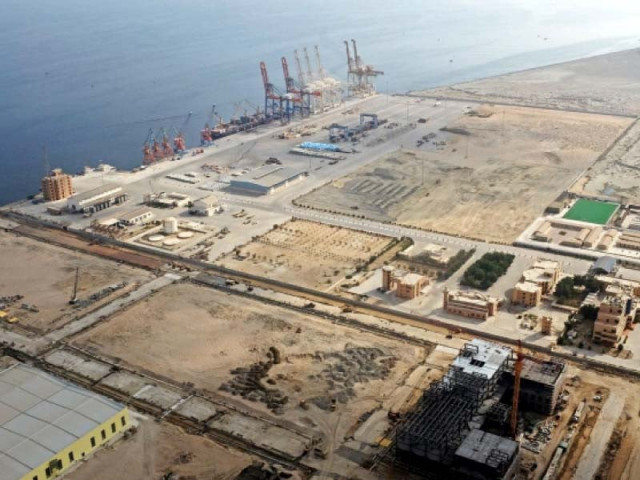
Pakistan has a long list of projects it wants to finance, including a tripartite deal between China, Pakistan and Saudi Arabia for an oil refinery in Gwadar. Photo: Archive
KARACHI:
Balochistan, which holds around 75% of Pakistan’s mineral wealth, is emerging as a central pillar of the China-Pakistan Economic Corridor (CPEC), with policymakers and analysts emphasizing that development, stability and prosperity in the province are closely linked to the success of the multi-billion dollar connectivity project.
Balochistan’s long coastline, the province rich in coal, copper, gold, chromite and other minerals, its proximity to the Strait of Hormuz and its location at the crossroads of South Asia, Central Asia and the Middle East give it immense geoeconomic and geostrategic importance, according to a paper published by an Islamabad-based think tank, the Center for Research, Policy Development, Peace and Strategic Studies.
Despite these advantages, the province has long lagged behind in social and economic indicators, suffering from poor infrastructure, energy shortages, weak governance and recurring security challenges.
However, since the launch of CPEC in 2015, significant changes have been observed. At the time, Pakistan, particularly Balochistan, was facing daily power outages of up to 16 to 18 hours, inadequate road networks and sluggish economic activity. Officials say more than $25 billion in CPEC-related investments have since helped improve the country’s energy system, transportation infrastructure and ports, with visible spillover effects in Balochistan.
According to official data, more than 8,000 MW of electricity have been added to the national grid through major energy projects, including coal, hydroelectric, solar and wind plants. These include the Hub coal-fired power plant in Balochistan, which has strengthened electricity supply and alleviated the province’s long-standing energy crisis.
Road projects such as Khuzdar-Basima Highway, Surab-Hoshab (N-85), Hoshab-Gwadar Expressway (M-8) and Gwadar Eastbay Expressway have improved connectivity across the rugged province, connecting remote areas to domestic markets.
Officials say travel time between Quetta and Gwadar has been reduced from 24 to 36 hours to around eight hours, transforming mobility, commerce and socio-economic interaction. The development of Gwadar Port, along with the completion of the new Gwadar International Airport and the establishment of a free zone, is described as a game changer that could more deeply integrate Pakistan into regional and global trade.
The Planning Commission says CPEC has already created more than 200,000 direct jobs across the country, with thousands of livelihoods linked to projects in Balochistan. With the launch of Phase II of the CPEC, the focus is shifting towards inclusive growth, Special Economic Zones (SEZs), agriculture, minerals, information technology and local value creation, with the aim of ensuring that the benefits of development reach common citizens.
Agriculture remains the backbone of Balochistan’s economy, with horticulture being its most prominent sub-sector. The province is often referred to as Pakistan’s “fruit basket” as it produces most of the country’s cherries, grapes, almonds, dates and apples. Despite high production, Balochistan’s share in agricultural exports remains limited due to weak value chains, water scarcity and lack of modern storage and processing facilities.
Under CPEC-related initiatives, agricultural mechanization, modern irrigation systems and high-tech agricultural practices are being introduced in collaboration with Chinese partners and international institutions. Officials believe these measures could increase agricultural production by 25 to 30 percent and open international markets for Balochistan products, helping to alleviate rural poverty.
The livestock sector, which directly or indirectly supports around 70 per cent of the province’s population, is also considered an area of significant growth. Balochistan accounts for a major share of Pakistan’s sheep, goats and camels. Chinese cooperation in genetic improvement, breeding technologies and veterinary training is expected to improve productivity and export potential.
Meanwhile, analysts point to the province’s vast coastline and marine resources as an untapped “blue economy.” Fishing, mangroves, coastal tourism and marine biodiversity could generate jobs and foreign exchange if developed sustainably. Attractions like Gwadar, Astola Island, Kund Malir and Hingol National Park have the potential to make Balochistan a major tourist destination, provided peace and stability are ensured.
Balochistan’s mineral wealth, estimated by some experts in the trillions of dollars, remains both an opportunity and a source of controversy. Projects such as Saindak and Reko Diq underline the province’s importance in global mineral supply chains. However, local communities have long complained that resource extraction has not translated into prosperity, fueling grievances and mistrust.
CPEC advocates argue that transparent and well-regulated mining under the corridor framework, along with a fair distribution of income and local employment, could help address these concerns and reduce conflicts. The province’s vast land area and climatic conditions also make it ideal for renewable energy projects, particularly solar and wind energy, which could support Pakistan’s climate goals and provide clean energy to underdeveloped regions.
Despite development progress, security remains the biggest challenge for smooth implementation of CPEC in Balochistan. The province has experienced multiple waves of insurgency since 2006, with militant groups attacking infrastructure, security forces and, increasingly, Chinese citizens and CPEC-related projects. Authorities say dozens of attacks in recent years have slowed project execution, increased costs and undermined investor confidence.
To counter these threats, thousands of security personnel have been deployed to protect CPEC projects, costing billions of rupees annually. Analysts, however, argue that a purely security-focused approach is insufficient. They highlight the need to address the underlying political, economic and governance grievances that fuel militancy, including perceptions of exclusion, lack of local ownership and weakness of provincial institutions.
Critics also highlight a governance gap, noting that key CPEC decisions are often made at the federal level, with limited involvement from provincial governments and local communities. This, they say, perpetuates a center-periphery dynamic that undermines trust. Greater transparency, community participation, and a stronger role for local governments are generally seen as essential to long-term success.
Experts agree that CPEC represents a historic opportunity for Balochistan, but warn that its success depends on inclusive policies, better governance and sustained peace. The recommendations include accelerating the development of SEZs, prioritizing the ML-1 railway project, integrating local industries into CPEC supply chains, expanding vocational education and training, and adopting climate resilient development strategies.
Strengthening coordination between federal and provincial authorities, improving intelligence sharing, and involving local communities in decision-making are also considered essential. Analysts argue that, if managed wisely, the CPEC could transform Balochistan from a strategically important but underdeveloped region to an economic powerhouse, contributing to Pakistan’s long-term stability and prosperity.
As CPEC enters its second phase, the challenge for policy makers is to ensure that development is not only visible in roads, ports and power plants but is also felt in improved livelihoods, social well-being and lasting peace for the people of Balochistan.


