
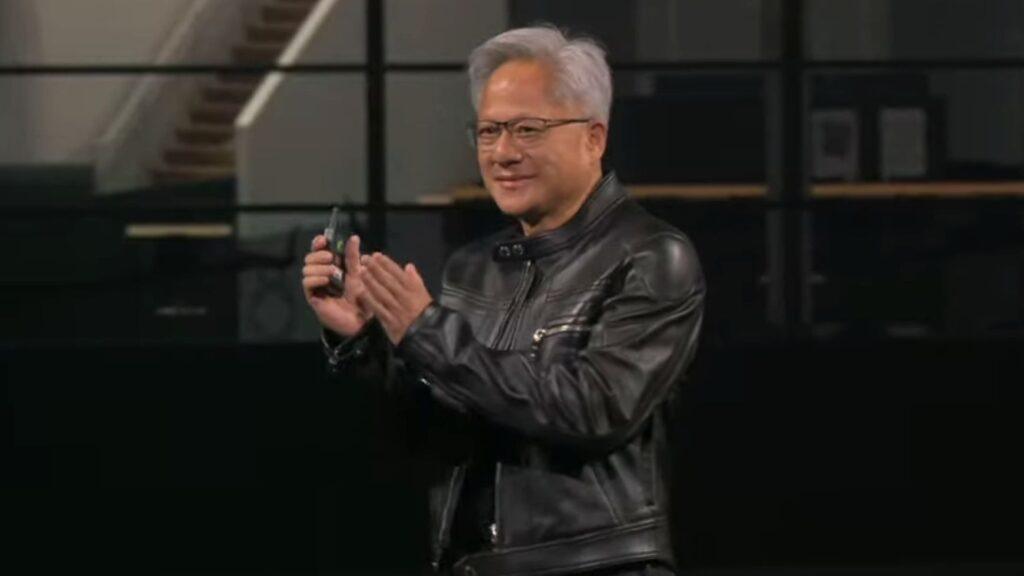
- Jensen Huang says reports of Nvidia pulling out of OpenAI are nonsense
- OpenAI remains heavily reliant on Nvidia chips and server infrastructure
- Nvidia will invest heavily in OpenAI despite not specifying exact figures
Nvidia CEO Jensen Huang rejected claims that the company was backing out of OpenAI.
“It’s nonsense,” he told reporters during a recent visit to Taipei, describing OpenAI as “one of the most important companies of our time” and confirming that Nvidia would “definitely participate” in the next funding round.
Huang also stated that Nvidia will “invest a lot of money” because OpenAI is “a very good investment,” and emphasized continued support for the partnership.
Nvidia will not be able to invest up to 100 billion dollars
In a statement to The Wall Street JournalAn OpenAI spokesperson backed this idea, stating that the companies are “actively working on the details of our partnership.”
Nvidia “has underpinned our advancements from the beginning, powers our systems today, and will continue to be central as we scale what comes next.”
Despite the strong language, Huang declined to provide figures. “Let Sam announce how much he’s going to raise… It’s up to him to decide,” he said, referring to OpenAI CEO Sam Altman.
That reluctance is interesting because previous reports set expectations very high: In December 2025, reports said OpenAI was exploring a $100 billion funding round.
More recently, The New York Times He said Nvidia, Microsoft, Amazon and SoftBank were discussing possible investments.
At the same time, reports say that Huang has begun to emphasize that Nvidia’s previous commitment of up to $100 billion was non-binding.
Recent discussions within the company have focused on expanding the investment, with some conversations focusing on an equity stake measured in the tens of billions of dollars.
The financial investment is only one part of the relationship between Nvidia and OpenAI.
Beyond the promised financing, the two companies planned to build massive computing capacity, including tens of thousands of servers.
OpenAI’s systems rely heavily on Nvidia chips, and that reliance extends to the cloud hosting environments where much of its AI work takes place.
These operational links also support the development and deployment of artificial intelligence tools that require continuous access to high-performance computing resources.
Some claims say Huang has privately criticized aspects of OpenAI’s business strategy, expressing concerns about competition from companies such as Anthropic and Google.
None of these claims have independent confirmation, but a contrast remains between confident public quotes and reports describing caution in private discussions.
Through TechCrunch
Follow TechRadar on Google News and add us as a preferred source to receive news, reviews and opinions from our experts in your feeds. Be sure to click the Follow button!
And of course you can also follow TechRadar on TikTok for news, reviews, unboxings in video form and receive regular updates from us on WhatsApp also.


