
ISLAMABAD/LAHORE/PESHAWAR/QUETTA:
The nationwide lockdown and wheel jam strike called by Tehreek-e-Tahaffuz-e-Ayin-e-Pakistan (TTAP), with Pakistan Tehreek-e-Insaf (PTI) as its main actor, was met with a mixed response across the country on Sunday.
While Quetta observed a near-total lockdown, parts of Khyber Pakhtunkhwa observed partial compliance and life largely continued as usual in Lahore and Islamabad.
The opposition alliance had announced the strike to commemorate the second anniversary of the general elections of February 8, 2024, which it continues to denounce as “rigged”, and to observe a day of mourning after the suicide attack on Friday in an Islamabad imambaga that left at least 36 dead.
In Balochistan, the call seemed to carry more weight. Quetta witnessed a complete lockdown and wheel jam, with shops, markets, malls and bazaars closed and traffic reduced to a minimum.
Mobile internet services were again suspended. PTI workers, along with activists of Pashtunkhwa Milli Awami Party (PkMAP), led by TTAP chief Mehmood Khan Achakzai, staged protests in various parts of the provincial capital.
Clashes were reported in Brewery and Khaizi Chowk areas along the Western Ring Road, where protesters blocked roads by burning tires and erecting barricades. Police used tear gas to disperse protesters and reopened roads after removing barricades.
Similar scenes were witnessed along the Eastern Ring Road, while a small protest near Airport Road was also dispersed. Stone-pelting incidents were reported in Chaman, in which a police officer was injured. The PTI Balochistan chapter claimed that at least 40 TTAP workers were arrested during the day.
Reports from Chaman, Qila Saifullah, Qila Abdullah, Pishin, Harnai, Duki, Ziarat, Kan Mehtarzai, Muslim Bagh, Loralai, Barkhan, Usta Muhammad and Nasirabad indicated small protest gatherings and road blockade attempts, which were largely dispersed by police.
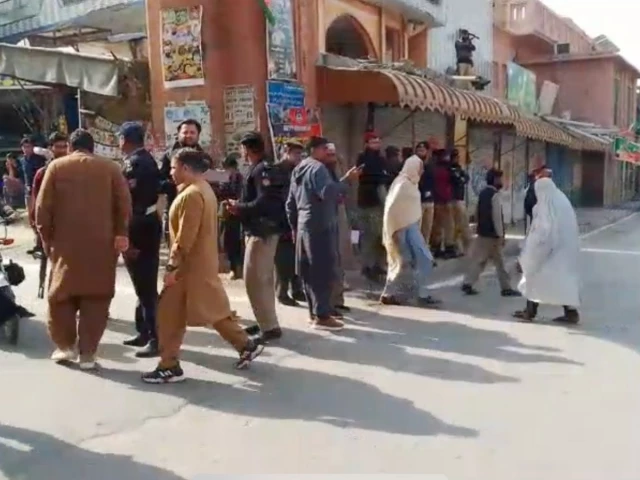
In Khyber-Pakhtunkhwa, the response was mixed. A partial strike was observed in the inner city of Peshawar, with shops in Hashtnagri and Rampura closed, while markets in Qissa Khwani Bazaar largely remained open. The PTI organized a rally at Chowk Yadgar where banners were displayed and party leaders addressed their supporters.
PTI leader Omar Ayub Khan called for a shutdown strike at Haripur Bazaar and a “complete jam of the wheels of public transport”, and thanked the traders and transport unions for supporting the call. In Shangla, large protest rallies were held in Bisham, Alpuri, Puran and surrounding areas, and partial lockdowns were reported.
Addressing the protesters, PTI leaders, including Shaukat Yousafzai, called the 2024 elections “the most controversial in Pakistan’s history” and vowed to continue a peaceful constitutional struggle.
However, in Punjab, the strike failed to significantly disrupt daily life. In Lahore, markets showed typical Sunday activity, with most closures attributed to the weekly holiday and the last day of the Basant festival rather than the strike. Traffic flow remained normal.
The PTI called its approach “silent agitation”, urging citizens to stay home voluntarily, but the call met with limited response.
In Islamabad and Rawalpindi, most markets remained open, including the H-9 weekly bazaar, which saw large footfall. Several merchants cited economic pressures as a reason for staying open.
While metro and electric bus services were suspended, traffic in the capital was largely unaffected.
Sindh also experienced limited impact as the closure of markets in Karachi coincided with a public holiday. However, PTI leaders claimed to have participated in silent protests in several neighborhoods.
Despite the uneven response, PTI and TTAP leaders considered the strike as politically significant. PTI general secretary Salman Akram Raja called it a “constitutional method of expressing irritation with the system” and called it a day of mourning for the “stolen vote and terrorism”.
KP Chief Minister Sohail Afridi congratulated his supporters for what he described as a “successful” strike, and urged continued peaceful resistance.
On the contrary, the government rejected the call. Punjab Chief Minister Maryam Nawaz declared “ZERO protest/strike/shutdown in Punjab”, while Information Minister Attaullah Tarar said the public had rejected “incitement policies”.
Federal Minister Amir Muqam also stated that the people of KP wanted development, not closures.


