
When markets get tough, as they did for cryptocurrencies at the end of January, investment firms need all the help they can get to make the right decisions quickly. It’s no surprise, then, that many are turning to AI, the brightest new weapon in the arsenal, to analyze and suggest ways to minimize losses and even make profits.
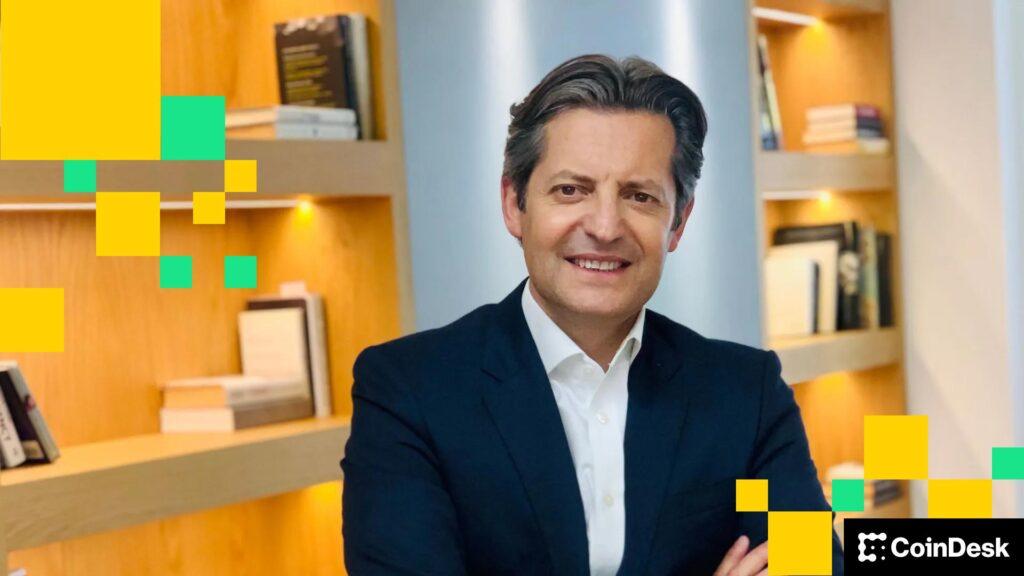
Nearly all (96%) executives at a surveyed group of trading firms that collectively manage about $14 trillion in assets said AI is already playing an important role in core investment processes, according to research recently conducted by Nickel Digital Asset Management. But this is not enough, the human hand is still needed, said Anatoly Crachilov, founding partner and general director of the company.
AI is transforming quantitative trading just like almost every other industry and human endeavor. Beyond the large language models (LLMs) that seem to have permeated much of everyday life, there are also machine learning and predictive AI approaches that analyze historical data to forecast what will come next. However, they are weak at identifying incorrect information that can lead to erroneous conclusions and poor decision making.
“It’s a very difficult market. AI won’t save you; it’s not a savior,” Crachilov said in an interview.
Despite the drop in cryptocurrency prices that hit the market late last month, London-based Nickel, which runs a multi-manager platform that allocates to more than 80 teams, remains positive for the year. “Maybe that’s an achievement in itself,” Crachilov said.
The crossover between cryptocurrency trading and AI is becoming more advanced in areas such as risk management. While AI might still struggle to outperform high-speed sniping bots targeting the latest low-liquidity crypto tokens, for example, a sweet spot is where sentiment and data-based models can learn to manage risk.
Each manager attached to Nickel operates within a well-defined risk framework that includes maximum drawdown limits in times of greater volatility. Sometimes human intervention and an “old-school” approach is needed, Crachilov explained, rather than relying on data-driven, machine-learned automation.
“If the market gets into trouble, as it has a few times recently, sometimes you have to exercise discipline and stop managers who go bankrupt. [max drawdown] limits, whether AI drives your strategy or not,” Crachilov said. “Ultimately, there is a hard limit on how much pain we would allow in the portfolio.”
Questions about how much human involvement there should be in AI-driven trading strategies, or how a human override is triggered, were too technical and nuanced for Nickel’s survey of relatively senior managers, Crachilov said.
He said Nickel operates “a military-style operation,” where a rich data stream collects more than 100 million data points from the underlying ledger every 24 hours. “Although this part is very knowledgeable, it still requires human involvement. And we are still chatting with managers, even in the middle of the night,” Crachilov said.
According to Crachilov, the natural evolution towards full automation still has to take into account the possibility of erroneous or incomplete data sources from places like crypto exchanges.
For example, a human would realize that data indicating that a certain position was down 100% was probably the result of something being wrong with a data source, he said. But an automated AI system could mechanically impose a limit when it is not necessary.
“You need a human overlay. The entire crypto ecosystem is still very fragile. And some of the exchanges may go into a 15-minute timeout, or see erroneous data, or produce erroneous data patches, which may inadvertently force the system to shut down some of the administrators for no good reason,” Crachilov said.
It really comes down to the company’s risk management philosophy, which is to eliminate a single point of failure at any point in the process, said Nickel’s head of investor relations, Charles Adams.
“If there was an autonomous agent that was monitoring the entire portfolio, let’s say something goes wrong, the risks could be potentially catastrophic,” he said. “The thing is, today we have this very well-diversified fund divided among more than 80 managers across hundreds, if not thousands, of sub-accounts on exchanges, and eliminating that single point of failure is very important to us.”


