
- SD Association says multi-terabyte SDUC cards already shipping in some sectors
- Sandisk showed off 4TB SDUC cards almost two years ago, but still no sign
- SD Express delivers SSD-class speeds and capacity targets reach 128TB
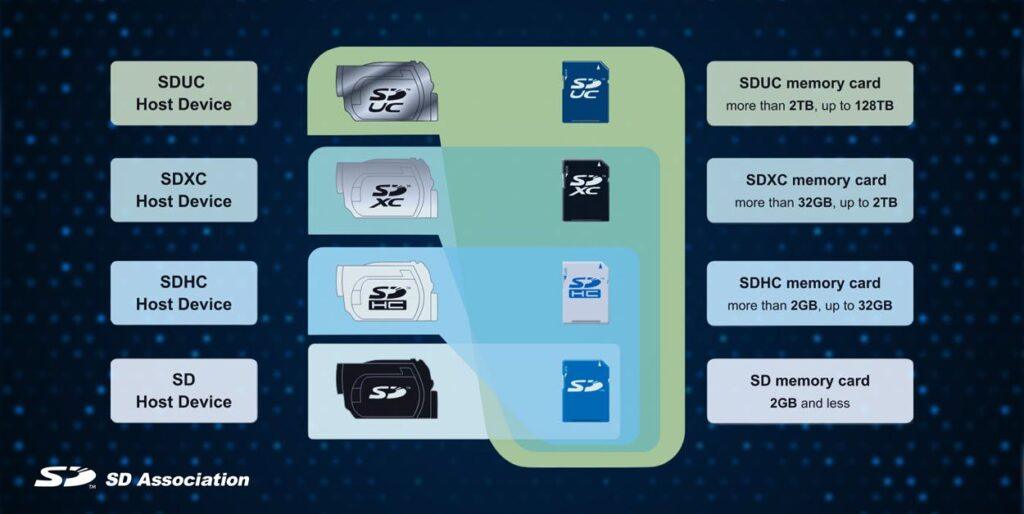
The SD Association says multi-terabyte SDUC cards are already shipping, with a format starting at 2TB and scaling up to a theoretical 128TB.
The industry standards group points to growing demand for artificial intelligence, high-resolution video, drones and edge computing as the reason capabilities continue to increase, which sounds great, although the retail market still tells a different story.
Nearly two years ago, Sandisk showed off a 4TB SDUC card at NAB 2024, calling it the first of its kind and hinting at a launch next year.
Multi-terabyte SDUC cards are shipping
Storing large 8K video files and huge photo libraries on a single removable card is something I’m definitely interested in.
However, it’s still difficult to find cards of that size in mainstream stores, and even 2TB SD cards are still relatively rare.
The SD Association insists that multi-terabyte SDUC cards are already being marketed, although it does not specify where those products will actually appear. That could mean industrial, integrated or specialized deployments rather than consumer shelves.
The group’s main message is that capacity and performance are increasing together. SD Express, which combines PCIe and NVMe interfaces, can reach approximately 1 GB/s with PCIe 3 x1 and up to approximately 4 GB/s using PCIe Gen4 x2.
Those speeds bring SD cards closer to SSD-class performance, especially for tasks like running apps directly from removable storage or handling large AI data sets.
Games are also part of the push. Nintendo Switch 2 uses microSD Express cards for storage, allowing games to be loaded and run directly from removable media without the slowdowns associated with older standards.
The partnership also highlights creators working with 4K to 16K video, along with cutting-edge virtual reality, augmented reality and artificial intelligence devices that produce huge volumes of data. Those uses make multi-terabyte cards seem less like an excess and more like a practical necessity.
Still, it’s hard to ignore the gap between standards ads and what shoppers can actually buy.
For now, the idea of a 4TB or 8TB SD card seems even closer to a roadmap than a routine purchase, even if the SD Association says it’s ready.
Follow TechRadar on Google News and add us as a preferred source to receive news, reviews and opinions from our experts in your feeds. Be sure to click the Follow button!
And of course you can also follow TechRadar on TikTok for news, reviews, unboxings in video form and receive regular updates from us on WhatsApp also.


