
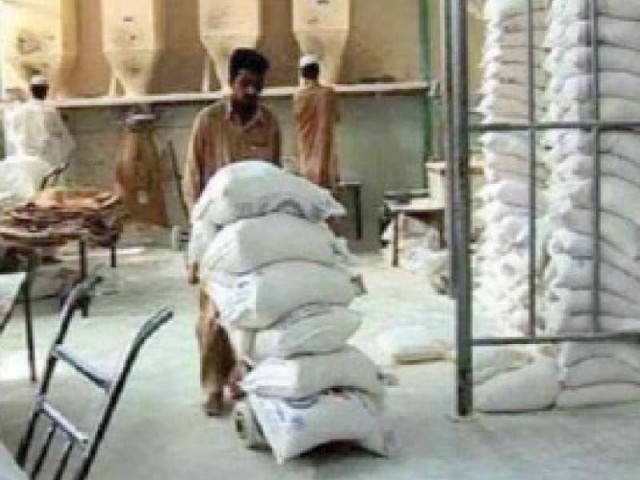
Amid a crackdown on wheat transportation in Punjab, prices of wheat and flour have skyrocketed, leaving consumers in the lurch. Photos: Express/ARCHIVE
PESHAWAR:
The Khyber-Pakhtunkhwa cabinet, chaired by Chief Minister Muhammad Sohail Afridi, approved the procurement of 175,000 metric tonnes of wheat, with an estimated cost of over Rs 19,000 crore.
This initiative is part of broader efforts to ensure stable supplies and mitigate price fluctuations of essential commodities. Additionally, the cabinet sanctioned the deregulation of sugar to promote a more transparent and stable supply chain at the national level.
A highlight of the meeting was the approval of an enhanced Ramazan relief package for more than one million deserving families. As announced by Special Assistant to Chief Minister on Information Shafi Jan, more than 10 lakh poor households will receive Rs 12,500 per family directly through digital payments during the holy month. Priority will be given to the destitute, widows, orphans, people with disabilities, transgender people and those affected by natural disasters.
Government and semi-government employees will not be eligible for this assistance.
The cabinet also allocated additional funds for the families of law enforcement martyrs, approving Rs 496 million as additional grant to the heirs of 190 martyrs under the Shuhada Package. Financial aid was authorized for indigent patients suffering from complex and costly illnesses.
In the area of social welfare and minority rights, the cabinet approved the reconstitution of the Quran Board with the appointment of 19 members for a period of three years.
He supported the appointments of members of the National Commission for Minorities, the Khyber-Pakhtunkhwa Kalash Marriage Bill and the Hindu Marriage (Amendment) Bill to safeguard minority rights.
A forward-looking step was the approval of the Khyber-Pakhtunkhwa Women Empowerment Policy 2026-2030, which outlines six core objectives: increasing women’s participation in economic activities and employment; ensure access to social services and human development; promote active roles in political and social leadership; provide legal protection and justice; enable digital inclusion; and safeguarding women during climate change and disasters.
Education received a boost with the decision to revive 325 non-functional computer/IT labs in higher secondary schools and provide internet connectivity to 958 schools. This aims to strengthen the integration of information technology and educational initiatives related to AI. The cabinet also approved cost improvements for the Teleeducation Pilot Project in 175 schools.


