The risk of a woman living in a conflict-affected country dying from maternal causes is around five times higher for each pregnancy she experiences compared to her peers in stable countries, according to new findings in the WHO report.
In 2023 alone, an estimated 160,000 women died from preventable maternal causes in fragile and conflict-affected settings, or six in 10 maternal deaths worldwide, despite these countries accounting for only about one in 10 of live births globally.
Large risk disparities
The new white paper offers an analysis of why pregnant women living in certain countries are more likely to die during childbirth and confirms what many professionals see on the ground: Crises create conditions in which health systems cannot consistently provide life-saving maternal care.
In fact, the intersection of gender, ethnicity, age and migration status can increase the risk faced by women and girls who are pregnant and live in fragile contexts, according to the report prepared by the WHO and an inter-agency group that includes the United Nations development agencies, UNDP, sexual and reproductive health, UNFPA, and children, UNICEF, as well as the World Bank.
The risk disparity is stark. A 15-year-old girl living in a country or territory affected by conflict in 2023 had a one in 51 risk of eventually dying from maternal causes, compared to a one in 79 risk in a country or territory affected by institutional and social fragility, and one in 593 for a 15-year-old girl living in a relatively stable country.
Global progress has stalled
The report aligns the latest maternal mortality rate estimates with whether a country is conflict-affected or considered fragile.
Countries classified as conflict-affected had an estimated maternal mortality rate of 504 deaths per 100,000 live births, while in countries considered institutionally and socially fragile, it was 368. In contrast, countries outside both categories recorded a much lower rate of 99.
These findings deepen the picture provided by last year’s maternal mortality estimates for the period 2000 to 2023, which showed that global progress has stalled and that maternal mortality remains strikingly high in low-income and crisis-affected settings, prompting this additional analysis.
Innovative approaches are helping
The publication also offers case studies on how frontline teams are struggling to maintain maternal health services amid instability, with solutions that show that even when health systems face extreme pressure, innovative approaches can protect maternal health.
Communities are adapting services to cultural needs, health workers are restoring disrupted services, hospitals are reorganizing care under security threats, and coordination mechanisms are evolving to ensure continuity of care.
Below are some examples:
Colombia: Training traditional midwives shows how strengthening trusted local networks can ensure timely care even when access is limited due to geography, insecurity or mistrust, by establishing continuity of care through mobile teams, renovated facilities and additional midwives.
Ethiopia: The emphasis is on practical measures that help restore services after a disruption by restoring continuity of care through mobile teams, refurbished facilities and additional midwives.
Haiti: The efforts demonstrate the importance of removing cost and infrastructure barriers, with free or low-cost cesarean sections and reliable electric power, making life-saving care available to displaced women who would not otherwise have access.
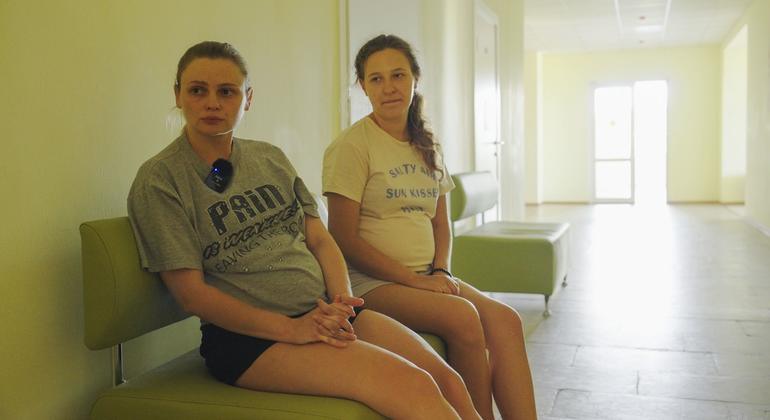
Myanmar, Papua New Guinea and Ukraine: Initiatives show that, even in the midst of complex crises or conflicts, women benefit when systems focus on protecting essential maternal services, whether through subnational planning, improving safe and respectful birth practices, or reorganizing patient pathways to safer facilities.
Use data for action
By linking maternal mortality rate data with frailty classification, WHO and its partners now have a more precise tool to identify where strengthening the health system is most urgently needed.
The report emphasizes the importance of:
- invest in primary health care to maintain essential maternal services during crises
- Strengthen data collection in hard-to-reach settings to ensure no death goes uncounted.
- Support the design of resilient health systems capable of absorbing and adapting to crises.
Together, these efforts can help accelerate progress towards reducing preventable maternal deaths, even in the world’s most difficult settings, according to the UN health agency.
Learn more about what WHO is doing here.