- The government updates the IAS and POC frameworks under the ‘One Nation, One Identity’ vision.
- The QR code was formally introduced as a legal security and authentication feature.
- Fingerprints and iris scans recognized as biometric authentication methods.
ISLAMABAD: In a major step towards a unified and digitally secure identity ecosystem, the Federal Government has formally updated the National Identity Card (NIC) and Pakistan Origin Card (POC) frameworks under its “One Nation – One Identity” vision.
The amendments, issued through SRO 330(I)/2026 and SRO 331(I)/2026 and published in the Gazette on February 24, 2026, modernize Pakistan’s identity system with QR-based verification, improved biometric features, stricter fraud controls and better citizen facilitation.
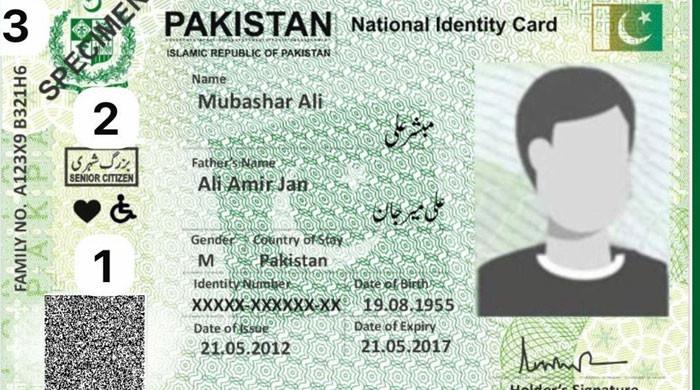
A highlight is the legal introduction of the Quick Response (QR) code as a security and authentication feature on all identity documents. The Rules now define QR code as a secure, machine-readable, two-dimensional barcode that stores encoded identity information and allows instant verification when scanned. Importantly, the amendments also authorize NADRA to use “QR code or any other technological feature”, ensuring that Pakistan’s identification infrastructure can evolve with emerging innovations without requiring recurring legal changes.
With this reform, citizens will carry a uniform identity document, replacing the previously parallel formats of chip and non-chip cards. The QR code architecture strengthens Pakistan’s digital ID ecosystem and aligns with the national data exchange layer, enabling rapid online and offline verification, faster service delivery, reduced manual checks and significantly lower risk of fraud or impersonation.
The government has also strengthened fraud prevention mechanisms. Under the revised rules, once an identity card is suspended, all related verification and authentication services automatically stop, blocking any attempt to use the suspended credential through digital or institutional channels.
Biometric security has also been improved, and the Rules now explicitly recognize fingerprints and iris scans as formal authentication modalities, reinforcing the shift toward multimodal biometric identification.
In a major facilitation step, citizens aged 60 years and above, whether resident or abroad, will be issued with a lifetime ID card bearing a distinctive senior citizen logo. This eliminates the need for repeated renovations and reflects a more service-oriented approach to older Pakistanis.
The amendments also introduce standardized identification for people belonging to Azad Jammu & Kashmir, requiring their cards to include a specific inscription defining their residency status.
To complete the modernization drive, the government has comprehensively updated the sample formats for all major identification categories including resident citizens, overseas Pakistanis, persons with disabilities, child certificates, organ donors, combined categories and residents of AJK. These new formats unify the design language and incorporate QR-based security as a main feature.
Overall, the 2026 amendments strengthen the backbone of Pakistan’s national identity system: enhancing digital trust, protecting against fraud, enabling real-time verification, and offering meaningful facilitation measures for citizens. The reforms also promote Pakistan’s readiness for future digital governance through an interoperable, secure and modern identity architecture.