
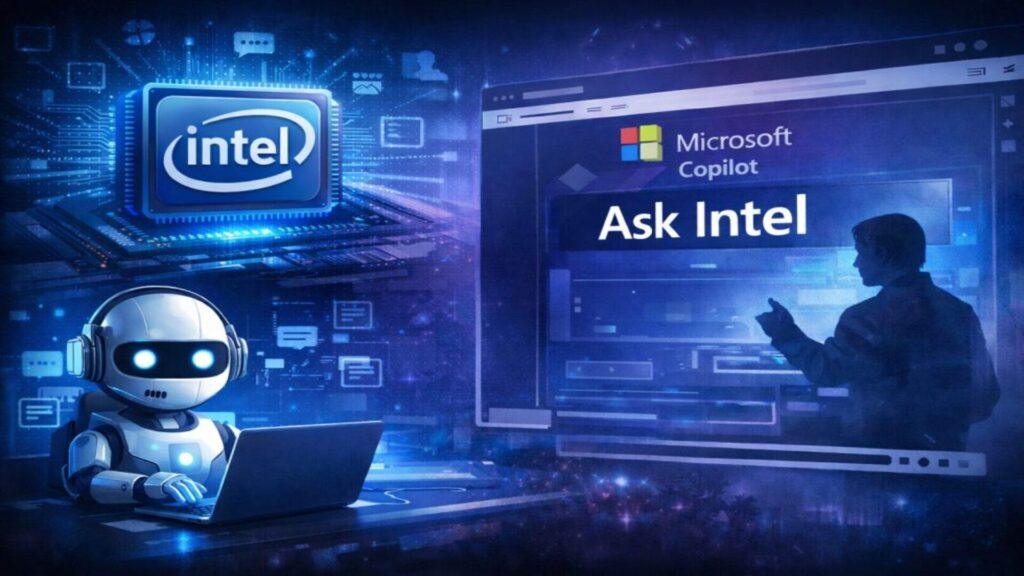
- Ask Intel replaces phone support as primary customer entry point
- Microsoft Copilot Studio powers Intel’s AI-powered centralized support assistant
- Intel reduces public phone and social media support channels globally
In a bid to restructure its operations, Intel launched “Ask Intel,” an AI-powered assistant, to serve as the primary entry point for warranty checks, troubleshooting guidance, and case creation on Intel’s support website.
This change follows the company’s decision to reduce inbound public telephone support in most countries and consolidate customer engagement around web-based systems.
The company has also discontinued direct interactions through certain social media channels, reducing communication toward centralized digital workflows.
Ask Intel
Ask Intel was developed on Microsoft’s Copilot Studio platform, which allows companies to create custom AI agents connected to internal data and operating systems.
The assistant can guide users through diagnostics, open or update service tickets, verify warranty coverage, and escalate complex issues to human agents when necessary.
Intel has indicated that future updates will expand integration with Intel.com and allow the system to identify required driver updates or automatically generate warranty claims.
The company describes the assistant as one of the first of its kind within the semiconductor industry, signaling a structural change in the way technical support is provided.
Intel’s own support documentation includes a disclaimer stating that the answers generated by the wizard cannot be guaranteed to be accurate.
The company acknowledges that the tool may contain bugs or incomplete features as development continues, but says Intel and other vendors may retain and process chat logs in accordance with their privacy policy, and there is currently no opt-out mechanism for users.
The assistant relies on artificial intelligence tools to interpret user queries and obtain relevant guidance from internal systems, but its autonomous decision-making remains limited to predefined workflows.
According to Intel, early partner feedback on the system has been positive, although it did not release specific figures to support this claim.
It also claims that internal performance metrics show improvements in case satisfaction and resolution rates compared to previous quarters.
The system is not 100% automated. Human agents are still involved in the process, although they now operate further down the line after automated triage and case preparation.
This restructuring aligns with Intel’s broader effort to streamline non-manufacturing functions and reduce operating expenses.
Replacing front-line telephone support with AI agents represents a major operational adjustment, one that can improve efficiency while concentrating control within automated systems that are still evolving.
Through Tom Hardware
Follow TechRadar on Google News and add us as a preferred source to receive news, reviews and opinions from our experts in your feeds. Be sure to click the Follow button!
And of course you can also follow TechRadar on TikTok for news, reviews, unboxings in video form and receive regular updates from us on WhatsApp also.


