
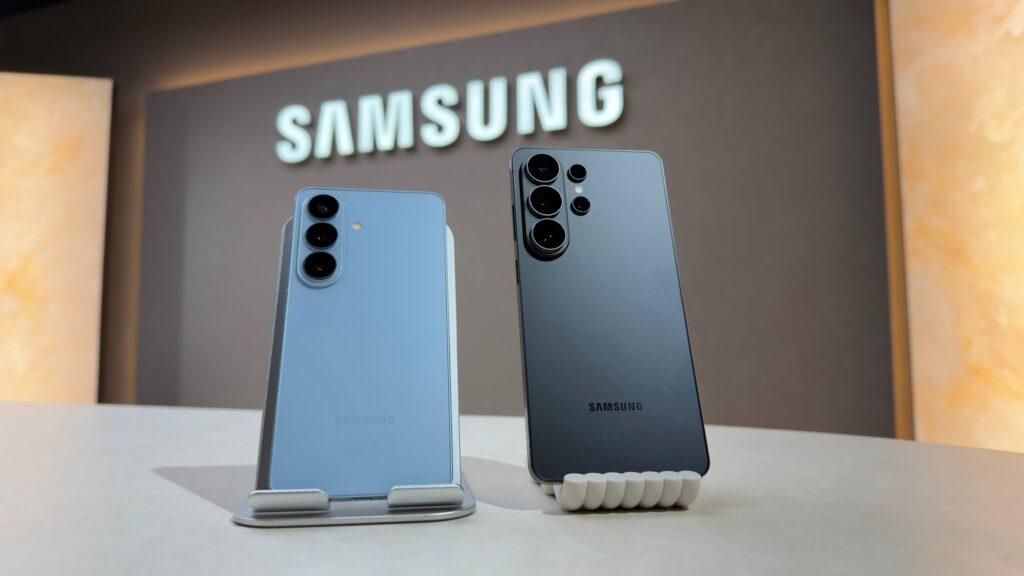
Samsung unveiled new phones and headphones at its Samsung Galaxy Unpacked 2026 event, and kicking off the show was the Galaxy S26 Ultra, which Samsung announced is the first smartphone to have a custom privacy screen.
In recent weeks we’ve seen a ton of leaks and rumors about the new Privacy Display feature, starting with a UI 8.5 leak earlier this year. Now that Samsung has officially unveiled the Galaxy S26 Ultra, we can put all speculation to rest, but we still have some questions about Privacy Display, and we’re sure you do too.
We attended a pre-Unpacked event earlier this week where Executive Vice President and head of the smartphone R&D team, Moon Sung-Hoon, took the stage to give us the inside scoop on one of Samsung’s biggest smartphone updates in recent years. During the session, he answered five of our biggest questions about privacy viewing – here’s what we learned.
1. It’s a feature that users really want
With Privacy Display, Samsung brings one of the biggest user requests to the Samsung Galaxy S26 Ultra. During the pre-Unpacked event, Moon revealed that “research shows that 56% of our users perceive screen disability as a form of privacy invasion, especially when logging into bank accounts or chatting with others.”
2. Powered by smart pixel-level technology
When Privacy Screen is enabled, your phone’s screen will appear normally from the front, but becomes harder to read from a side perspective. So how is this achieved?
The technology uses two different types of pixels: “narrow” pixels that emit light forward and “wide” pixels that also emit light to the sides at an angle.
“If we activate the privacy screen, the narrow pixels are mainly activated, while the wide pixels operate at a minimum level, limiting the side angle visibility and maintaining frontal clarity,” Moon explained.
3. Does not affect the brightness of the screen.
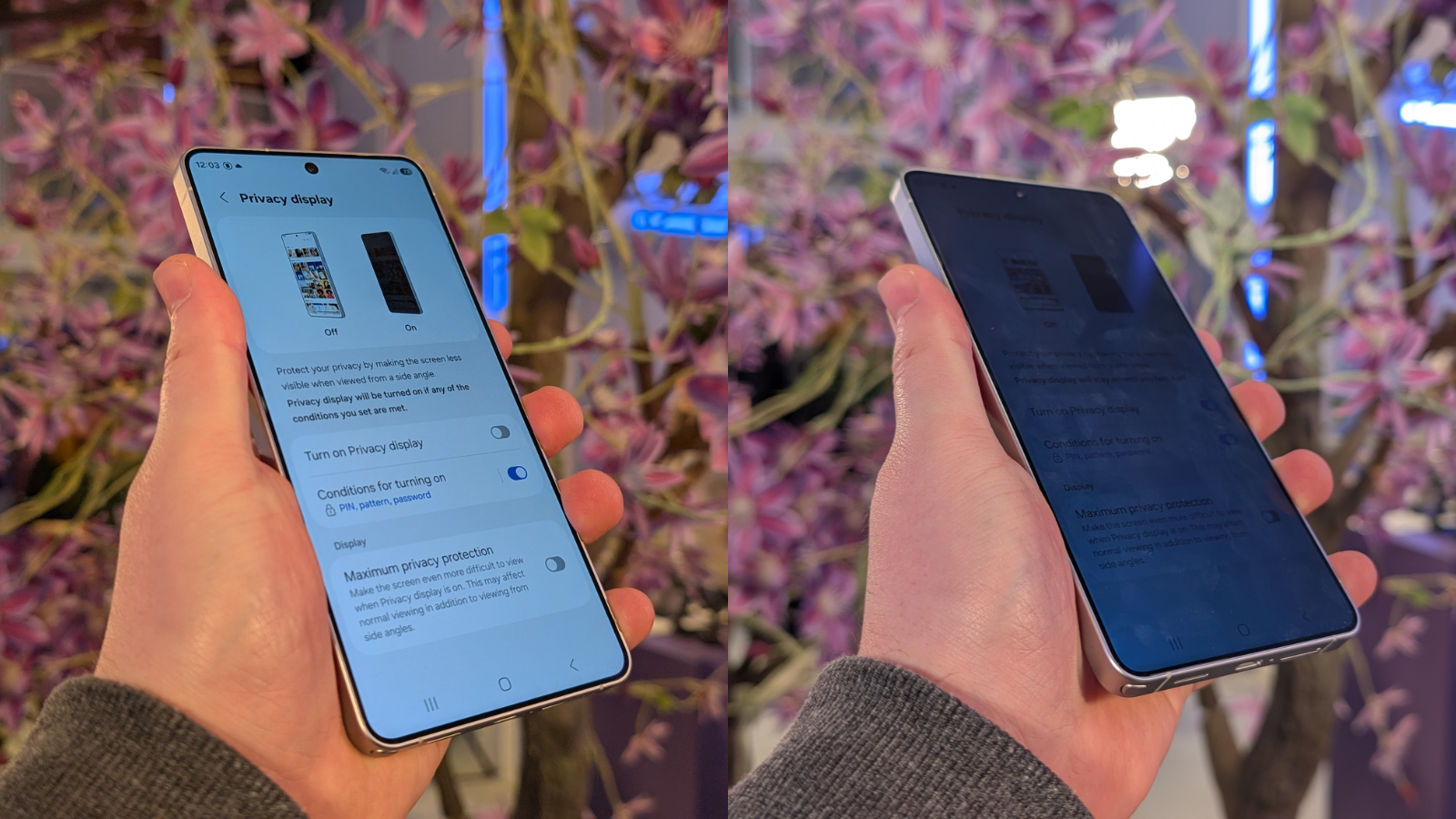
This all makes sense, but does this technology affect the overall brightness of the screen?
In short, the answer is no. Even when you’re viewing the Galaxy S26 Ultra with the privacy screen enabled, the forward display brightness remains unchanged.
4. Privacy display can save you from notification failures
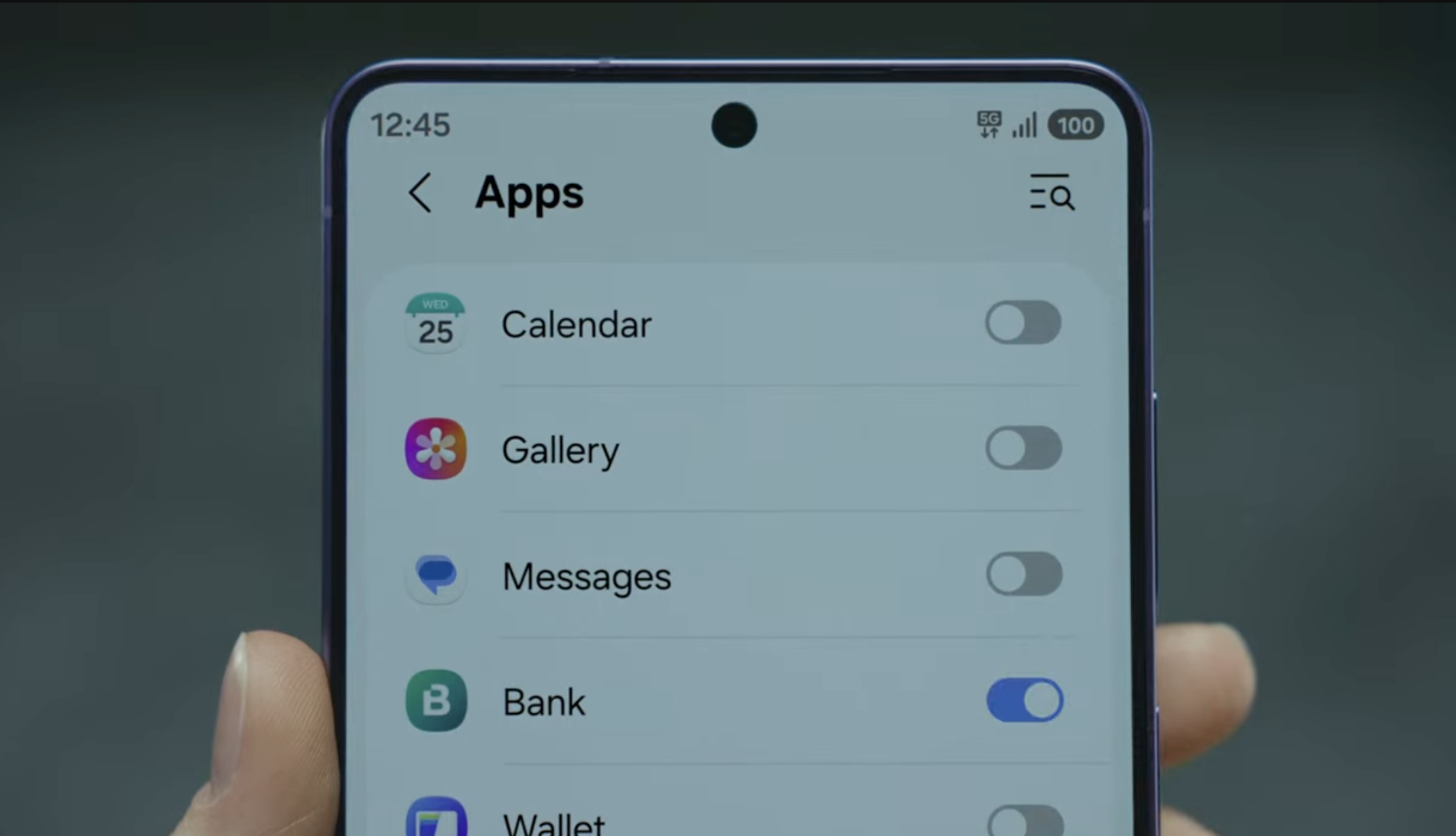
One of the other advantages of Privacy Display is that it’s not an all-or-nothing feature: it can be enabled for certain apps and not others. For example, you can enable privacy display when you enter a password or apply it to specific apps like online banking or messaging.
Moon explained that it can also apply only to notifications: “When we watch YouTube together with our family or friends, if a private message appears, it’s a disaster, right?” said. “But the privacy screen will protect only that notification area so that others cannot read it. This way, our users can enjoy the best viewing experience without any worries.”
5. Privacy display will be the default setting
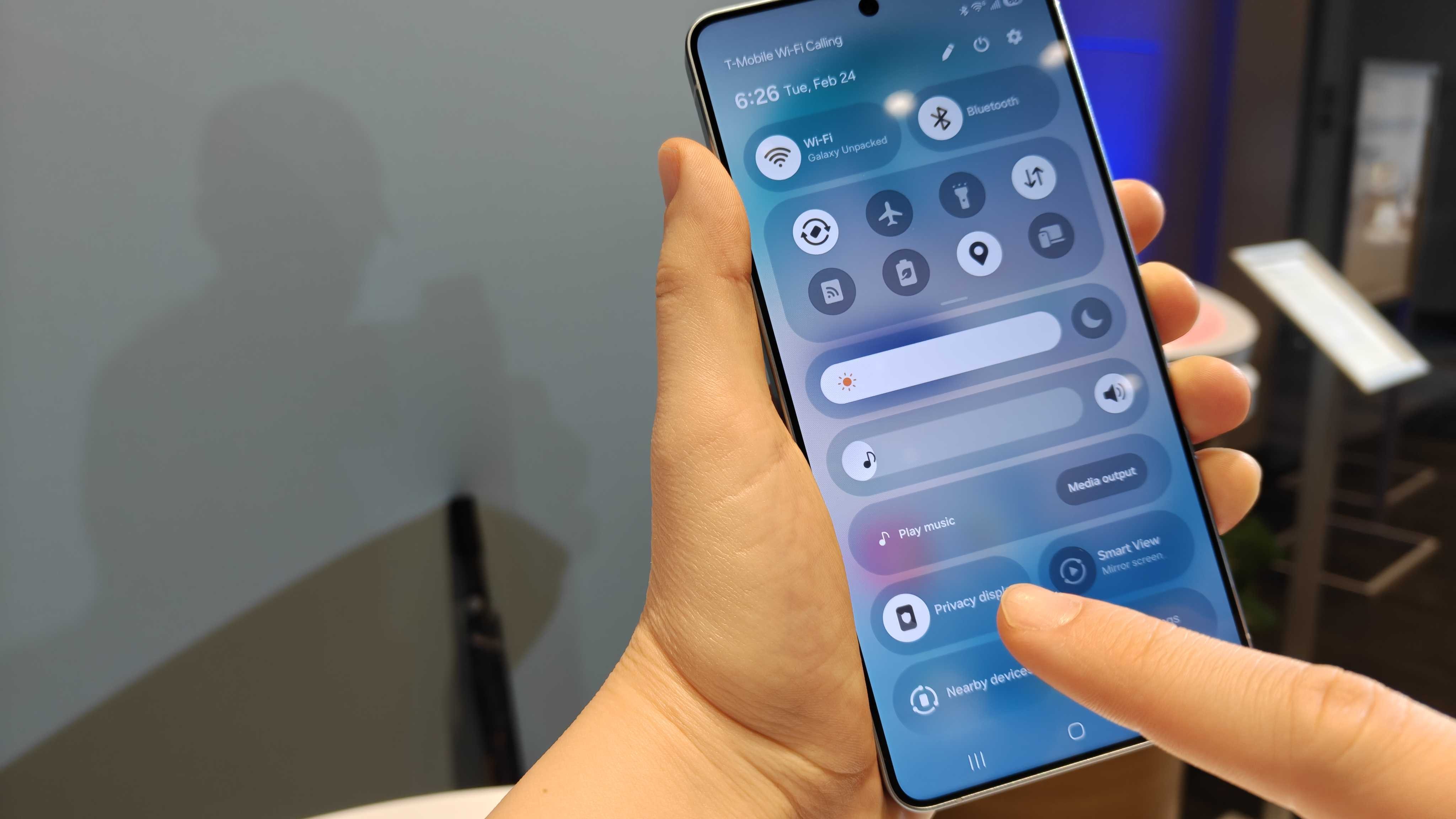
Instead of having to dig through your phone’s settings to find the switch to enable Privacy Screen, the feature will be enabled automatically on the Galaxy S26 Ultra. This way, you will be immediately protected from exposure to notification alerts. You can then change the feature settings to suit how and where you use your phone.
Follow TechRadar on Google News and add us as a preferred source to receive news, reviews and opinions from our experts in your feeds. Be sure to click the Follow button!
And of course, you can also follow TechRadar on YouTube and tiktok for news, reviews, unboxings in video form and receive regular updates from us on WhatsApp also.


