
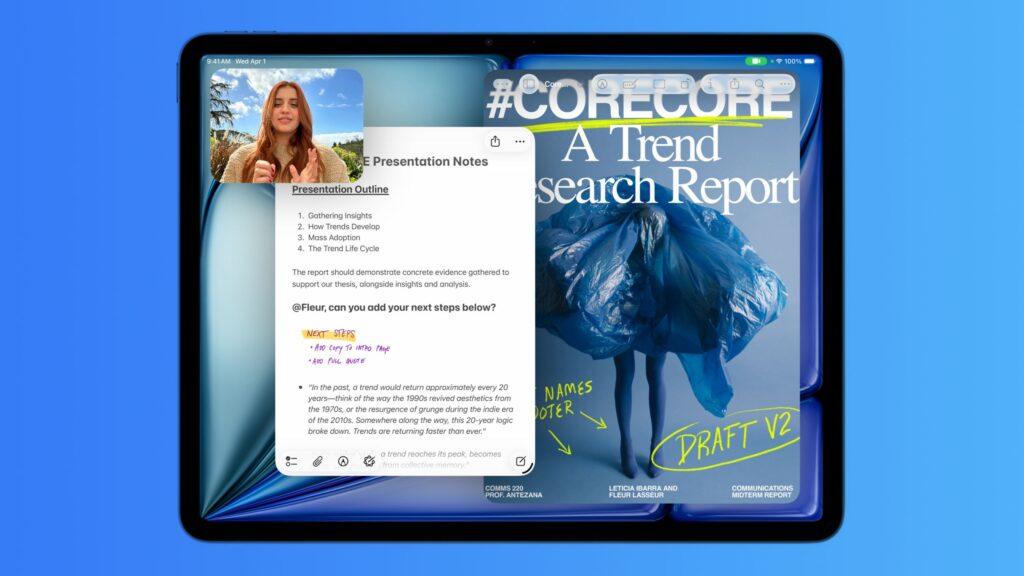
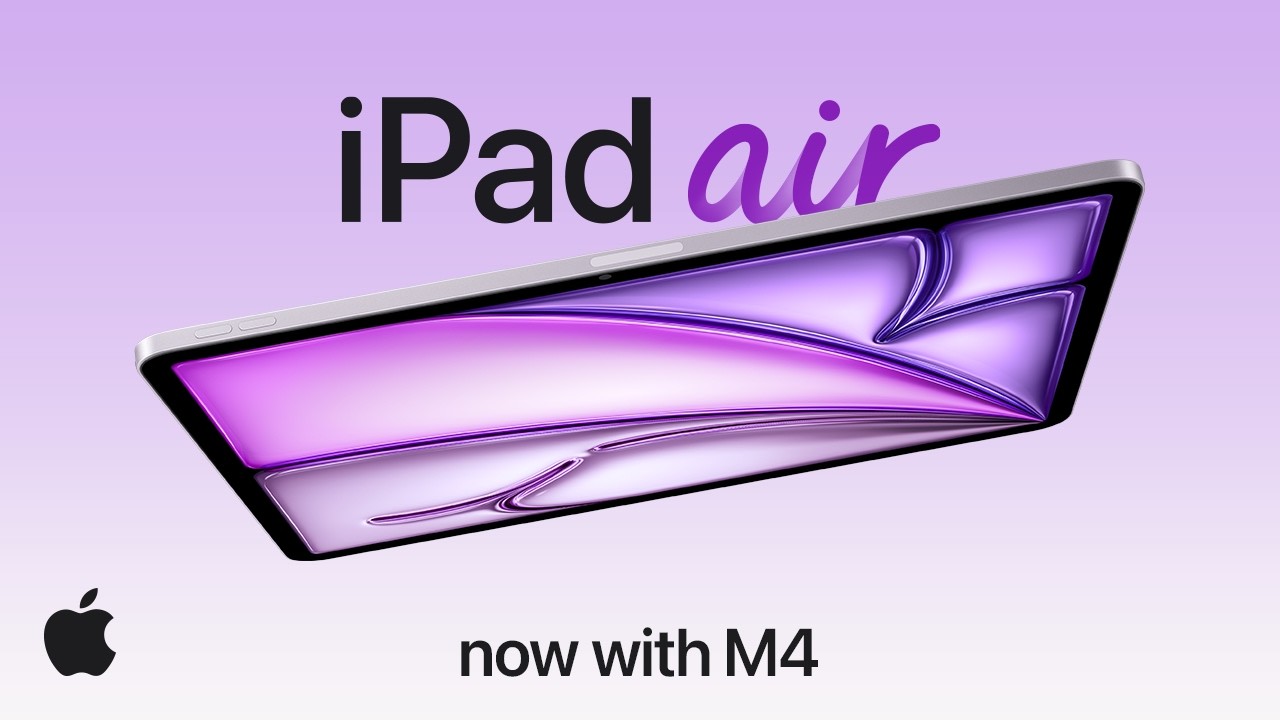
- Apple has announced a new iPad Air
- The iPad Air now features the M4 chip along with the N1 and C1X
- Maintains the starting price of the previous iPad Air with M3
Well, Tim Cook teased a big week ahead of Apple’s invite-only event on March 4, 2026, and the Cupertino-based tech giant is wasting no time. Apple just announced an updated iPad Air with the M4 chip inside.
Now, while there’s not much to talk about in terms of design, Apple is powering things up under the hood with more powerful and better equipped silicon. And that’s really something we’ve come to expect from Apple’s annual updates to its mid-range iPads.
The iPad Air still has a modern design, available in two sizes (11 and 13 inches) with Touch ID for easy authentication and support for the Apple Pencil Pro, but the real upgrade here is the switch to Apple’s M4 chip from the M3. Apple promises a big boost, even generation after generation, as the iPad Air M4 is up to 30% faster than the M3.
However, it’s not just the M4 chip either; Apple is also upgrading connectivity with its own in-house chips, the N1 and C1X, for fast Wi-Fi 7 and LTE or 5G connectivity. All of this should make iPadOS 26 run smoothly and honestly continue to position the iPad Air as the pro-grade iPad for most consumers.
It still comes in four color options (blue, purple, starlight, or space gray) and starts at the same price in the United States. That’s $599 / £599 / AU$999 for the 11-inch iPad Air and $799 / £799 / AU$1,249 for the 13-inch iPad Air, both with 128GB of storage and Wi-Fi connectivity.
M4 chip should keep things fresh
As I noted above, the main change to the iPad Air in 2026 is the chip. The M4 chip inside is configured with an 8-core CPU, a 9-core GPU, and a 16-core neural engine. You’ll also get a 50% increase in RAM, now up to 12GB, which should make this iPad well-equipped for multitasking and more intense processes. With the latter, think about 3D rendering in applications and large exports.
Beyond the general-purpose improvements I shared above, Apple also promises that the iPad Air M4 will offer up to 4x faster professional 3D rendering with ray tracing compared to the original iPad Air with M1. I suspect this will really shine with video and photo editing, along with other creative tasks and gaming on the iPad Air.
In addition to the Apple-made M4 chip, there are two other additions inside that provide more robust connectivity. The N1 chip means the iPad Air supports Thread connectivity, Bluetooth 6 and Wi-Fi 7, the latter being new. Apple’s C1X modem, which debuted on the iPhone Air, will boost cellular connectivity on eligible iPad Air models. As with most previous iPad models, the Air with M4 is eSIM only.
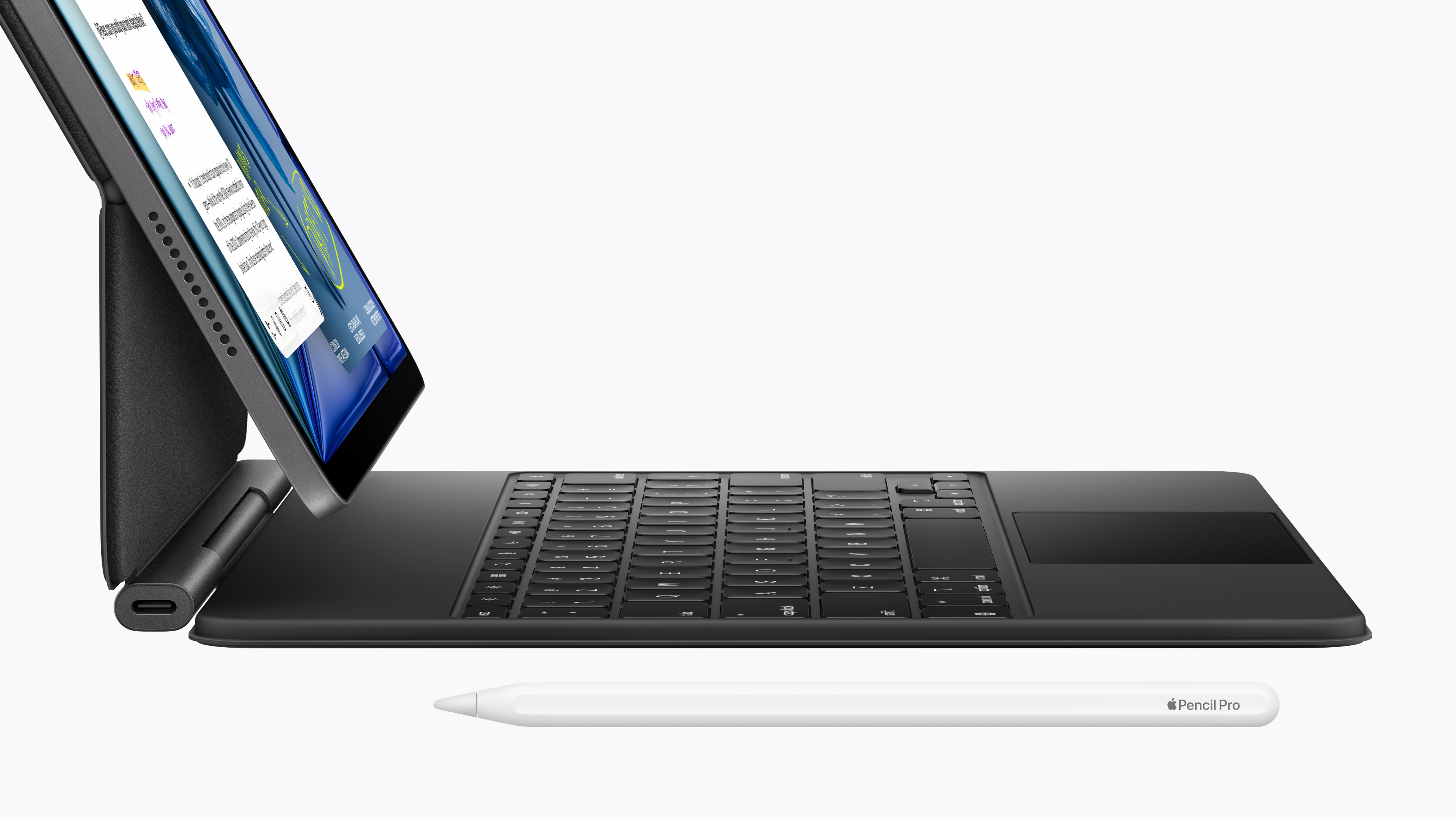
Between the M4 chip, the N1, and the C1X silicon, this sums up the main changes for the iPad Air. It still offers Touch ID on the power button along with an 11- or 13-inch Liquid Retina display with support for True Tone, Wide Color (P3), and an anti-reflective coating.
A note on screen size: Apple is rounding up slightly, but they’re the same as the last generation: the 11-inch is actually 10.86 inches and the 13-inch is 12.9 inches, both measured diagonally.
The iPad Air with M4 still starts with 128GB of storage, but you can configure it up to 1TB. Pricing starts at $599 / £599 / AU$999 for the 11-inch iPad Air with Wi-Fi or $799 / £799 / AU$1,249 for the 13-inch iPad Air with Wi-Fi. As always, cellular models start a little higher at $749 for the 11-inch and $949 for the 13-inch. It remains compatible with the Magic Keyboard for iPad Air (both sizes) and works with the Apple Pencil Pro and Apple Pencil (USB-C).
Apple will begin pre-orders for the iPad Air with M4 on March 4, 2026, and it will officially launch on March 11, 2026.
We’ll be testing the latest iPad Air as soon as we can. Let us know what you think about the upgrade from M3 to M4 in the comments below.
Look
Follow TechRadar on Google News and add us as a preferred source to receive news, reviews and opinions from our experts in your feeds. Be sure to click the Follow button!
And of course, you can also follow TechRadar on YouTube and tiktok for news, reviews, unboxings in video form and receive regular updates from us on WhatsApp also.


