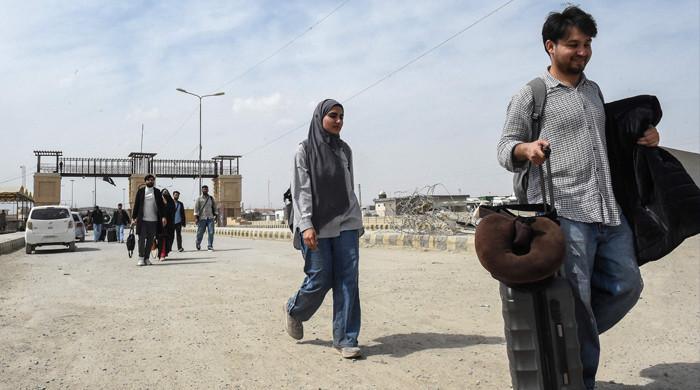
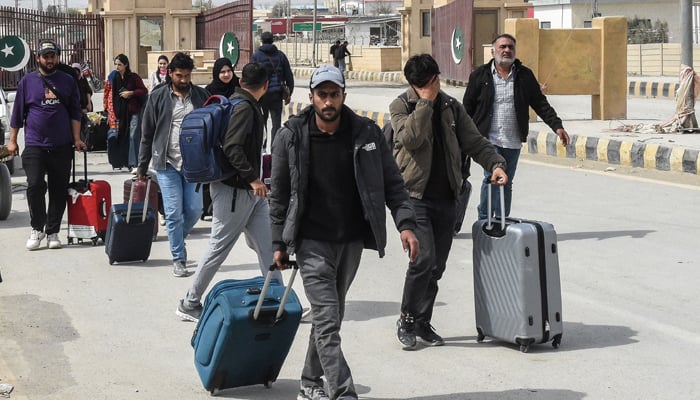
Pakistani citizens dragged suitcases across the border from neighboring Iran, describing missile launches and travel chaos as they rushed to leave the country after the United States and Israel launched attacks over the weekend.
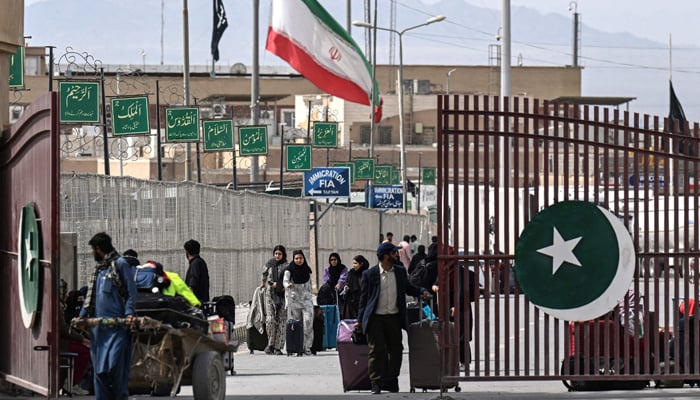
AFP Journalists saw a steady stream of people passing through large metal gates at the remote border crossing between Iran’s Mirjaveh and Taftan in Pakistan’s Balochistan province.
Powerful explosions have rocked Iran’s capital, Tehran, since Saturday, and embassies of countries around the world have asked their citizens to leave.
“All our Pakistani brothers who were in Tehran and other cities had started leaving and were arriving at the terminal, which caused a lot of pressure from the crowd,” said shopkeeper Ameer Muhammad, 38. AFP on Mondays.
“Due to the crowding, there were big transportation problems.”
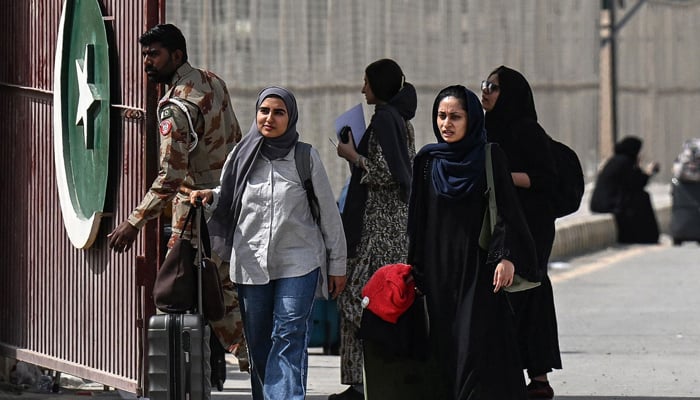
The isolated Taftan border is located about 500 kilometers (310 miles) from Quetta.
AFP Journalists saw the Iranian flag flying at half-mast as soldiers stood guard.
Most people passed through the border crossing with bulky luggage, while cargo trucks formed a long line.
Irshad Ahmed, a 49-year-old pilgrim, said AFP He was staying in a hostel in Tehran when he saw missiles being fired nearby.
“There was a military base near the hostel and we saw a lot of missiles fired,” he said.
“After that, we went to the Pakistani embassy so they could evacuate us from there. They brought us here safely.”
Prime Minister Shehbaz Sharif has said the assassination of Ayatollah Ali Khamenei was a “violation” of international law.
“It is an ancient convention that Heads of State and Government should not be attacked,” Sharif wrote in X.
The “people of Pakistan join the people of Iran in their time of pain and sadness and express their deepest condolences for the martyrdom” of Khamenei, he added.
A professor at the Pakistani embassy in Tehran, who identified himself as Saqib, said AFP: “Before we left, the situation was normal. The situation was not that bad.”
The 38-year-old said Saturday’s attacks in Tehran “forced us to leave the city.”
“The situation worsened on Saturday night when the attacks led to the loss of precious lives,” he said.