
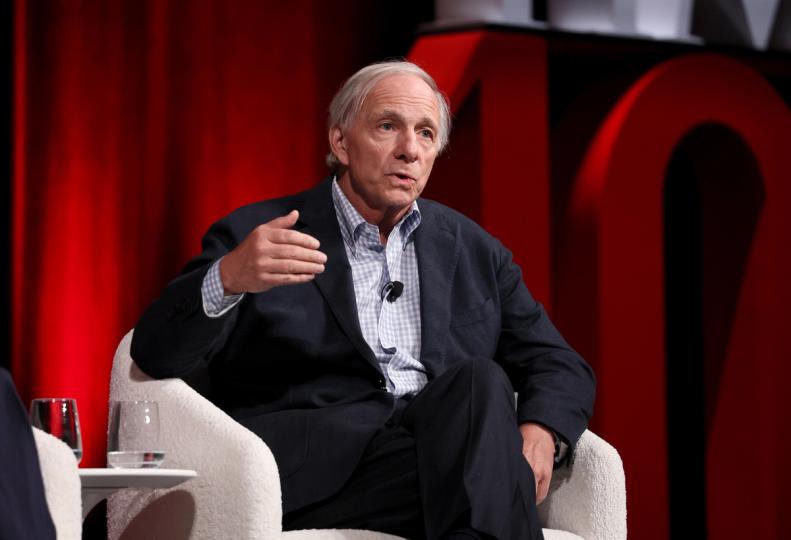
Crypto experts are pushing back after billionaire hedge fund manager Ray Dalio renewed his skepticism about bitcoin arguing that the largest and oldest cryptocurrency lacks the qualities that make gold a reliable store of value.
Speaking on the All-In Podcast, the Bridgewater Associates founder said bitcoin should not be compared to gold because it lacks central bank backing, offers limited privacy and could face an existential threat from future advances in quantum computing. Dalio also pointed to the asset’s public ledger, suggesting that transactions can be monitored and potentially controlled.
Dalio, who said last year that he has about a 1% allocation to bitcoin, is not new to criticizing the digital asset. At the time, he said bitcoin faces challenges as a global reserve asset due to its traceability and potential quantum computing vulnerabilities.
However, industry figures say those criticisms reflect long-standing debates around bitcoin, and that the risks Dalio highlighted are already reflected in bitcoin’s much smaller market value compared to gold.
Bitcoin’s risks are also its advantages
However, some analysts say those criticisms are exactly why bitcoin is worth buying.
“Dalio is not ‘wrong’ in an absolute sense,” Matt Hougan, chief investment officer at asset manager Bitwise, told CoinDesk. “There really is some risk with quantum technology and central banks aren’t really buying bitcoin yet.”
But Hougan said those concerns are precisely why bitcoin is still trading well below, about 4%, the size of the entire gold market. Bitcoin’s market cap is currently around $1.4 trillion, compared to an estimated $35 trillion for gold.
“These criticisms are literally the opportunity,” he said. “We invest in bitcoin because we believe these things will change over time; that developers will solve quantum risk and central banks will recover.”
“If these criticisms did not exist, bitcoin would already be at a million dollars per coin,” he added.
‘Tired’ old narratives
Alex Thorn, head of research at Galaxy, said Dalio’s arguments echo older narratives from bitcoin’s early years.
“Ray Dalio’s criticism of Bitcoin is reminiscent of the tired narratives of the pre-2017 era,” Thorn said in an email, adding that developers are already addressing quantum risks.
Read more: Here’s why the quantum threat to bitcoin may be less than people fear
He also said that comparing bitcoin to gold is fair, but overlooks how the two assets differ in practice. “Gold might do just fine stored in a bunker or the New York Fed, but Bitcoin has real real-world utility in ways that gold could never match,” he said, noting the growing adoption of the asset by both individuals and institutions for nearly two decades.
monetary exchange
Matthew Sigel, head of digital asset research at VanEck, said both gold and bitcoin “play a role” as they represent hard assets from different monetary eras.
“Ultimately, this is a debate between the monetary architecture of the last century and the one emerging in this one,” he said in an email.
In his view, gold solved the problem of trust in an “analogue” financial system built around declared reserves and custodians. Meanwhile, bitcoin addresses that in a digital environment through open source development and verifiable transactions.
He added that central banks, such as the Czech National Bank, are already beginning to experiment with digital asset exposure and that privacy improvements are emerging through better wallet practices and second-layer networks.
Sigel also rejected concerns about quantum computing, saying that the problem affects the entire financial system and not just Bitcoin. “Quantum risk is a broader cryptographic challenge facing the entire financial system, not a flaw unique to bitcoin,” he said.
Investor surveys, he said, also show that younger investors are increasingly preferring bitcoin, suggesting a gradual shift in the “monetary center.”
Read more: ‘Big Short’ Micheal Burry detects 2022 vibes in bitcoin crash


