
Pakistan pledges responsible development of energy and mineral resources, says UN envoy Asim Iftikhar
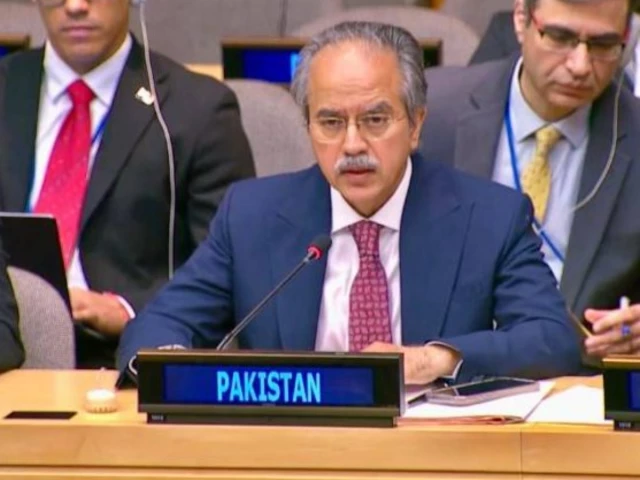
Permanent Representative to the United Nations Ambassador Asim Iftikhar Ahmad Photo: APP
Pakistan has said it is willing to work with all members of the UN Security Council and beyond to ensure that critical minerals become catalysts for sustainable development, progress and stability. Radio Pakistan reported.
The statement was made by Pakistan’s Permanent Representative to the United Nations, Ambassador Asim Iftikhar, during a briefing on “Energy, Critical Minerals and Security” in New York on Friday. He said Pakistan is committed to the responsible development of its energy and mineral resources.
Iftikhar highlighted that the government has launched specific initiatives to accelerate the exploration and development of critical minerals, strengthen regulatory frameworks, modernize geological mapping, improve licensing transparency and promote environmentally responsible mining practices.
“Our goal is to ensure that Pakistan’s resource potential is translated into industrial growth and social development,” the ambassador added, underscoring Islamabad’s efforts to align its mining sector with global sustainability and security goals.
Pakistan has vast untapped mineral wealth, including copper, gold, lithium, cobalt, rare earths and precious stones, but exports remain minimal and local communities see limited benefits.
The government aims to change this situation through policy reforms, better regulations and investment promotion, aligning Pakistan with international standards and positioning it as a responsible partner in the global minerals market.
The Second Pakistan Minerals Investment Forum (PMIF26), scheduled for April 8-9 in Islamabad, will serve as a platform to promote mining awareness, attract sustainable investments and showcase investment-ready projects.
The forum will feature technical sessions, an international gemstone exhibition and initiatives to improve market access, skills development and environmental safeguards for miners.
Read: Despite obstacles, US interest in Pakistani minerals grows
Strategic projects, such as the Reko Diq copper and gold site in Balochistan, could generate billions in revenue, create thousands of jobs and boost Pakistan’s industrial and economic growth if properly developed.
Experts predict that tapping into the minerals and gemstones sector could add between $5 billion and $7 billion annually to GDP over the next decade, transforming underutilized resources into a major economic driver for the country.
At the same time, experts also say that treating critical minerals exclusively through the lens of global demand risks repeating past mistakes. Historical experiences, such as the Green Revolution, show that growth driven by production rather than human needs can deepen inequality, damage the environment and marginalize ordinary people.
For resource-rich countries like Pakistan, true mineral security means using domestic resources to meet local needs before prioritizing exports. While the sale of critical minerals can generate income for a small elite, translating these profits into broad social benefits remains a major challenge.


