
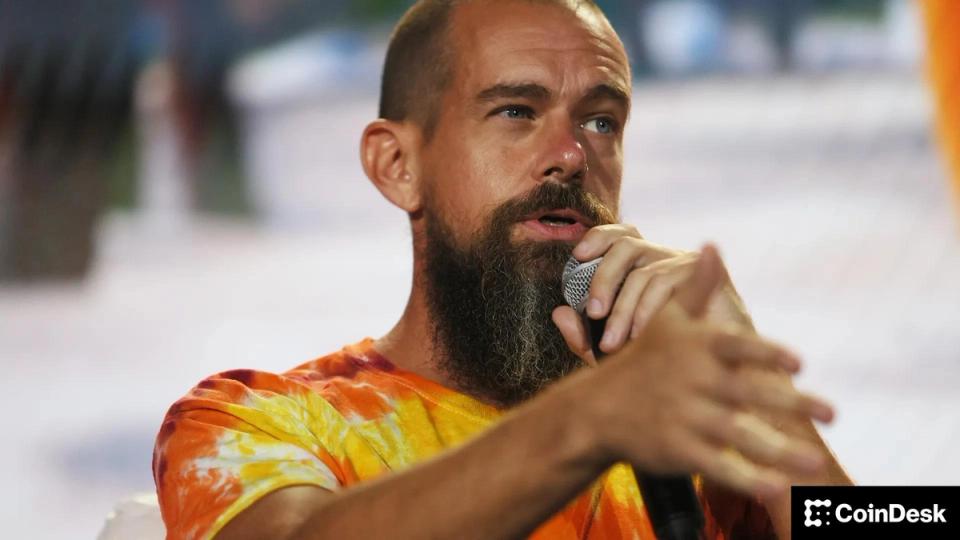
Block CEO Jack Dorsey says his company will support stablecoins, despite long arguing that Bitcoin should serve as the internet’s native monetary protocol.
In an interview with WIRED, Dorsey acknowledged the change and made clear that it reflects customer demand rather than a change in his personal beliefs.
“I don’t like that we support stablecoins, but our customers want to use them,” he said. “I don’t think it’s wise to move from one guardian to another.”
The move marks a pragmatic turn for one of the most vocal Bitcoin advocates in Silicon Valley. For years, Dorsey framed Block’s crypto strategy solely around Bitcoin, supporting the development of mining hardware and integrating the asset into products like Cash App.
The company first introduced the option for users to buy and sell bitcoins on the Cash App, and the following year received a BitLicense from New York regulators.
Block started a Bitcoin development arm and funded Bitcoin and Lightning Network developers in 2019, and began accumulating bitcoins for its corporate treasury in 2020. It currently holds 8,888.3 BTC, worth over $600 million.
Meanwhile, stablecoins have surged. Fiat-pegged tokens now circulate widely in crypto markets and cross-border payments, with their total market capitalization reaching $318 billion, according to data from CoinMarketCap.
Competition is also intensifying. Payment companies including Stripe and PayPal have already integrated stablecoin infrastructure, increasing pressure on Block to offer similar options to avoid losing users, although Dorsey did not mention them during the interview.
This is not the first time Dorsey’s Block has reluctantly backed stablecoins.
In November last year, Block’s Cash App announced that it would be adding support for stablecoins, making them “interoperable with a customer’s USD cash balance.” Stablecoin deposits, the firm said, would be instantly converted to US dollars in users’ balances.
That development was notable since in 2024, when Facebook was working on its since-scrapped Libra stablecoin and the Libra Association behind it, Dorsey said with a definitive “Hell no,” that he would not join the crypto payments scheme.
At the time, Dorsey notably said that the project was “born out of one company’s intent and is not consistent with what I personally believe in and what I want our company to stand for.”
In true Bitcoin purist style, he goes on to argue that Bitcoin’s decentralized design makes it the best candidate for an open financial protocol.
The comments come after the company reduced its workforce by about 40%, citing structural changes driven by artificial intelligence. While the layoffs sparked controversy over whether the company had overhired, Dorsey dismissed the question during the WIRED interview and doubled down on the AI angle.
“These [AI] “The tools are presenting a future that completely changes the way a company is structured,” Dorsey said in the interview, noting that the layoffs were not intended to fix the company’s cost and revenue per employee, because his company was “already ahead” of all its competitors in those metrics.
“I don’t know what the end result will be, but I do know it will have a dramatic effect,” Dorsey added.


