
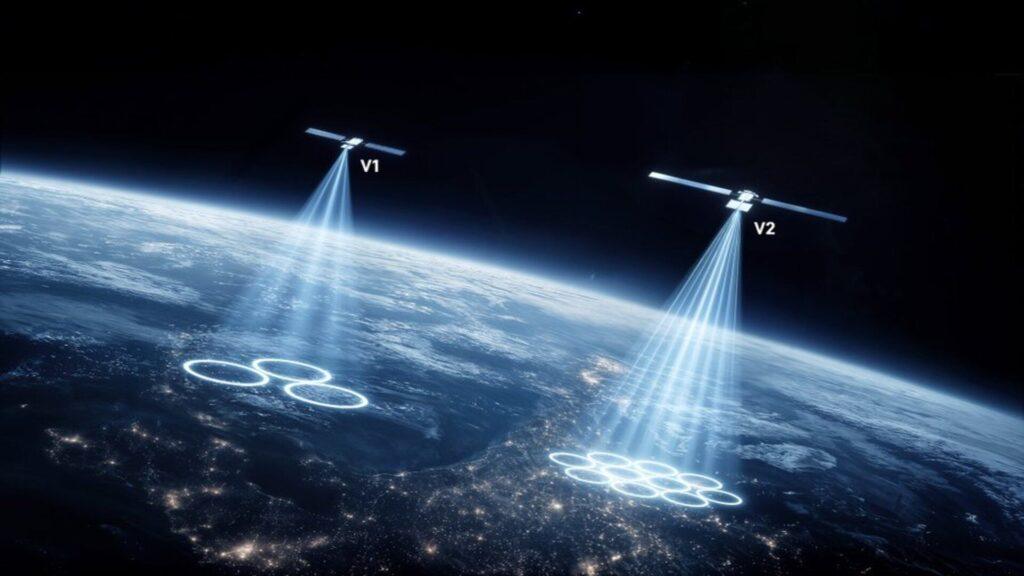
- Starlink V2 satellites hope to connect common smartphones directly without additional equipment
- The network aims to provide uninterrupted mobile service through terrestrial and satellite coverage.
- Maximum speeds could reach 150 Mbps as Starlink plans to launch up to 15,000 V2 satellites
Satellite connectivity services have traditionally focused on coverage rather than raw throughput, particularly compared to land mobile networks, but Starlink has now announced that its next-generation V2 satellites will deliver “5G speeds from space” with “100 times the data density of current generation V1 satellites.”
The company’s current service is limited to light data usage and basic text messaging, according to multiple mobile-focused sources, meaning the V2 update promises a substantial change in performance capabilities.
The upcoming V2 satellites are designed to be compatible with hundreds of existing LTE phones, allowing regular smartphones to connect directly to the network without the need for specialized hardware.
Deployment and performance expectations
SpaceX plans to launch up to 15,000 of these satellites to expand coverage and increase capacity, while first tests of the enhanced service are expected in early 2027.
Some V2 Mini satellites are already being deployed to bridge the transition between generations, serving as interim solutions until the full constellation is in place.
Starlink’s performance in deploying larger satellites will directly impact how quickly users will be able to access the full benefits of the V2 network.
The company also anticipates partnerships with terrestrial operators, such as T-Mobile in the United States, to enable seamless transitions between satellite and terrestrial networks without notable interruptions or degradation in service.
In practice, the phones will connect to satellites operating in low Earth orbit (LEO) while still cooperating with conventional cellular infrastructure.
The system is described as functioning like cell phone towers in orbit, allowing compatible phones to maintain connectivity without additional antennas or equipment.
Previous announcements from the company suggest that maximum speeds of 150 Mbps per user could become realistic once a sufficient number of V2 satellites are operational.
The service aims to provide a more reliable alternative to traditional mobile networks, particularly in regions with limited land coverage.
The satellite-to-phone service, previously called Direct to Cell and now Starlink Mobile, began commercial launch in mid-2025 in several regions, offering basic connectivity where terrestrial networks are scarce.
The upgraded V2 satellites are expected to improve bandwidth and user experience, although the actual impact of the deployment remains to be seen as the figures presented by Starlink depend on achieving full operational capacity with the larger constellation.
This leaves some uncertainty about how quickly users will experience the promised 5G speeds and higher data density in practice.
Follow TechRadar on Google News and add us as a preferred source to receive news, reviews and opinions from our experts in your feeds. Be sure to click the Follow button!
And of course you can also follow TechRadar on TikTok for news, reviews, unboxings in video form and receive regular updates from us on WhatsApp also.


