
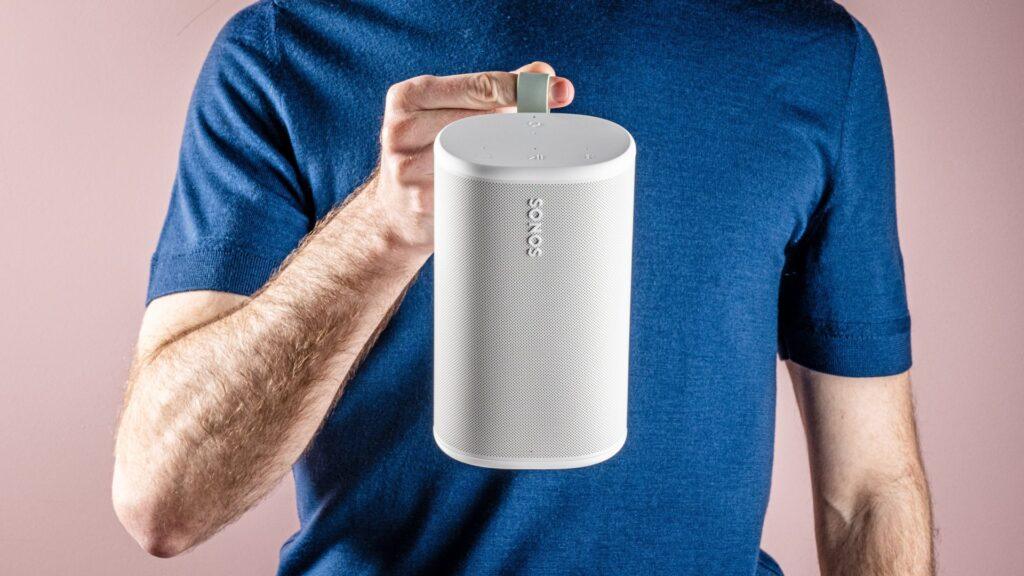
- Sonos launches two new speakers: Sonos Play and Sonos Era 100 SL
- Sonos Play is a new portable speaker that costs $299 / £299 / AU$499
- Sonos CEO Tom Conrad tells us it’s designed as a “gateway” to the Sonos system, like the Play:1 speaker was 13 years ago.
Sonos just introduced its first new music speakers since May 2024: the Sonos Era 100 SL and a new portable speaker that sits between the Sonos Roam 2 and Sonos Move in the company’s lineup. It’s called Sonos Play, and Sonos CEO Tom Conrad tells me that with Play, “we’re not launching a new speaker, but we’re really opening a new gateway into the system.”
The name of the new Sonos Play is “an intentional callback” to the Play:1 as Sonos’ original introductory speaker, Conrad says, because the idea here is to create a speaker that’s the best of all worlds at once. “It’s a phenomenal-sounding speaker and has a lot of utility compared to anything we’ve done before,” he promises.
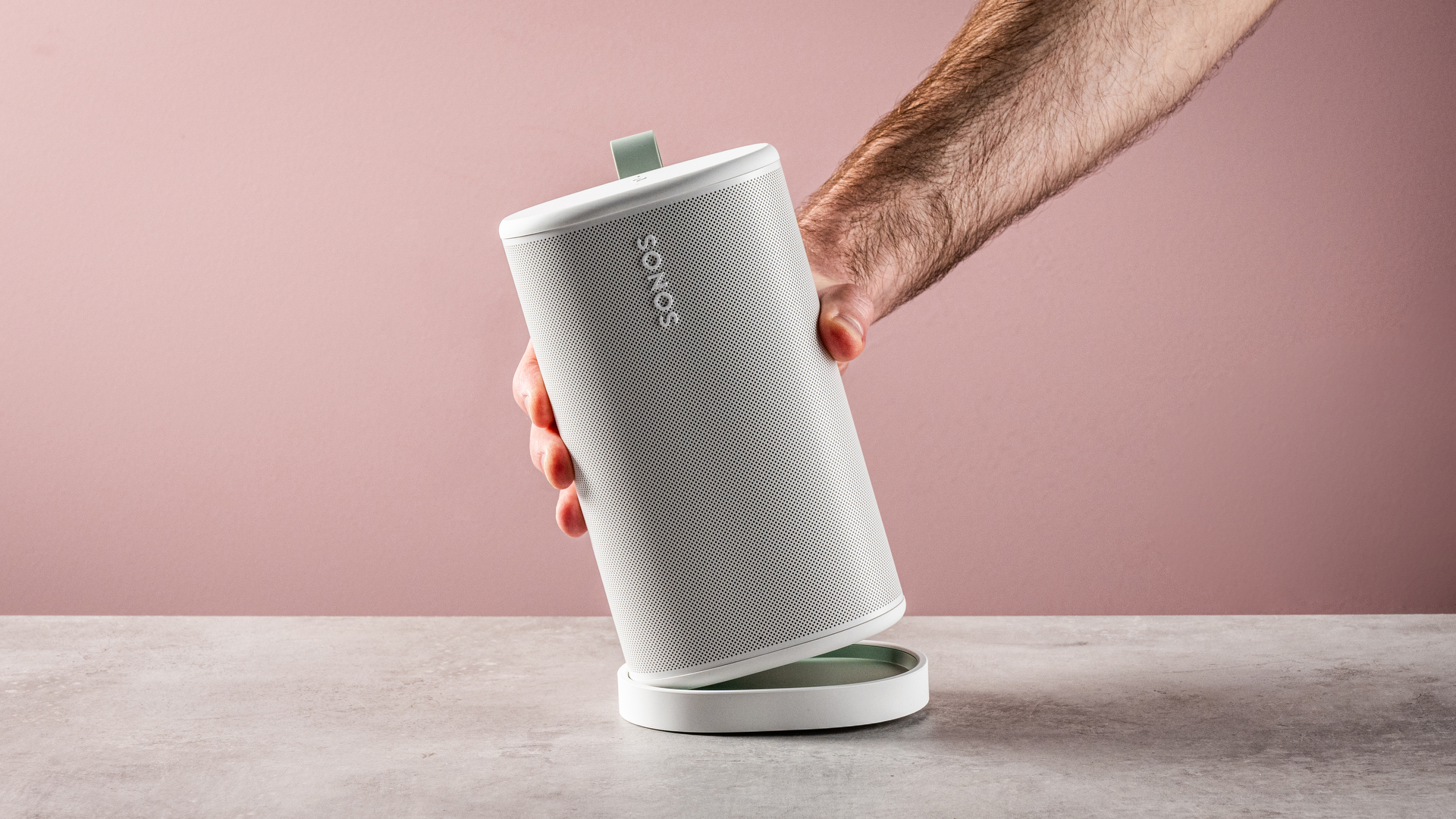
The Sonos Play has a smart audio setup for its compact size: there are two angled tweeters for a little stereo separation, with a midrange speaker for mids and bass. This is the same approach used in the Sonos Era 100, but because the drivers need to be smaller than in the Era 100, the Play also has two bass radiators of opposite force to help improve bass power without adding vibrations. “It falls nicely between the audio features of the Sonos Roam and Sonos Move,” says Conrad.
Article continues below.
It sits beautifully between the audio features of the Sonos Roam and Sonos Move.
Tom Conrad, CEO of Sonos
The idea is that it can provide enough power and audio quality to fill any room in the house, whether alone or in a stereo pair, but it’s small enough to carry around – the Move 2 is a bit heavy to carry around. anywherealthough it is technically portable, as I said in my Sonos Move 2 review.
The Sonos Play supports Wi-Fi and Bluetooth, and promises up to 24 hours of battery life on a single charge, which is impressive compared to even the best portable speakers. It has a USB-C port that can be used as a line input via an adapter (for one of the better turntables or a similar source). Sonos really wants this to be able to do everything its other speakers can do, to the extent possible.
The Sonos Play is IP67 rated, meaning it’s fairly dust-resistant and can be completely submerged in water for a short period of time without issues. It weighs 2.87 pounds (1.3 kg) and at 4.43 x 7.56 x 3.02 inches (113 x 192 x 77 mm), it’s small enough to easily carry with you, even if it’s not exactly pocket-sized. It has a small hook on the back to carry or hang somewhere.
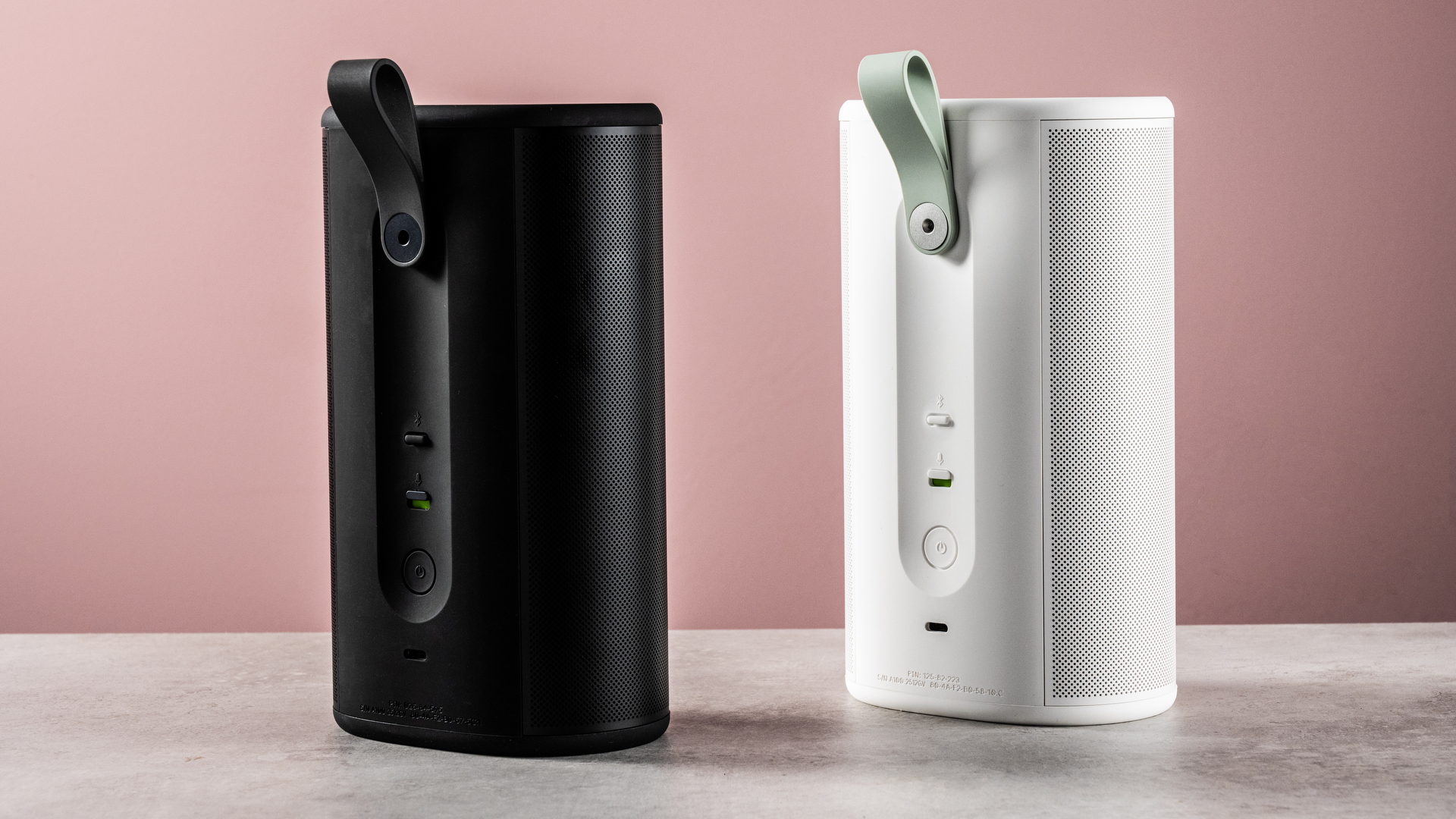
Obviously, it works as part of the Sonos ecosystem on Wi-Fi (and includes support for Apple AirPlay 2) and comes with a charging dock. But it also expands the Sonos system in a new way: multi-speaker support over Bluetooth. You can connect your phone to a Sonos Play via Bluetooth and then you can stream sound to up to three other Play or Move 2 speakers, no matter where you are. It’s not as extensive as Auracast Bluetooth support on some speakers, but it’s not available on all phones and is still a nice upgrade.
The Sonos Play will launch on March 31, 2026 priced at $299 / £299 / AU$499, so it’s definitely not a cheap thing to add to every room. When it comes to mid-size Bluetooth speakers, you’re paying a lot more than you would for the five-star JBL Charge 6, for example. But then you wouldn’t get the Wi-Fi features that are essential for the best wireless speakers, and significantly, the Sonos has a much nicer home design compared to the JBL.
The Era 100 SL looks like a great budget buy
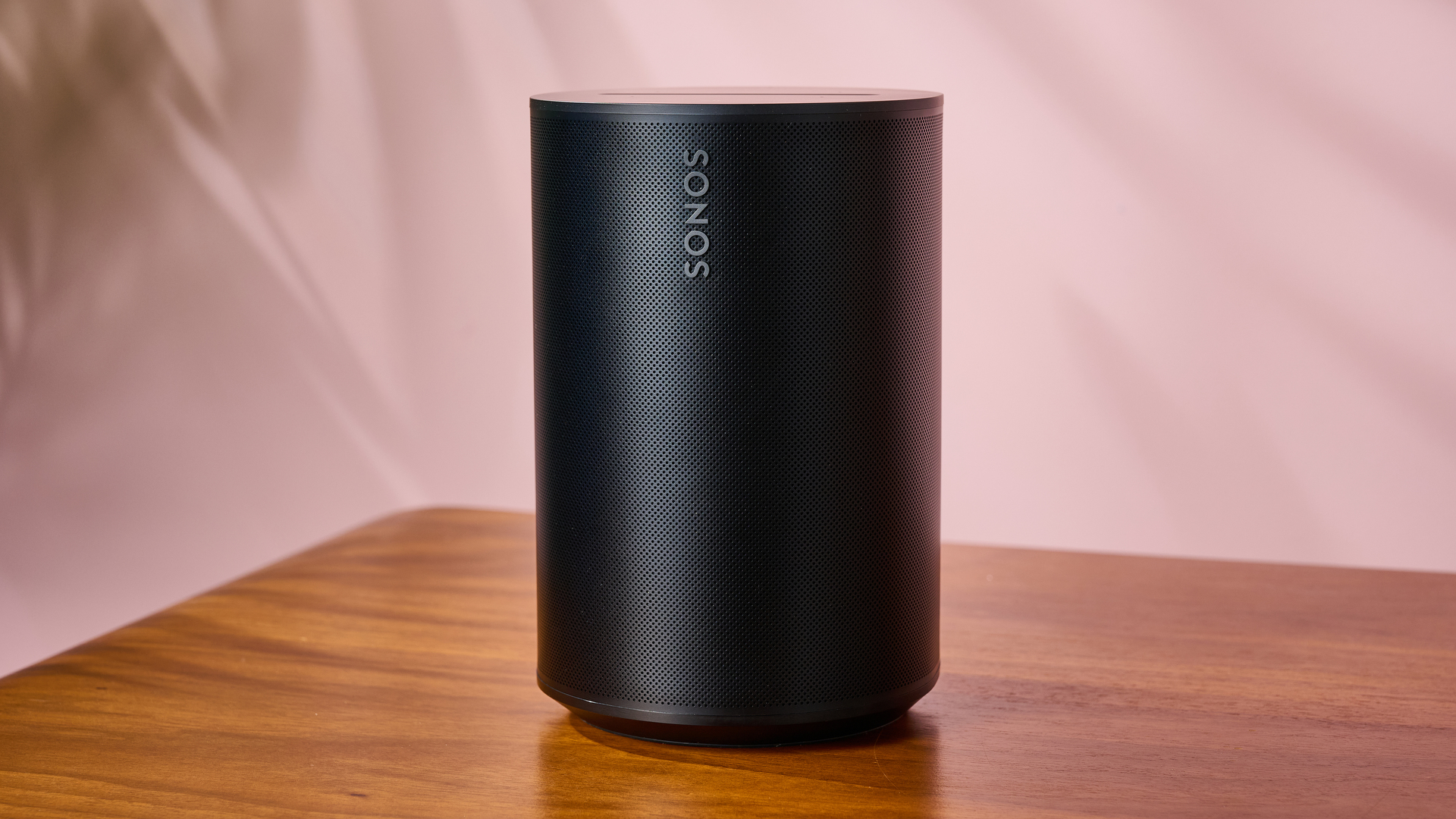
The Sonos Era 100 SL follows the pattern of other Sonos SL products: it is a cheaper version of the Sonos Era 100. It has the same speaker configuration of two angled tweeters to provide some sense of stereo sound, with a single midrange speaker for mids and bass.
It still includes Wi-Fi and Bluetooth, plus a USB-C port to which you can connect an adapter for audio input from a turntable or other source. However, it doesn’t include any voice control options – the microphones have been removed to help reduce the price. (This also means it doesn’t support TruePlay Quick Tuning for iOS and Android, only full TruePlay for iPhone only.)
With an introductory price of $189 / £169 / AU$289 (available March 26), it’s the cheapest Sonos speaker you can buy in the UK and Australia, although in the US it costs $10 more than the Sonos Roam 2.
The Sonos system is really the product.
Tom Conrad, CEO of Sonos
Tom Conrad told me that it wasn’t just a matter of removing the microphones to get the speaker to that price, but that the speaker was actually redesigned on the inside to make it less expensive to produce:
“A lot of work went into the Era 100 SL to get to a point where we could offer it at this entry-level price, without compromising audio quality at all. While it might seem like this is as simple as removing a few microphones, there was a thorough look at the cost of the product from top to bottom to arrive at this new price.”
Refocus on the system, not the devices
I asked Conrad why these models are the choices to lead Sonos’ return to launching music-focused speakers, and he emphasized that the big change in the way he approaches the company is to stop treating individual launches as separate products, but instead focus on the whole.
“One of the first things I told the team when I took over as CEO was that I think we really make one product, which is a home sound system. Any individual device is just a way to get into the system or deepen your attachment to it. The Sonos system is really the product.”
So when it comes to planning releases, he says: “We’re thinking more fundamentally about ‘how does this fit into the overall offering?’ How do you make the Sonos system more complete?”
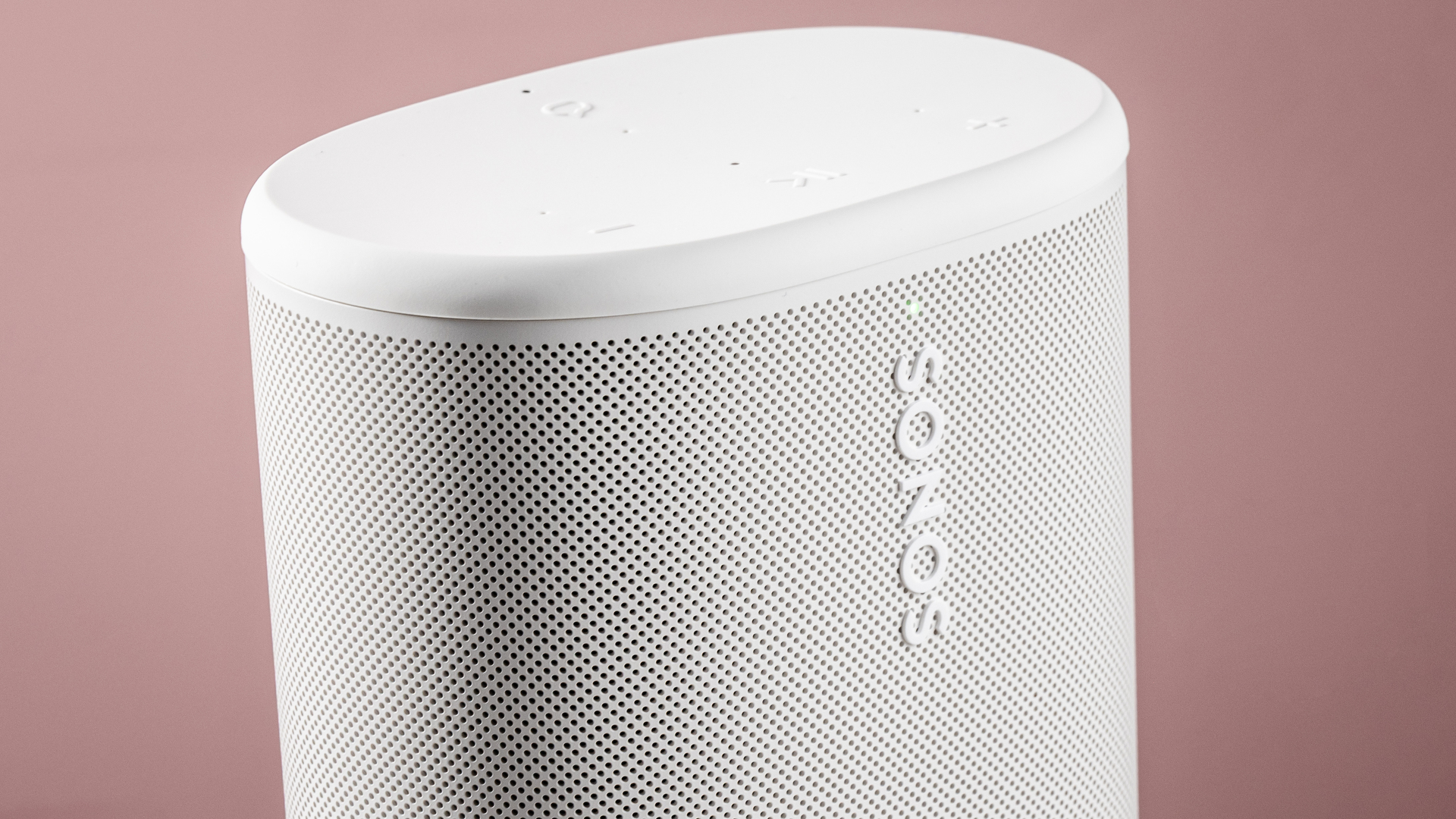
As I mentioned above, he really wanted to reference the original Play:1 (and he showed me that he still uses one on his desktop). The name and even some design elements of the new speaker are a reference to that model (the thicker plastic band on the top of the Play is reminiscent of the Play:1 or Sonos One, compared to the Era 100), but he says it’s also about the philosophy:
“13 years ago, Play:1 introduced millions of people [the idea of the Sonos system]. We actually sold over 10 million of them and amazingly nine out of 10 are still in use today.
“When we started this project, we asked ourselves a simple question. If we were designing the perfect building block for the Sonos system today, knowing everything we’ve learned over the past two decades, what would it look like?”
We’ve really focused on how to make this a really great part of the Sonos system – the perfect ‘Goldilocks’ speaker, if you will.
Tom Conrad, CEO of Sonos
As part of thinking about Sonos as a product, Conrad began restructuring the company quickly after joining permanently in January 2025.
“I moved us from a business unit orientation, where we had a home theater team, a laptop team, a professional team and a headphone team, to a functional organization. [organization]where we have a hardware organization and a software organization, and a product design organization.
“And the benefit is that it really allows the company to think about what we do as a system and not as a collection of categories.”
Conrad says the development of Sonos Play is an example of how changing the structure of the company changes the products themselves.
If I’m honest about my evaluation of the app, I think it’s peculiar.
Tom Conrad, CEO of Sonos
“It allowed us to really think holistically about how the product fits into the line,” he says. “I think that under the old guard, a product like the Play could have been conceptualized primarily alongside other types of mid-level portable speakers, and would have been vetted internally and marketed in [technical specs] about battery life and portability, etc. We’ve really focused on how to make this a really great part of the Sonos system – the perfect ‘Goldilocks’ speaker, if you will.
“I really think it’s the ideal component. When my friends and family ask me about Sonos, I’ll start telling them that they should put a Sonos Play in every room or a pair of stereos in their family room.”
Of course, any discussion about the direction Sonos is moving in can’t ignore the app debacle that led to Sonos’ nightmare year in 2024, and Conrad and I discussed that at length.
You can read Conrad’s analysis of what went wrong before he joined, how mistakes were made, what’s being improved, and what changes still need to be made in my conversation with him here, but here’s a tidbit:
“If I’m honest about my assessment of the app, I think it’s peculiar. I think the company made a number of UI decisions that are simply not consistent with what you see in other music streaming apps, for example.
“I mean: all kinds of strange swipe behavior and a search possibility that floats above the screen in a strangely invisible way, cards upon cards upon cards as you navigate the app, none of which is conventional. And so, when we sit with our customers in their homes and watch them using the app, they get lost, they don’t know where they are. It’s not clear to them how to get to the basic functionality.”
Follow TechRadar on Google News and add us as a preferred source to receive news, reviews and opinions from our experts in your feeds. Be sure to click the Follow button!
And of course, you can also follow TechRadar on YouTube and tiktok for news, reviews, unboxings in video form and receive regular updates from us on WhatsApp also.


