
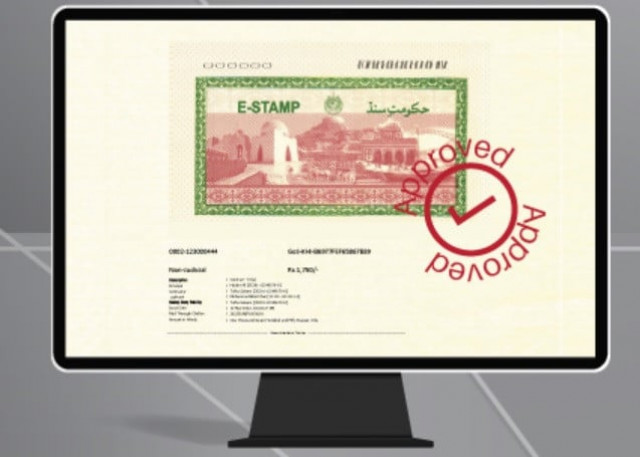
Sudden transition from old e-stamp system sparks frustration among attorneys, residents
Electronic seal. PHOTO: estamp.gos.pk
RAWALPINDI:
Citizens faced severe inconvenience and judicial work largely stopped after the newly introduced digital white paper system for issuing stamps remained paralyzed across Rawalpindi division on Monday and Tuesday.
The Punjab Board of Revenue (BoR) has abruptly scrapped the e-stamp system, introduced two years ago, after the system reportedly did not work effectively. In its place, authorities launched a new digital white paper format, abolishing the role of the Bank of Punjab (BoP) in issuing stamp papers and returning the responsibility to traditional licensed stamp providers.
During the first two days of implementation, the system remained non-functional. From 8 in the morning until the closing of the office, not a single stamp could be issued due to technical failures. Lawyers were unable to file new cases, High Court petitions, appeals or bail applications, and responses to ongoing cases were also pending.
Ordinary citizens were equally affected. People seeking stamps worth between Rs 100 and Rs 1,200 (or water, electricity, gas, telephone connections, restoration of disconnected utilities, domicile certificates, job applications and other official requirements) were unable to obtain them. Long queues formed in front of the sellers’ offices, but customers left empty-handed.
The new system abolished the centuries-old yellow stamp paper, traditionally used for property records, affidavits and powers of attorney. Dating back almost 200 years, yellow paper was known for its durability and could last for decades without breaking or deteriorating. It has now been replaced by a digital white paper format that allows stamp papers to be downloaded and printed on plain sheets, raising concerns about the long-term durability of high-value property documents.
Officials said system development and technical setup for the transition were completed over the weekend, and the new portal was scheduled to go live on March 9. However, the old e-stamp website was closed and replaced by a new platform, which remained largely inaccessible, effectively stopping the issuance of all types of stamp papers.
Citizens expressed frustration over the disruption. Nasir Ali and Muqaddas said they had visited vendors for two days to get stamps for domicile certificates and electricity connections, but the system was still not working. Lawyers warned that ongoing court work could be delayed indefinitely.
Tariq Mahmood Sajid Awan, president of the District Bar Association, criticized the repeated changes in the stamp paper system and questioned why the previous mechanism was discontinued before the new portal was fully functional.


