
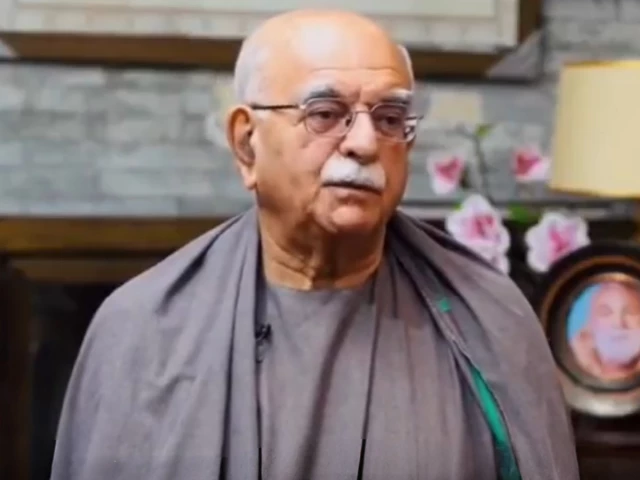
A photograph of opposition leader Mahmood Khan Achakzai. SCREEN CAPTURE
ISLAMABAD:
Tehreek Tahaffuz Ayeen-i-Pakistan on Wednesday urged the government to trust the opposition and parliament on defense pacts and policies amid the changing regional situation, and emphasized that national security decisions must be taken with consensus.
The demand was contained in a resolution passed during a joint parliamentary meeting of the PTI and other opposition parties in Parliament in Islamabad, according to a post on the TTAP’s X account. The resolution included demands related to the ongoing conflict in the Middle East as well as tensions between Pakistan and Afghanistan.
The resolution also demanded the immediate release of jailed former Prime Minister Imran Khan, as well as expressing “deep concern” about the situation in the region and condemning US-Israeli attacks on Iran.
National Assembly Opposition Leader Mahmood Khan Achakzai chaired the meeting.
According to sources, the members discussed the situation in Iran and agreed to present a resolution in support of Iran in both the National Assembly and the Senate. The participants appreciated the text of the resolution prepared by Latif Khosa.
Legislative procedures and the role of the opposition in parliamentary committees were also discussed at the meeting. During the debate, Sher Ali Arbab expressed reservations about the functioning of the committees.
He said the opposition was not getting adequate opportunities to present its position effectively, adding that if it was not possible to return to the committees, resigning from the assemblies could also be considered.
Sources said most members supported a return to parliamentary committees, while some participants suggested keeping the option of resignations under consideration.
Later, in a resolution passed unanimously, the parliamentary party reiterated its stance that the cases in which former Prime Minister Imran Khan has been imprisoned are politically motivated and baseless and should be resolved through the judicial process.
The resolution expressed serious concern about Imran Khan’s health status while detained in Adiala Jail, noting that he had reportedly been transferred twice for treatment to the Pakistan Institute of Medical Sciences due to lack of adequate medical facilities in prison.
He also noted the absence of a retina specialist at the hospital and stated that despite the deterioration of vision in his right eye, access to his personal and family doctors remained restricted.
In view of his deteriorating health and need for immediate medical attention, he demanded his immediate release under rules 143, 145, 146, 197 and 795 of the Pakistan Prison Rules, read with section 401 of the Code of Criminal Procedure, citing precedents where similar relief had been granted to a convicted former prime minister.
The resolution also expressed deep concern about the deteriorating situation in the region and strongly condemned the attacks carried out against Iran by the United States and Israel, calling them a clear violation of international law and state sovereignty.
The meeting emphasized that every sovereign state has the fundamental right to self-defense and highlighted that respect for sovereignty, territorial integrity and international law is essential for global peace and stability. He also urged Muslim countries not to allow their territory, airspace or resources to be used against another state under external pressure.
The participants expressed their grief over the martyrdom of Iran’s Supreme Leader Ayatollah Syed Ali Khamenei and others, paid tribute to them and condemned all incidents targeting civilian populations.
The meeting also expressed concern over the rising tensions between Pakistan and Afghanistan and urged both countries to resolve their differences through patience and diplomatic compromise, while ensuring protection of lives and properties of civilians.
Furthermore, he called for dignified treatment of Afghan refugees in Pakistan in accordance with international law and humanitarian principles.
Speaking to the media after the meeting, PTI president Gohar Ali Khan said there was grave concern within the parliamentary party regarding Imran Khan’s health, adding that nearly 100 MPs had expressed reservations on the issue. He said a resolution on Imran Khan’s health would be tabled in the National Assembly.
On the other hand, British High Commissioner to Pakistan, Jane Marriott, also visited Parliament and met Mahmood Khan Achakzai in the opposition chamber, where they discussed matters of mutual interest and the current political situation.


