
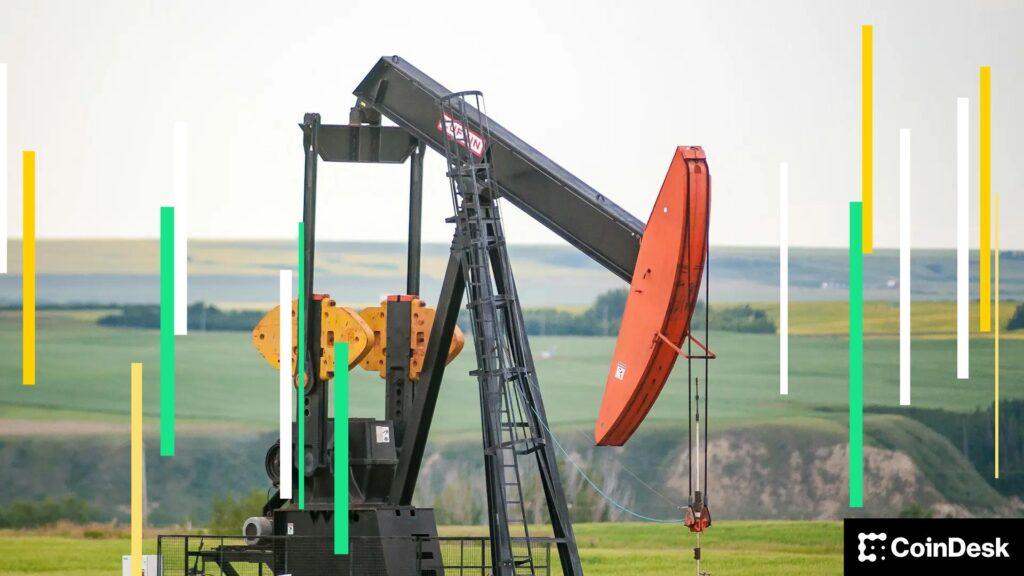
Oil is the most vital commodity and exerts a dominant influence on all corners of the global economy. This reality became painfully clear with the recent war-induced increases in oil prices above $100 a barrel and the resulting nervousness in financial markets.
Yet despite its immense importance, the machinery that drives the global oil trade remains largely archaic. It is dominated by huge legacy exchanges, extensive paperwork and high barriers to entry that can deter all but the biggest players.
Baron Lamarre, co-founder of International Digital Exchange (INDEX), a blockchain-based platform for tokenized oil and identified as former head of trading at Petronas, aims to revolutionize this.
Their vision is to put oil on the blockchain, with each LITRO token representing 1 liter of actual crude oil, with the goal of debuting in early 2027. The value of the token will be indexed to popular global oil benchmarks such as Brent and West Texas Intermediate.
“Litro’s testnet and product demo will launch from March to May 2026, with an official launch in January 2027,” Lamarre told CoinDesk in an interview, highlighting the project’s clear development timeline.
This project stands out for its ambition to remain strictly based on the real world. By contrast, much of the broader digital asset market remains awash in speculative tokens that have little connection to Main Street.
Even the booming real-world assets (RWA) market, which is reportedly over $25 billion today, is predominantly driven by the tokenization of financial instruments such as government bonds.
It is specifically designed to modernize what it describes as the outdated, paper-based systems of the $6 trillion global oil market. Traditional commodity deals are often dragged through long supply chains involving multiple banks and clearinghouses, frequently delaying settlements by up to 90 days and locking up billions in vital capital.
This problem is especially acute now, as conflicts in the Middle East disrupt supply chains and increase market volatility. The current system, dominated by traditional exchanges such as CME and ICE, often leaves a wide range of small and medium-sized investors sidelined due to high capital requirements and lack of direct access.
Verified reservations
LITRO tokenization aims to solve this by placing verified digital reserves on the blockchain, promising faster, more accessible and more transparent trading.
Here’s how it works: Oil producers commit their certified reserves to the INDEX platform. These reserves are then meticulously verified by independent auditors for quantity, authenticity, and ownership of the crude oil before any LITRO token is minted. While the physical oil remains securely held at the producer’s facilities, legal title to that oil is digitally assigned to the INDEX system.
“Only audited and verified reserves can be tokenized,” Lamarre explained, emphasizing that tokens are minted strictly 1:1 with the physical volume of oil. He added that the project is currently being built on Arbitrum, an Ethereum scaling solution, while maintaining compatibility with any EVM-compatible blockchain.
Physical redemption
A key draw for traders, Lamarre says, is LITRO’s 24/7 liquidity and promise of direct reimbursement. Holders of the token can redeem it for cash or, in theory, physical delivery of crude oil.
“Redemption for physical oil is part of the design,” Lamarre said.
The platform has a sophisticated “intelligent logistics routing system” to facilitate this. This system is designed to match oil grades, organize vessels and terminals, issue bills of lading and electronic certificates, and coordinate delivery.
This means that token holders will eventually be able to take physical custody of the barrels they digitally own. Its intelligence layer connects digital tokens with physical delivery mechanisms, leveraging IoT sensors, AIS vessel tracking, and AI-powered optimization to automate the entire redemption-to-delivery process.
First stages
The project is still in its early stages. Lamarre noted that INDEX is currently in talks with Capital Union Bank to join as a banking partner. Other agreements with investors and partners are expected to be finalized once the Minimum Viable Product (MVP1) is completed by the end of March 2026.
If Lamarre and his team successfully execute this ambitious vision, it could mark a significant and necessary shift in the way global energy markets operate, moving from the closed silos of traditional finance to transparent blockchain rails that operate 24/7.


