
- German court orders TCL to stop advertising and selling QLED TVs
- Complaints from rival companies allege false advertising
- Standardized Certification Could Help Buyers
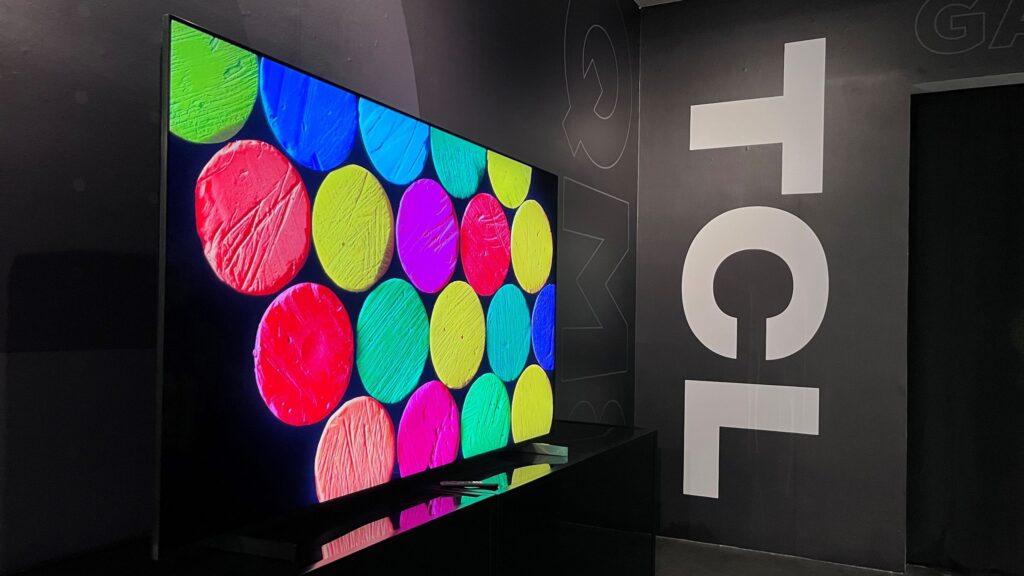
TCL has been ordered to stop selling some of its televisions in Germany. A Munich court ruled that TCL had violated the country’s unfair competition law by advertising supposedly QLED TVs that “do not offer the color reproduction expected from QLED TVs,” Korea Times reported.
The court decision means that TCL can no longer advertise or sell certain current models of specific QLED TVs in Germany.
The case was brought by Samsung, which claimed that TCL was running misleading advertising, and more court cases on the same issue are coming up in other countries, including the United States.
Article continues below.
All of the lawsuits make the same claim: that what TCL calls a QLED is not a QLED as it is commonly understood, and that TVs are being mis-sold to consumers as a result.
Tests of quantum dots did not find many results.
The court found that TCL’s quantum dot TVs, such as the QLED870 series available in Germany, did not offer the features of a quantum dot LED and that consumers were being misled as a result.
This is not the first time it has been claimed that TCL’s quantum dots do not work. In late 2024, South Korean news website ET News published details of tests that failed to detect the chemicals needed to produce quantum dots in TCL quantum dot TVs.
The tests were commissioned by Seoul chemical company Hansol Chemical (which, it is worth noting, works with Samsung, a key rival of TCL, and which heavily promoted the results of these tests along with the initiation of the court case) and were carried out by SGS of Geneva and Intertek of the United Kingdom.
According to ET News (via Google Translate), “No Indium (In) or Cadmium (Cd) was detected in three TCL QD TV models. Indium and Cadmium are essential materials that cannot be omitted for QD implementation…if neither of them are present, QD technology cannot be said to have been applied.” You can see the test results here.
TCL disputed the findings—”QD content may vary by supplier, but it definitely contains cadmium,” it responded—and published its own tests, including a test conducted by SGS, the same company that performed tests for Hansol.
The results contradicted Hansol Chemical’s tests, but those tests used a different methodology: while TCL’s tests focused on TCL’s quantum dot films, the tests commissioned by Hansol were performed on finished TCL TVs.
It seems highly unlikely that TCL will get away with selling quantum dot TVs that don’t contain quantum dots, and the performance of TCL’s QLED displays in our reviews has been consistent with the stated specs and color performance, regardless of what technology was used inside to get there, within the usual margins of error we expect when moving from marketing claims to real-world use.
Hansol Chemical has filed a complaint against TCL with the US Federal Trade Commission, alleging false advertising, and TCL is also facing class action lawsuits in several US states making the same claim. TCL is not alone here: Hisense has also been the target of attacks in the United States.
The claims and counterclaims indicate a problem with TV technology: Without independent certification, we have to rely on manufacturers’ claims. And at least in Germany, the court decided that TCL was making promises it had not kept.
While independent certification could help consumers, it’s all very confusing right now: Germany’s TÜV Rheinland has given official certification to both Samsung and TCL for quantum dot TVs, but for different things: Samsung has been certified as “Real Quantum Dot Display,” while TCL received the “Realistic Visual Experience” award.
TCL declined to comment for this article and we reached out to Samsung but have not yet heard back. We will keep you posted with any additional responses.
Follow TechRadar on Google News and add us as a preferred source to receive news, reviews and opinions from our experts in your feeds. Be sure to click the Follow button!
And of course, you can also follow TechRadar on YouTube and tiktok for news, reviews, unboxings in video form and receive regular updates from us on WhatsApp also.


