
- London judge says plaintiff used smart glasses to cheat in court
- The plaintiff received real-time responses from the smart glasses.
- The evidence was rejected for being “unreliable and lying”
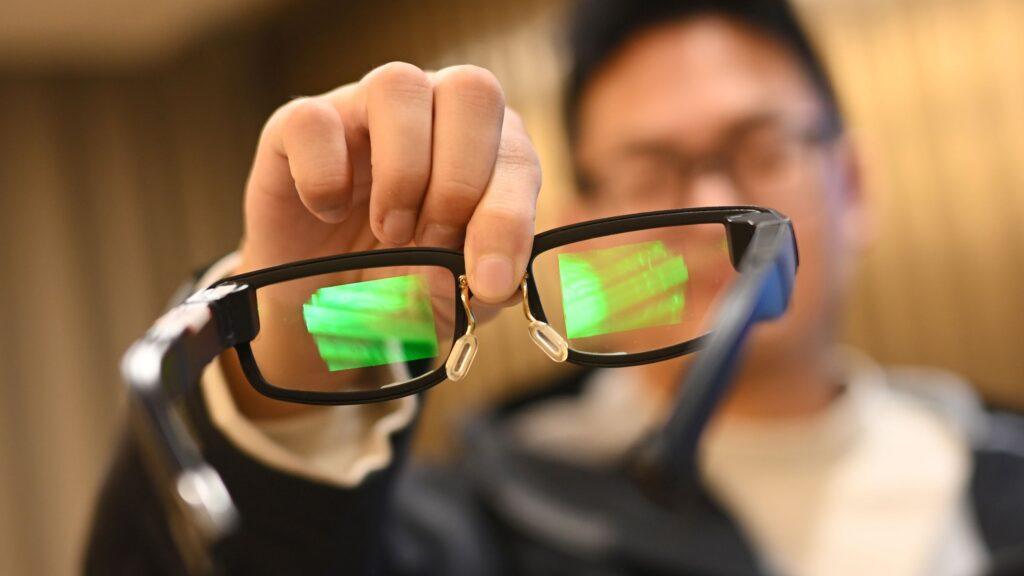
It sounds like a deleted scene from Suitsbut a judge in a London High Court case revealed that a plaintiff recently used smart glasses to receive real-time advice on his answers, and then blamed ChatGPT.
The insolvency case, which centered on the liquidation of a Lithuanian company co-owned by Laimonas Jakstys, took place in January, but was recently reported by Legal Futures (via 404 Media) when the judgment was published. And it’s full of fascinating, if slightly comical, clashes between a courtroom and new technology.
The judge first noticed something was wrong when Jakstys began pausing before responding. “Right at the beginning of his cross-examination, he appeared to pause before answering the questions put to him,” Judge Agnello KC noted in the ruling.
Article continues below.
After this happened several times, defense solicitor Sarah Walker said she could “hear interference coming from around Mr Jakstys”, and this was supported by the interpreter. The judge asked the plaintiff to remove his glasses before continuing with the cross-examination, but that was just the beginning of a comical turn of events.
Later, while the interpreter was translating a question, Mr. Jakstys’ cell phone apparently “began to loudly emit the voice of someone speaking,” the ruling states. “There was evidently someone talking on a mobile phone with Mr. Jakstys. He then took his mobile phone out of the inside pocket of his jacket. Following my instructions, the smart glasses and his mobile phone were placed in the hands of his lawyer,” wrote Judge Agnello KC.
Interestingly, Jakstys showed up in court with the glasses the next day, but was then told to turn them off. “When questioned, Mr. Jakstys denied that he was using the smart glasses to receive the answers he was required to give in court to the questions asked. He also denied that his smart glasses were connected to his mobile phone at the time he was testifying before me,” the judge added.
Unfortunately, the evidence did not support this. According to Jakstys’ call log, he had called and received calls from someone marked on his phone as “abra kadabra”, including one just before he entered the witness stand. When asked about the identity of “abra kadabra”, Jakstys claimed that he was a taxi driver. But the judge was understandably not convinced.
‘A race first for me’
The smart glasses, the pauses before the answers and the mysterious “abra kadabra” contact: this case has all the ingredients of a CSINetflix style documentary. But there was a final twist.
When asked about the voice blaring on his phone when his smart glasses were removed, “his explanation was that he thought it was ChatGPT.” Understandably, Judge Agnello KC concluded that this “lacks credibility.”
Jakstys also seemed to mysteriously fight without his glasses. “Once Mr. Jakstys was [sic] Since he no longer had his smart glasses, he hesitated quite a bit before answering their questions. He would often be asked a question and would pause before asking for the question to be repeated or say he didn’t understand it. This frequently occurred when it was clear to me that he simply did not know what his response should be,” Judge Agnello KC concluded.
The inevitable result was that Jakstys’ evidence was rejected “in its entirety.” Summarizing the testimony, the judge concluded that he “was not truthful regarding the use of the smart glasses and the training through the smart glasses.”
But, naturally, the case also raises broader questions about the clash between our long-standing institutions and the technology that is rapidly overtaking them. As attorney Saara Idelbi noted about the case on LinkedIn: “This time it was a human trainer. Next time it will be AI. This case shows us how dangerous smart wearable devices can be.”
Defense lawyer Sarah Walker also told Legal Futures: “This was my first professional career but, with technological advances, it may well be something litigators have to deal with much more frequently in the coming years.”
Follow TechRadar on Google News and add us as a preferred source to receive news, reviews and opinions from our experts in your feeds. Be sure to click the Follow button!
And of course, you can also follow TechRadar on YouTube and tiktok for news, reviews, unboxings in video form and receive regular updates from us on WhatsApp also.


