
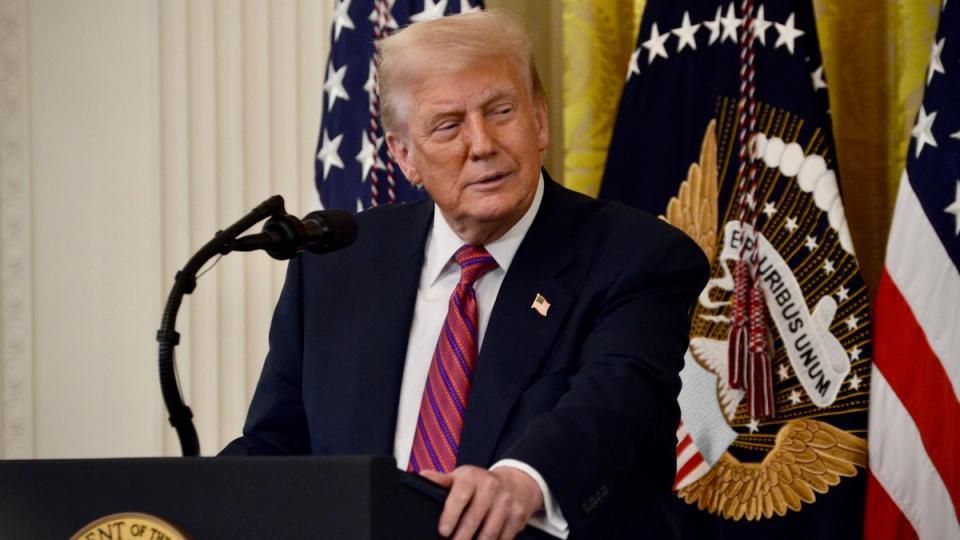
A seat at Donald Trump’s next crypto lunch could cost as little as $70,000. It could also cost more than $6 million, depending on how participants choose to move up the leaderboard that determines entry, even as the token trades nearly 96% below its peak.
The event, announced last week, is scheduled for April 25 at Mar-a-Lago, Trump’s private club in Palm Beach, Florida. Attendance is capped at 297 people and is tied to TRUMP memecoin holdings. Wallets are ranked based on “Trump Points,” which reflect the exposure of the tokens over time. Those rankings, rather than simple ownership, determine who qualifies for invitations.
This lunch marks the second such event to meet the president, following the last dinner announcement in April 2025. That previous dinner led Democratic lawmakers to lodge protests and express concerns about Trump profiting from his own crypto token while advocating for legislation to support the industry and appoint regulators to oversee cryptocurrencies. These concerns have, in part, delayed current legislation sought by the crypto industry, while US lawmakers are currently trying to advance the Digital Asset Market Clarity Act.
Onchain data shows that participants in this new event are approaching it in very different ways (previously, only the top 220 holders received invites), and the leaderboard of these winning wallets provides the clearest example.
Over the past week, the address tagged as DNTpoX, currently in the first position in the ranking, received over $6 million in TRUMP tokens from Binance, including transfers of 1 million and 999,999 tokens in a short period, reflecting the majority of his holdings. The pattern points to rapid accumulation, suggesting that the incumbent has moved up the rankings through recent purchases rather than long-term positioning.
That wave of buying over a short period aligns with broader trading patterns around the token. The leaderboard rewards both strategies: wallets that accumulated early and held on through the token drop have accumulated points for months, while latecomers with deep pockets can still quickly climb the leaderboard by deploying capital at scale.
The top 29 qualifiers will attend a private VIP reception with Trump and a tour of the event venue, while the others will only attend the gala itself.
However, not all entries in the rankings appear to correspond to individual investors.
One of the wallets that made it to the rankings is labeled “Sun,” implying that it could be the wallet of crypto investor Justin Sun. While Sun purchased $21 million of memecoin last year, on-chain analysis shows the wallet is flooded with wallet transfers from HTX, an exchange with close ties to Sun. However, the data appears to be an internal mix of wallets rather than a single entity holding it. Justin Sun did not respond to CoinDesk’s request for comment.
Further down the rankings, the cost of qualifying appears significantly lower.
Based on wallet balances near the lower end of the top 300 and current prices, some positions are worth tens of thousands of dollars. That puts the likely entry threshold around $70,000, although the exact limit will depend on how the rating changes.
That range is well below the multi-million dollar positions at the top, but still represents a significant financial commitment.

What the leaderboard shows is that the rankings reflect a mix of approaches of investors who want to be invited.
Some participants accumulated tokens months ago and held onto them. Others appear to be building positions more recently. In some cases, wallets may represent balances linked to exchanges rather than individuals.
Overall, the data suggests that qualifying for the event depends not only on how much is held, but also on when the positions were established and how aggressively they were increased.
TRUMP’s memecoin team did not immediately respond to CoinDesk’s request for comment.
A familiar but different approach
While invitations to the previous Gala were limited to the top 220 token holders, this time it looks like things are slightly different.
Last year’s cryptocurrency dinner selected attendees based on token activity, attracting a mix of traders, entrepreneurs and public figures. Reports from NBC News, CNBC and The Intercept identified participants, including former NBA player Lamar Odom, while many others remained under pseudonyms.
Some attendees said they hoped to influence Trump’s views on crypto policy, while critics argued that the event blurred the line between financial activity and political access.
Data from Dune and Token Terminal show that TRUMP generated enormous trading volume in the days following its launch in January 2025, and that activity declined sharply thereafter. That history shapes the current ranking: wallets that accumulated tokens early, during that period of high liquidity, have accumulated Trump Points over months of holding. Newer entrants are competing in a smaller market, but large deals can still move up the rankings quickly, meaning both strategies remain viable.
The difference this time is who receives the invitations.
For the new event, Solscan data shows that the largest TRUMP wallets, including those linked to the project team, exchanges and liquidity pools, control the majority of the supply but do not appear on the leaderboard, probably because individual invitations cannot be sent to companies or organizations.
Instead, addresses linked to top-ranked participants tend to have much lower total shares. The third-ranked wallet, for example, has approximately $4 million in tokens and ranks around 30th in terms of total token holders. Another high-ranking participant owns between $4 million and $10 million and is in a similar range.
The group vying for entry appears distinct from the chain’s biggest holders, and for some participants, those positions were built months ago.
Several top-ranked wallets show large inflows of TRUMP tokens dating back eight to 10 months, typically transferred from exchanges such as Binance, OKX, and Gate.io. In many cases, those tokens appear to have been in possession ever since.
This suggests that the leaderboard reflects not only current balances and trading activities, but also duration, giving an advantage to participants who accumulated early and maintained exposure.
However, recent activity shows that positions are not fixed and late buyers can still participate in the ranking.
The entries from the top-ranked wallets indicate that large purchases can still change rankings quickly. Participants do not need to have held tokens from the beginning, as long as they are willing to deploy capital at scale.
The result is a system in which both early accumulation and late entry remain viable strategies.
TRUMP is currently trading at $3.70, having gained more than 25% since the gala was announced. It is still significantly lower than when it was introduced last year.


