After a strong 2025, in which we gave positive reviews to all three of LG’s OLED TVs, the B5, C5 and G5, and said the mid-range C5 is the best TV for most people, the company has finally revealed Australian pricing and availability for its 2026 TV line-up.
As was the case last year, here in Australia we were late to the party to check out the new range, but fortunately I’ve now been able to get up close and personal with the QNED, the OLED TV and even the company’s only Micro RGB model.
A more stylized television series
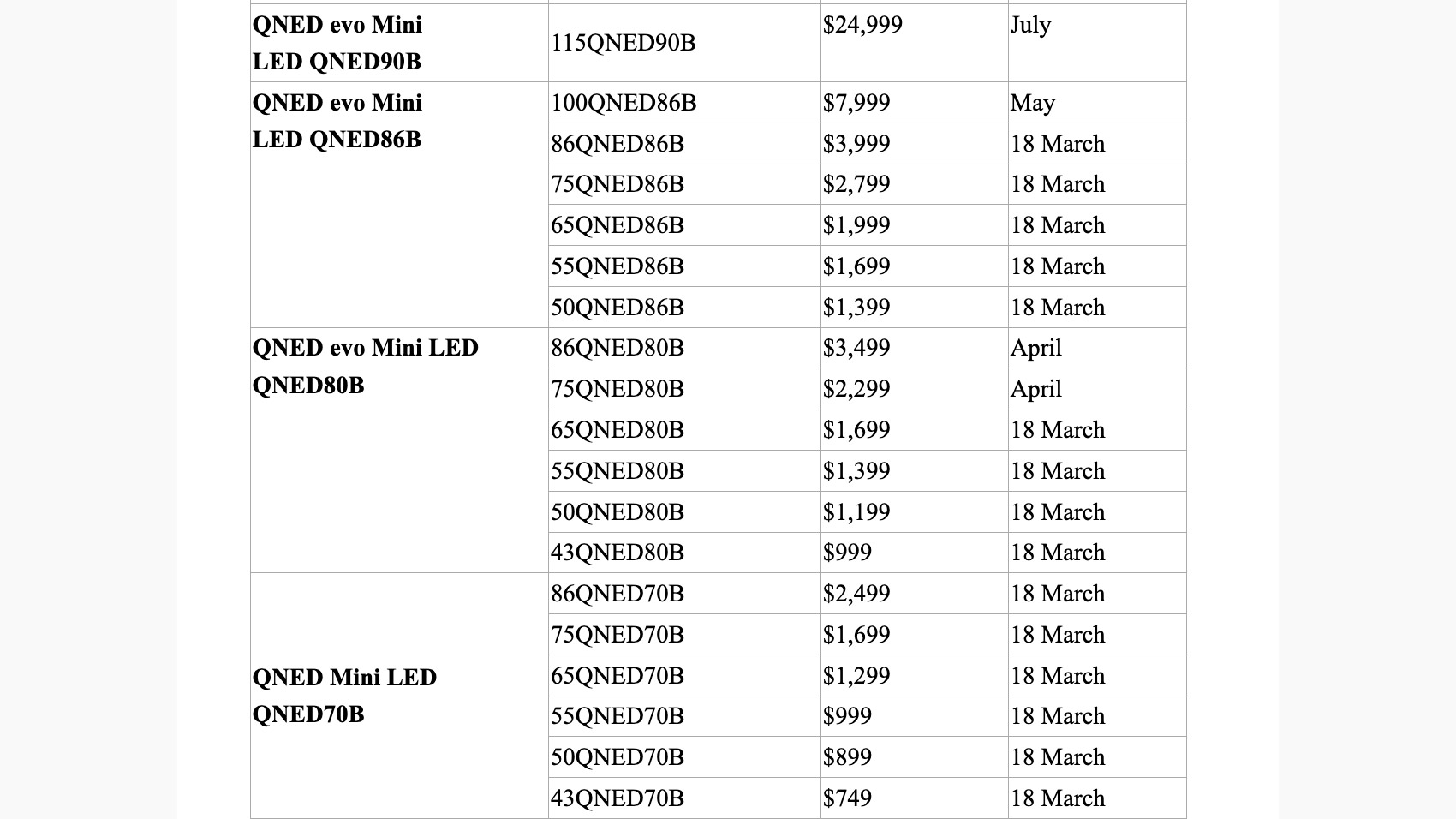
The biggest change this year, in my opinion, is that LG has now said goodbye to its entry-level NanoCell series of TVs, which last year started at just AU$749, opting instead for QNED technology as the default gateway to its TVs. What’s even more exciting is that LG’s QNED TVs have now also done away with edge-lit backlight systems, and Mini LED backlights are used across the range.
Article continues below.
I spent some time with the QNED81 TV in January 2024 and was able to compare it side by side with the then flagship G3 OLED. I found color production to be good, but ultimately struggled when it came to brightness, which had a negative effect on contrast. Now that all QNED TVs are switching to a Mini LED backlight, over which the integrated processor will have more control, I’m excited to see how many improvements have been made.
When I saw the new QNED displays at a recent demo, the colors and brightness looked much, much better. I’d love to see them in more normal living conditions, because with prices once again starting at AU$749 for a 43-inch QNED70, there could be a lot of value.
OLED continues to shine
Of course, LG is best known for its OLED TVs and this year the company has made some interesting updates that it hopes will allow it to continue competing at the highest level.
The G6 flagship receives a new Primary RGB Tandem 2.0 display panel, a second-generation version of the Primary RGB Tandem panel used on the LG G5. Improvements include Hyper Radiant Color technology, which LG says extends the brightness benefits of its Primary RGB Tandem panel to other image quality factors such as color and contrast.
The TV also includes a new Brightness Booster Ultra feature that claims to provide a 20% brightness boost over the G5. Finally, the anti-reflective coating on the screen has been improved; LG claims that the reflectance of the screen is less than 0.5%.
My UK colleagues recently ran a side-by-side test of the flagship LG G6 against the Samsung S95F to see how LG’s new technology fared against arguably the best TV for viewing in bright rooms, thanks to its Glare Free panel technology. In short, it was a positive result for LG, with reflections less pronounced than in the G5, being able to maintain excellent black levels.
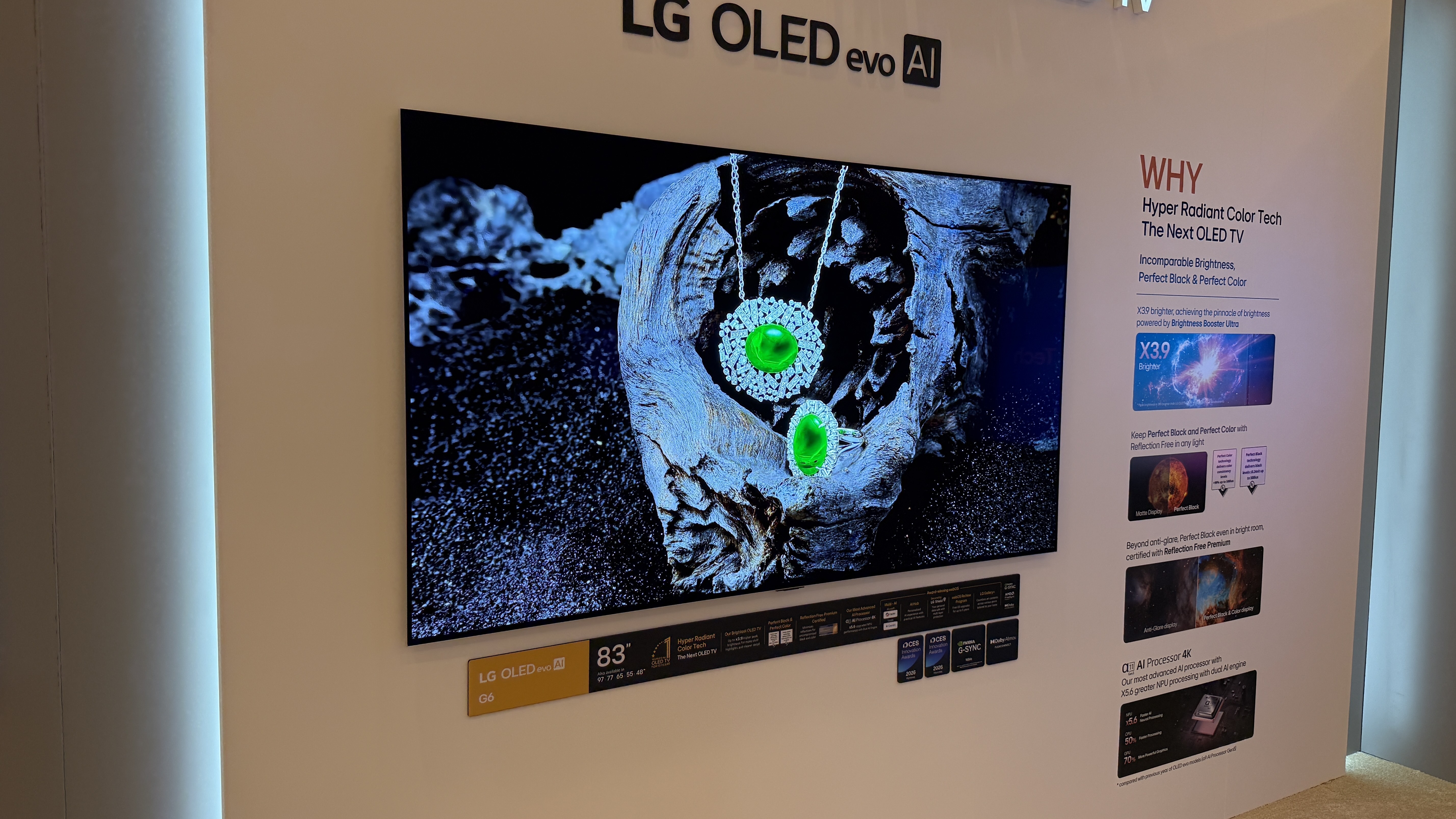
The other big change for the LG OLED 2026 range relates to the popular mid-level C6 model, which will now be offered in two versions. One version will get the same Primary RGB Tandem 2.0 panel found on the flagship G6 model, while the other will continue to use the same WOLED panel found on previous C-series TVs.
In other global markets, the highest specification model will be known as C6H; However, I asked local LG representatives if the same model name will be used in Australia and they said no, it won’t. The C6 name will be used for the entire line, but in-store TV and display specialists should highlight the fact that the larger models benefit from an improved OLED panel.
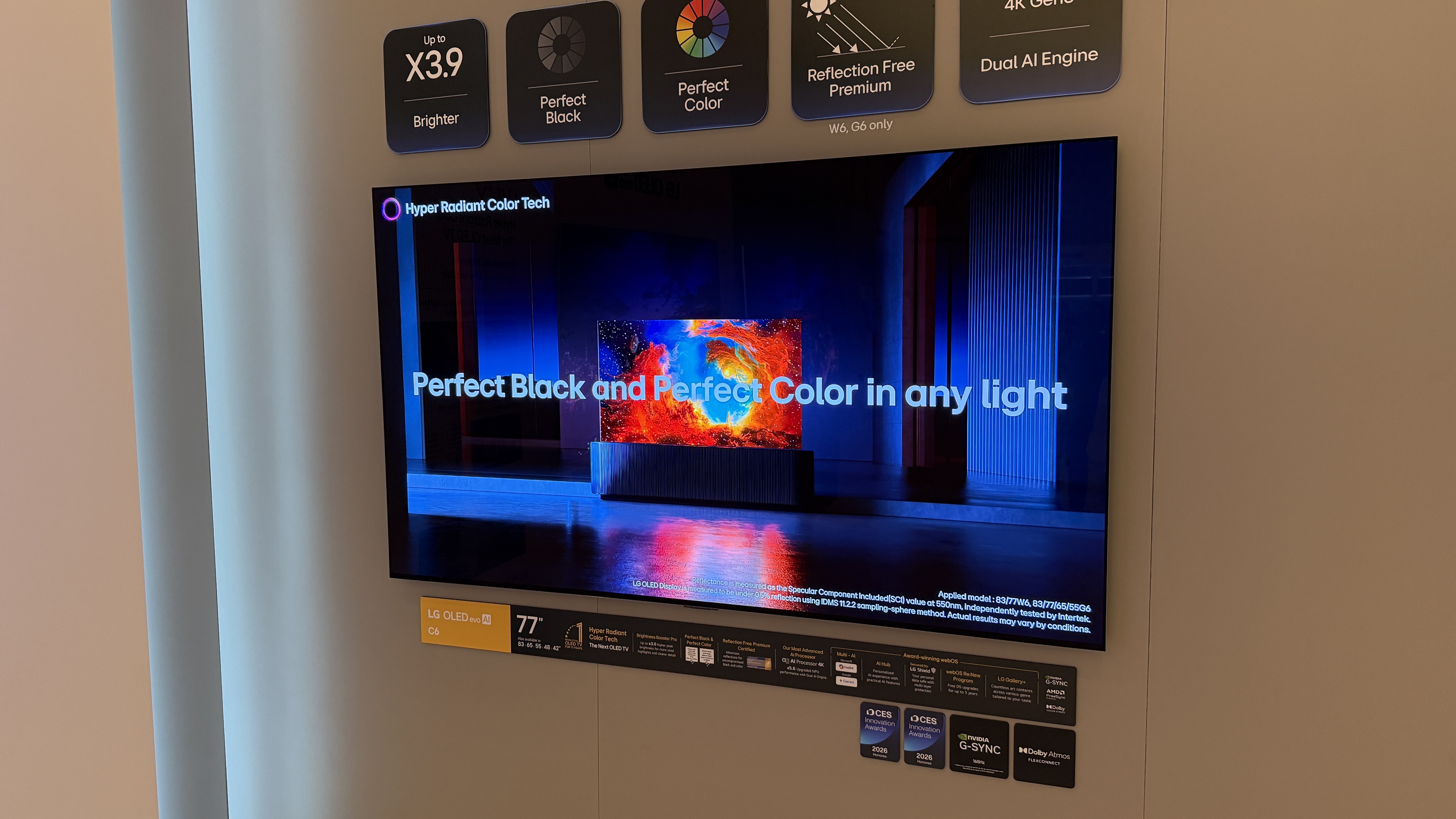
The small caveat is that to get the most advanced OLED panel, you’ll have to opt for the 77- or 83-inch LG C6. So on paper, you might be wondering why you’d opt for a big-screen G6, when you can get the same technology in a more affordable model. The main difference between the two lies in the anti-reflective coating; the C6 has a lower variant.
All versions of the LG C6 and G6 will get the same AI Alpha 11 Gen 3 processor, which promises major image improvements, including upscaling. Previously, the flagship G series would get the latest processor, so it’s great to see it coming to the mid-range C series this year as well.
I’ll have to wait until TechRadar’s team of TV experts complete reviews of all the new models, but I expect the LG C6 to become the best TV for most people in 2026.
Massive Micro RGB
Finally, LG also demonstrated its new Micro RGB TV, the MRGB96. Interestingly, the number in the model name does not relate to the screen size: it will be available in 75-, 86- and 100-inch variants, with prices starting at AU$7,999.
LG is still positioning its OLED TVs as the pinnacle of its entire lineup, but there’s no denying how impressive the colors look on the new model. It shouldn’t come as a big surprise, as LG says it offers the Triple Crown of color accuracy, with 100% coverage of the BT.2020, DCI-P3, and Adobe RGB color spaces.
When can I get the LG 2026 TVs and how much will they cost?
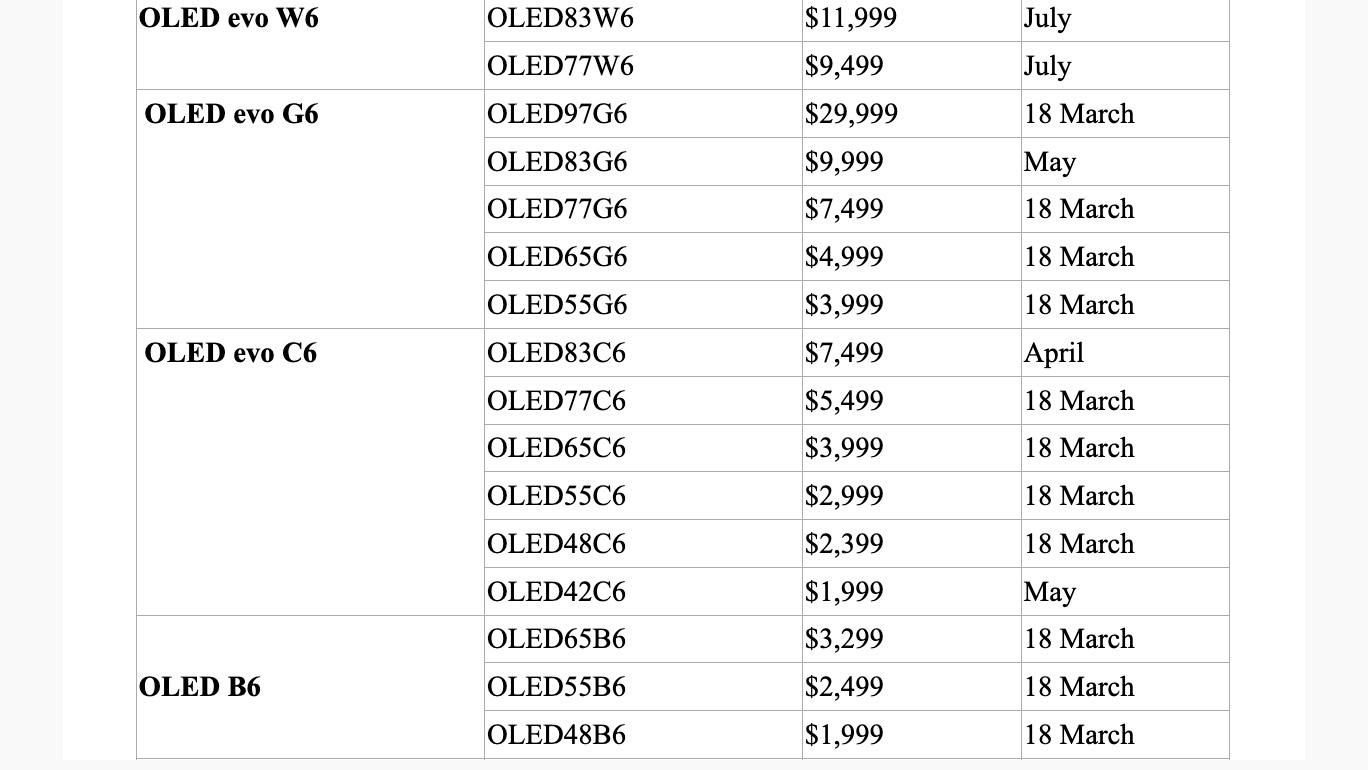
LG has kept the same launch prices for its OLED TVs this year as last year and, in fact, the massive 97-inch G6 OLED has dropped AU$10,000 to a launch price of AU$29,999 (the 97-inch G5 launched at AU$39,999).
Full pricing and availability is as follows.